
What I Buy at Costco as a Mother, a Chef, and a Homesteader
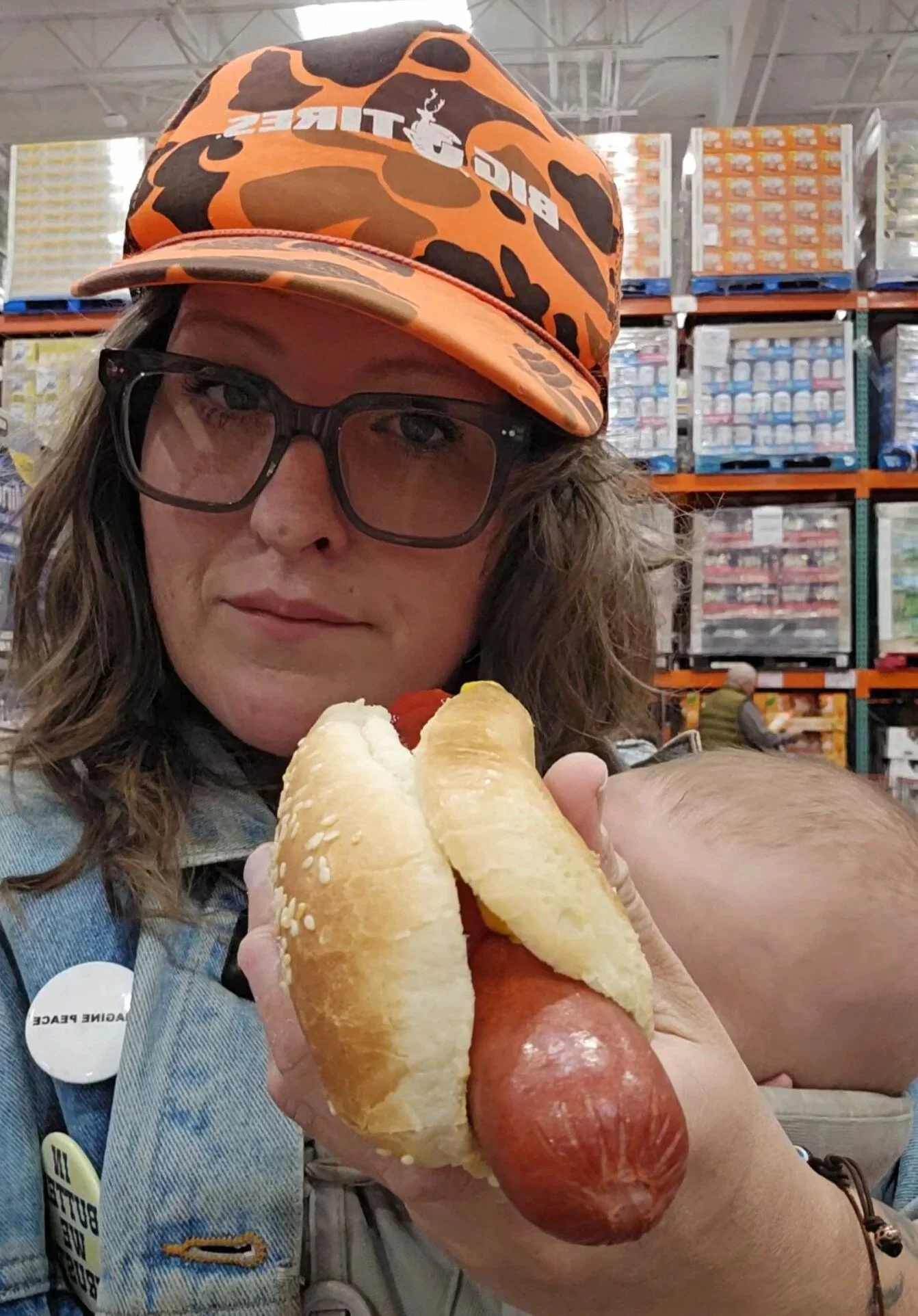
Don’t skip the dog.
One of the hottest tips I have is this: do not shop at Costco on an empty stomach. This $1.50 hot dog could save you hundreds of dollars. And look, if you are too good for hot dogs, eat whatever you want before you shop. Just do not go to Costco hungry.
For a long time, people on the internet have asked me what I buy at Costco, and while this feels a little vulnerable for me, the time has finally come to show you.
I am not here to tell you what is “toxic,” what is good or bad for you, or what you should or should not buy. There is no fear bait here. This is simply an honest look at what I buy during a fairly average winter Costco shop. You get to make the decisions that work best for you and your family.
Before we get into the specifics, I want to say this up front. I shop Costco on a pretty strict budget. I go in with a list and I stick to it. I do not browse non food areas unless there is something specific I need and I have already looked it up ahead of time. We do not drink at home, so I skip the alcohol aisle entirely, and I pretty much avoid the bakery as well. I also largely skip the pre prepared meals and the snack and junk food aisles. Not because those foods are bad, but because that is where I personally tend to overspend and overbuy. Costco is only overwhelming if you let it decide for you. I try very hard to decide before I walk in.
My hope is that this blog gives you some inspiration, keeps a couple bucks in your pocket, and makes Costco feel a little less overwhelming. When bulk shopping is done thoughtfully, it is not uncommon to save 50% or more compared to buying the same foods individually at a traditional grocery store. I hear all the time that Costco can feel like a lot, which is a bummer, because even for small households of one or two people, there is a lot there that can genuinely save you money. Through years of cooking, preserving, and my work as a Master Food Preserver, I have learned that it is not so much the quantity you are buying, but how you manage it once you get home.
That means portioning things right away, freezing what we will not use quickly, storing foods properly, and buying ingredients I know how to turn into many different meals. I have no more storage space than the average two bedroom home, aside from an extra freezer, and I do not struggle to find a place for it all because everything has a plan.
For my family of five, my husband, a seven year old, a two year old, a three month old, and myself, Costco makes a lot of sense. Outside of growing and producing as much as we can here on the homestead, we source locally whenever possible, shop at the co op sparingly for specialty items, and buy most everything else at Costco.
Since my second child was born, I have greatly reduced the amount I work outside the home, which means we are essentially on a single income. That requires me to be very mindful about spending while still prioritizing good quality food. Costco, paired with a bit of planning and effort, is how I make that work.
Today’s bill was $513, which is about $200 more than our usual trip. It is a week before Christmas, and I decided to get my husband and myself new Sonicare toothbrushes, along with a few essentials I only buy once a year or so. I also splurged a little here and there. That said, much of what you are going to see are our current regular monthly basics.
We shop at Costco about twice a month and usually spend anywhere from $150 to $350 per trip. What we buy changes seasonally, depending on what is growing here and what is available from local farms. Winter looks much different than summer. The food we purchase is nourishing, it lasts us, and I am able to turn it into many different meals because I focus more on ingredients than pre packaged or prepared foods.
When we lived in Whatcom County, I would have never imagined buying dairy, meat, or as many vegetables at Costco as I do now. In Northern New Mexico, I have not yet built the same farm relationships I had in Washington, and honestly, replacing those is impossible. This is not the same bustling dairy region, I have not found a beef share I can afford at the quality I want in a half or quarter cow, and the sheer abundance of Washington produce is largely unmatched, especially in the high desert.
Because the soil and growing conditions here do not produce at the same scale, prices are noticeably higher at farmers markets, and understandably so. There are many wonderful farms here, and New Mexico has its own beautiful crop culture. It is simply not feasible for me to purchase the same quantities I once did, given a decrease in income, an increase in children, and rising food costs.
This past season was our second spring here and the first where we really put our foot on the gas with growing food. I was pregnant the entire time and focused a lot of my energy on raising meat birds. I was really happy with the outcome, producing just shy of 400 pounds of chicken. While our vegetables did well, they were not produced in large enough quantities to carry us through the winter, and by the end of my third trimester, harvest got the best of me. So I will try again next year.
For now, this is what shopping looks like for our family during this season of life.
Without further ado, this is what I generally buy at Costco, and how I store it at home so it actually gets used.
I should also mention that this post is not sponsored or affiliated in any way.
TL;DR: What I Buy at a Glance
Dry Goods & Pantry
Garofalo organic spaghetti and pasta variety packs
Kirkland Organic raw cane sugar
Kirkland Organic brown sugar
Four Monks distilled white vinegar
Kinder’s Garlic Butter seasoning salt
Better Than Bouillon organic bases
Wild Planet sardines
Kirkland organic maple syrup
Annie’s mac and cheese
Kirkland grass fed beef sticks
Sea salts including Kirkland sea salt, Celtic sea salt, and other finishing salts
Oils & Cooking Fats
Kirkland Organic extra virgin olive oil
Terra D’Ylyssa extra virgin olive oil
Avocado oil cooking spray
Dairy & Refrigerated
A2 organic grass fed yogurt
Organic half and half
Kirkland feta made from 100 percent sheep’s milk
Tillamook block cheddar cheese
Kirkland grass fed butter
Darigold eggnog
Frozen & Protein
Kirkland grass fed beef patties
Flank or skirt steak packs
Kirkland wild red Argentine shrimp
Original’s organic turkey breast deli packs
Pure Farm’s Thick Cut Bacon
Eggs, yes even though I keep chickens
Produce
Honeycrisp apples
Lemons especially Meyer when available
Mangoes when in season sometimes regretfully
Bananas
Avocados only when in season from Mexico or California
Cucumbers
Carrots
Celery
Onions
Potatoes
Fermented & Specialty
Wildbrine sauerkraut
Kimchi
Occasional Snacks & Treats
Kirkland s’mores bites
Italian tiramisu cups
Crème brûlée cups
Household & Misc
Ziploc bags for food storage
Baby wipes
Sonicare toothbrushes
Car seat
Read below to find the why behind each buy, and how I handle it once it gets home so it doesn’t go to waste.
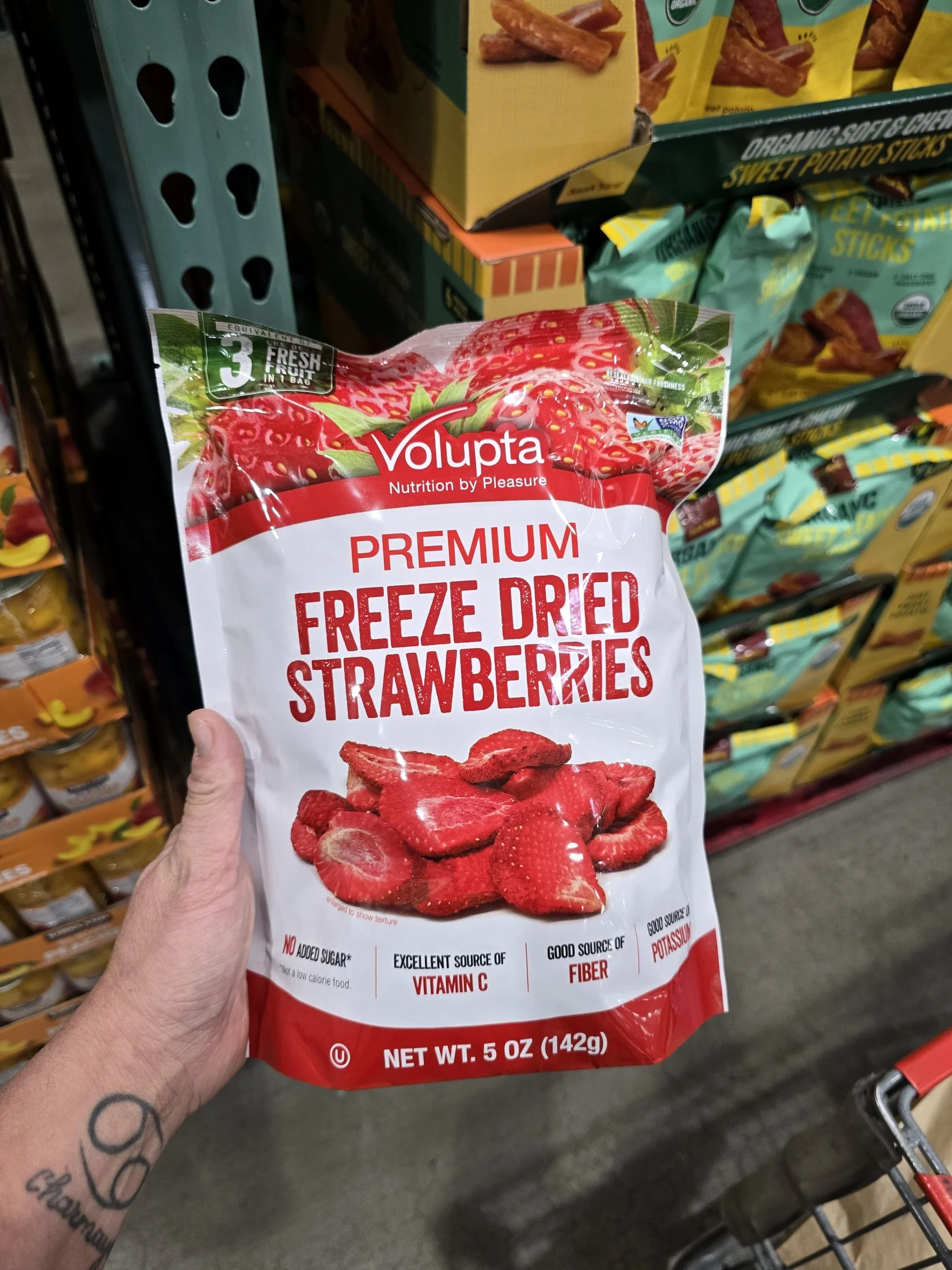
These freeze dried strawberries were a bit of a splurge, but at around $10 they are actually a pretty good deal considering 3 pounds of fruit went into the package. The small single ounce bag at Trader Joe’s is $5, that is massive savings. My kids love them. They make an easy, shelf stable snack and are naturally high in vitamin C. Because my kids eat them quickly, I do not do anything special beyond making sure the bag is sealed tightly between snacks. If you will not finish them within a few weeks of opening, you can portion them into jars or baggies to help protect them from moisture. When stored in jars that are properly vacuum sealed and kept cool and dry, freeze dried foods can remain shelf stable and edible for up to 25 years, though quality over time will still depend on storage conditions.
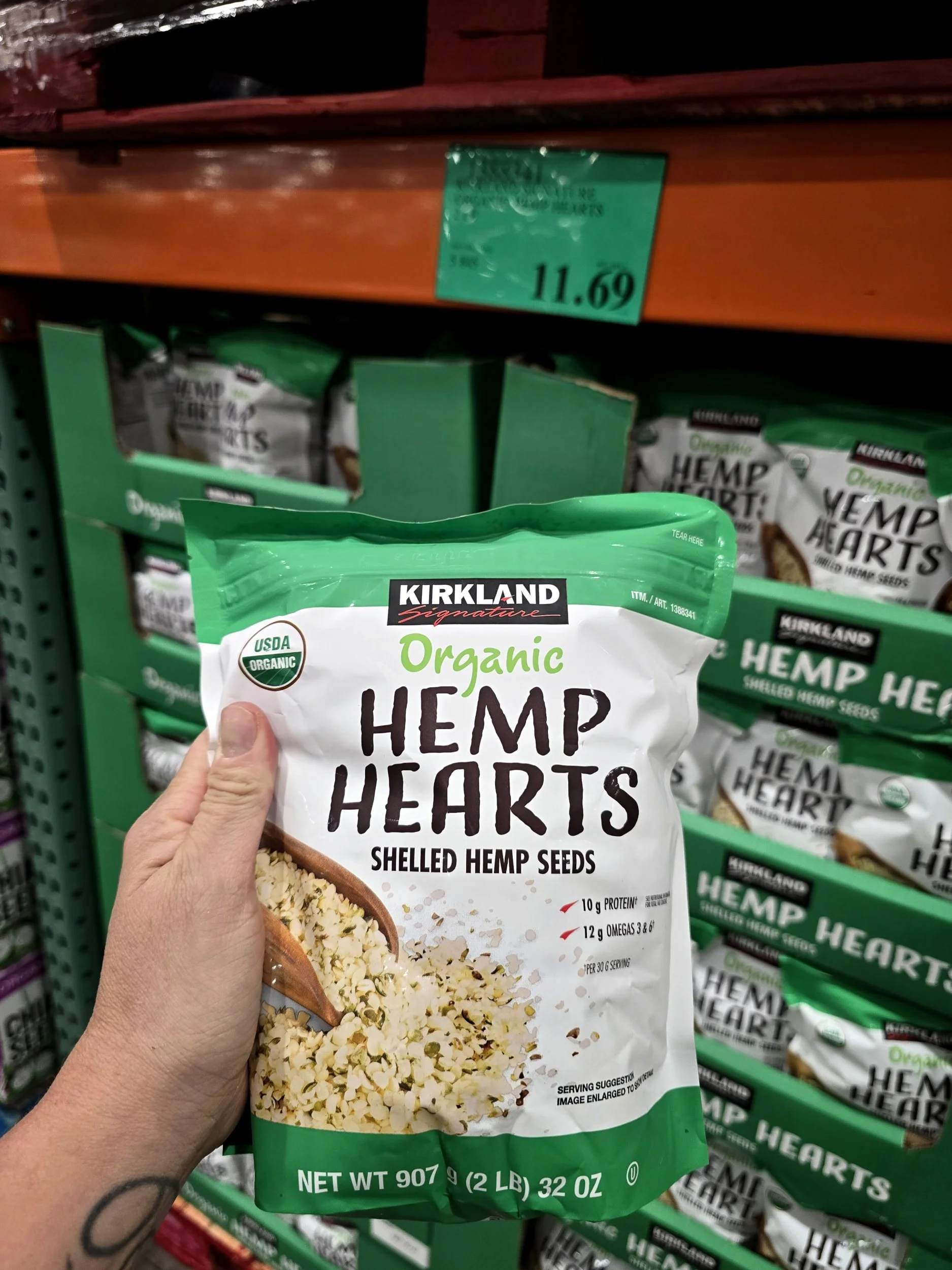
I like hemp hearts for smoothies, sprinkling on salads, and adding to all kinds of foods. They are high in protein and omega fats, and at $11.99 for two pounds, they are a big bang for my buck. I commonly see 1/2 pound bags at the normal grocery for $12 or more. I keep them in the freezer between uses, which helps prevent the sensitive oils from going rancid. We go through a bag about once a month, sometimes every other month. These hemp hearts are also grown and processed in the United States, so they are not an exotic product with ingredients sourced from halfway around the world. They are a simple, whole food protein and nutrient source, and relatively flavorless.
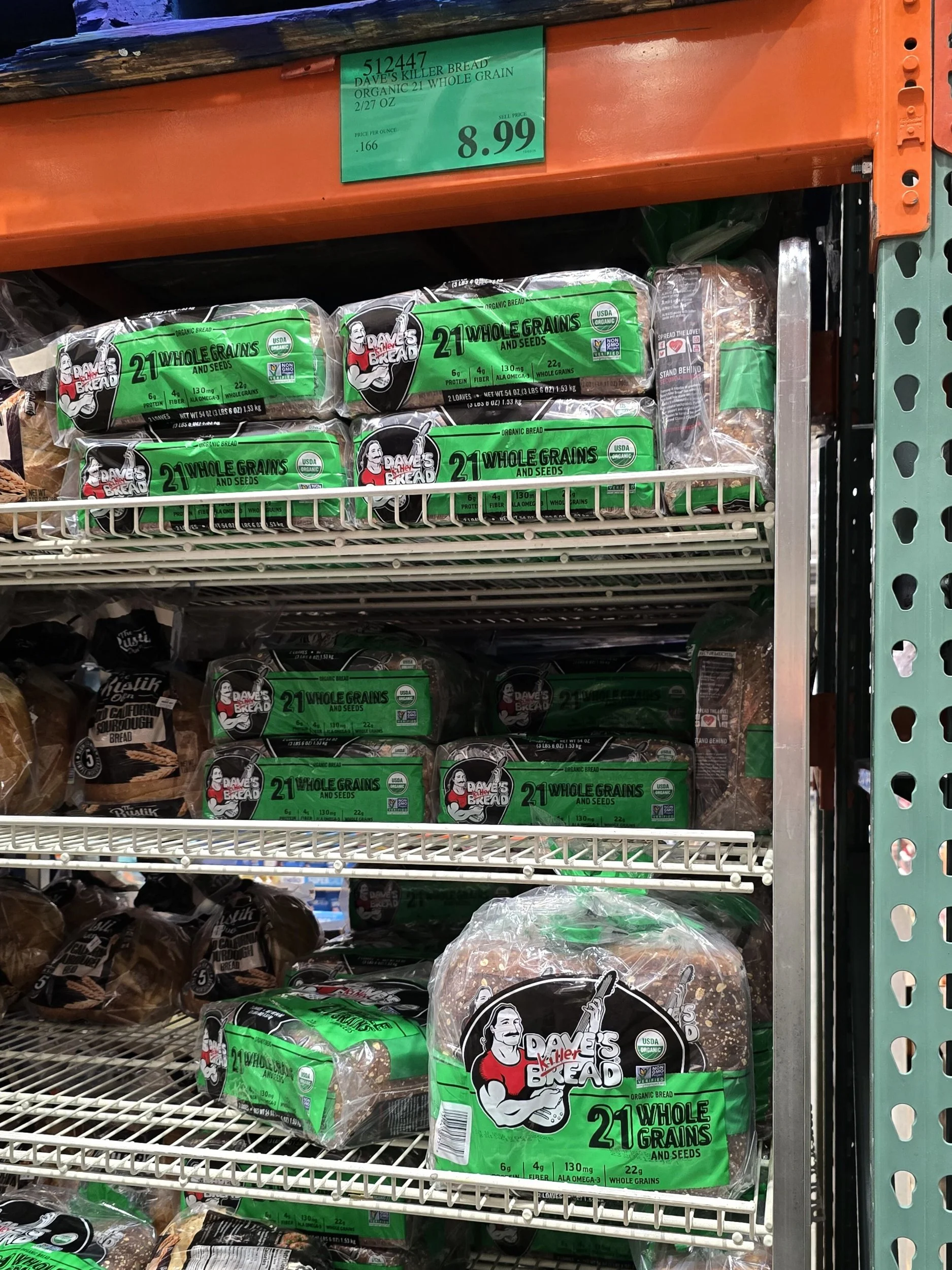
There is nothing especially magical about Dave’s Killer Bread, other than the fact that it is the one my kids like. It is relatively healthier than many other options, organic, and Non GMO. I know there are a lot of differing opinions about this bread, and bread in general, but this works for us. A single loaf at the grocery store is often over $7, so buying it this way ends up being close to a 50 percent savings.
It also reminds me of the hippy bread my dad bought when I was a kid. We keep the second loaf in the freezer until we need it, and the one we are using in the bread box. In the summer, we store the active loaf in the refrigerator because in a warm kitchen it can mold quickly, which I actually see as a good thing. It does not rely on heavy preservatives to prevent mold.
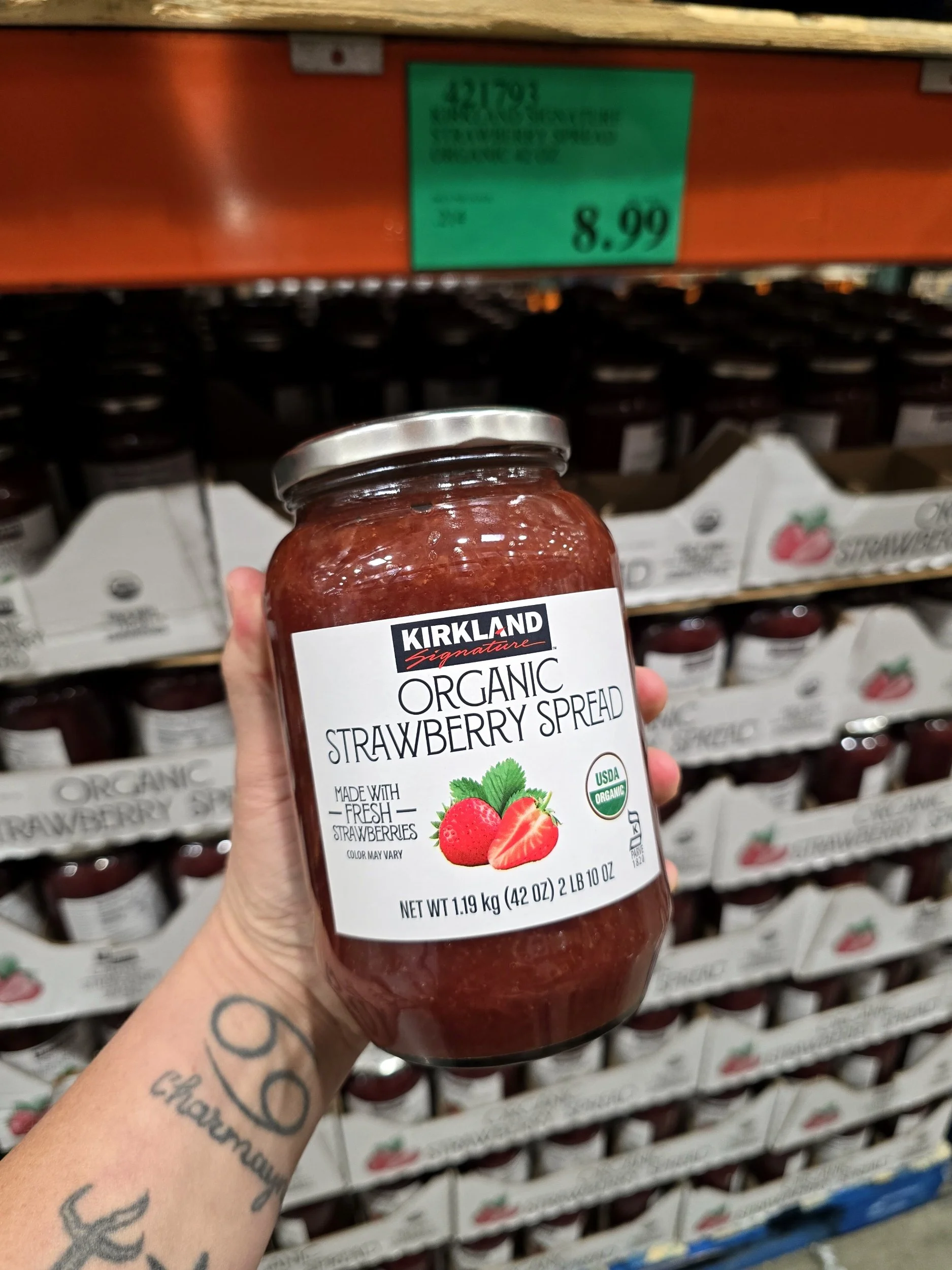
In Washington, I always did u pick strawberries at Shumway’s or ordered flats at a pretty low cost from local farms. They don’t call it the land of milk and berries for no reason. Here in New Mexico, strawberries just don’t grow in abundance, and that makes them expensive, rightfully so. We might buy a pint or two in season as a snack, but that’s about it.
I am definitely sad about not having enough berries to make jam this year, but maybe I can grow them this coming season. For now, this jam is a totally suitable substitute and about as close to homemade as you will find in the store. If I am worried we wont finish the jar within a month, I portion it into 4oz or 8oz jars, leaving about an inch of headspace. I freeze them with the lids off, then screw the lids on and label once frozen. Stored this way, they will easily last a year, if not two or three.
And at $8.99 for dang near three pounds of organic jam, that is a screamin’ deal. A single small eight to twelve ounce jar of organic jam at the grocery store can easily cost the same.
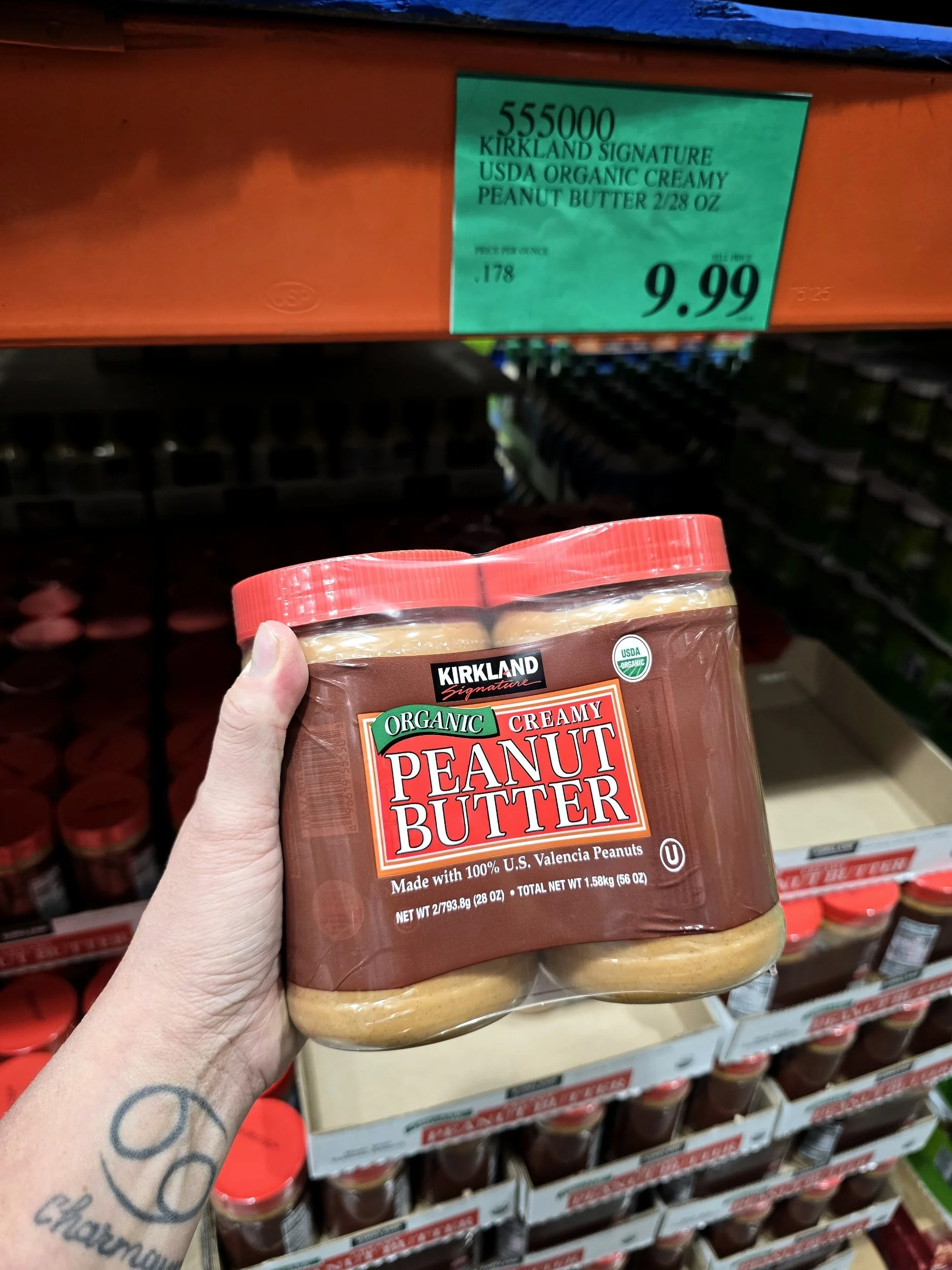
I grew up on Adam’s Natural Peanut Butter, and this is about as close as you can get these days. There is nothing especially fancy about it, other than the fact that it is made from 100 percent organic, U.S. grown Valencia peanuts. There are only two ingredients, peanuts and salt, and at about $0.17 an ounce, or $9.99 for two twenty eight ounce jars, it is a great deal with a really good, normal peanut flavor.
We go through one of these about every month or so, and I keep it in the pantry once it is opened. If you do not use peanut butter very quickly, you can keep it in the fridge instead. I do not portion this or do anything special with it, but you absolutely can if that works better for you.
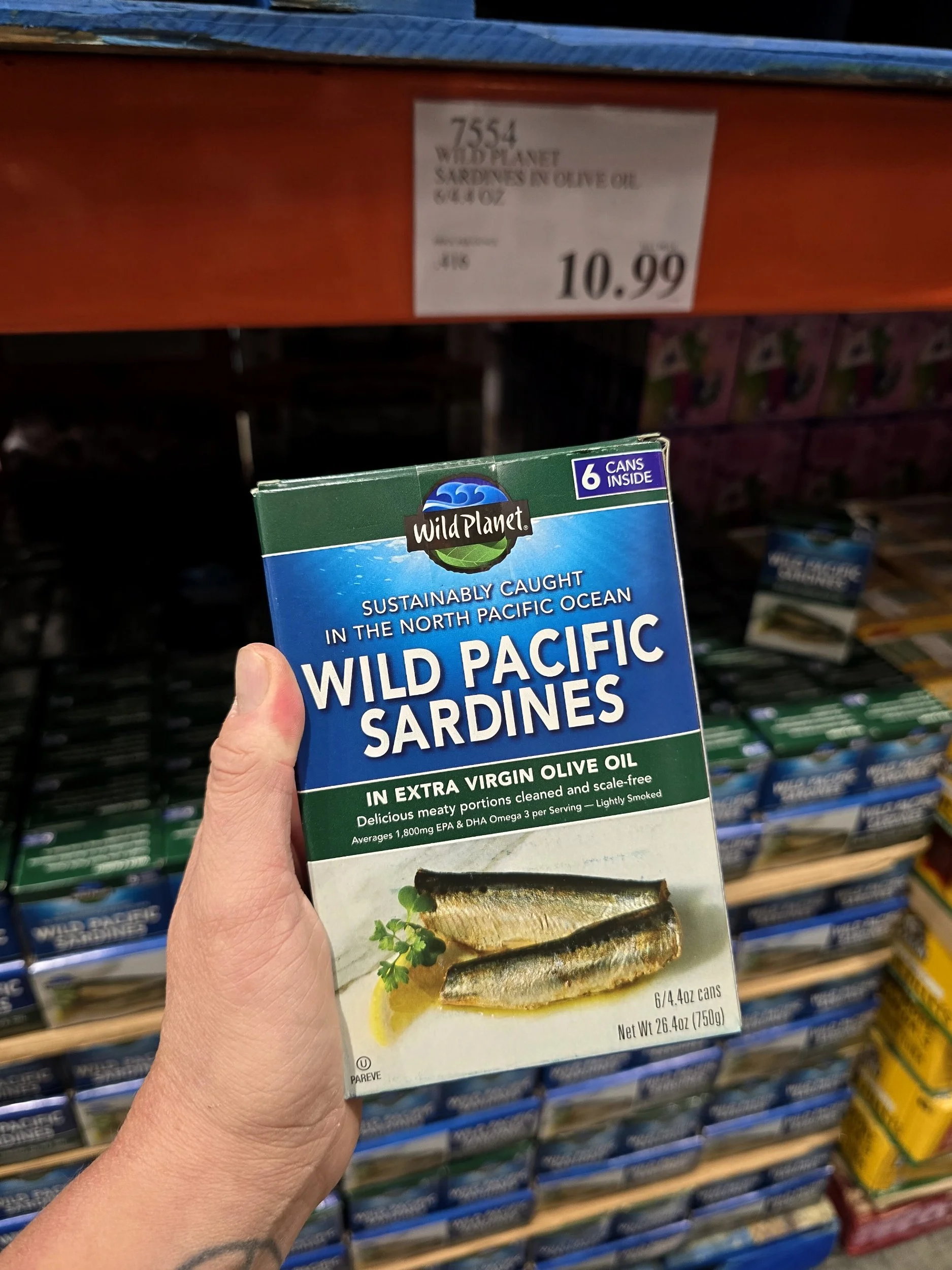
I love canned fish. Yes, canned. We do not need to dance around it with frilly terms like “tinned,” especially when it comes to sardines, which I know are not everyone’s cup of tea. These Wild Planet sardines are a far cry from the ones I ate as a kid, the ones with the lighthouse on them, sealed in hot sauce or mustard, which honestly I would still happily eat today and that used to cost about a dollar or less.
These are sustainably harvested, full of healthy omegas, and have about 22 grams of protein per can. They make an excellent quick and easy mom lunch. At the co op grocery store, these run about $4 a can. At Costco, I can get six cans for $10.99. There is really no beating that price.
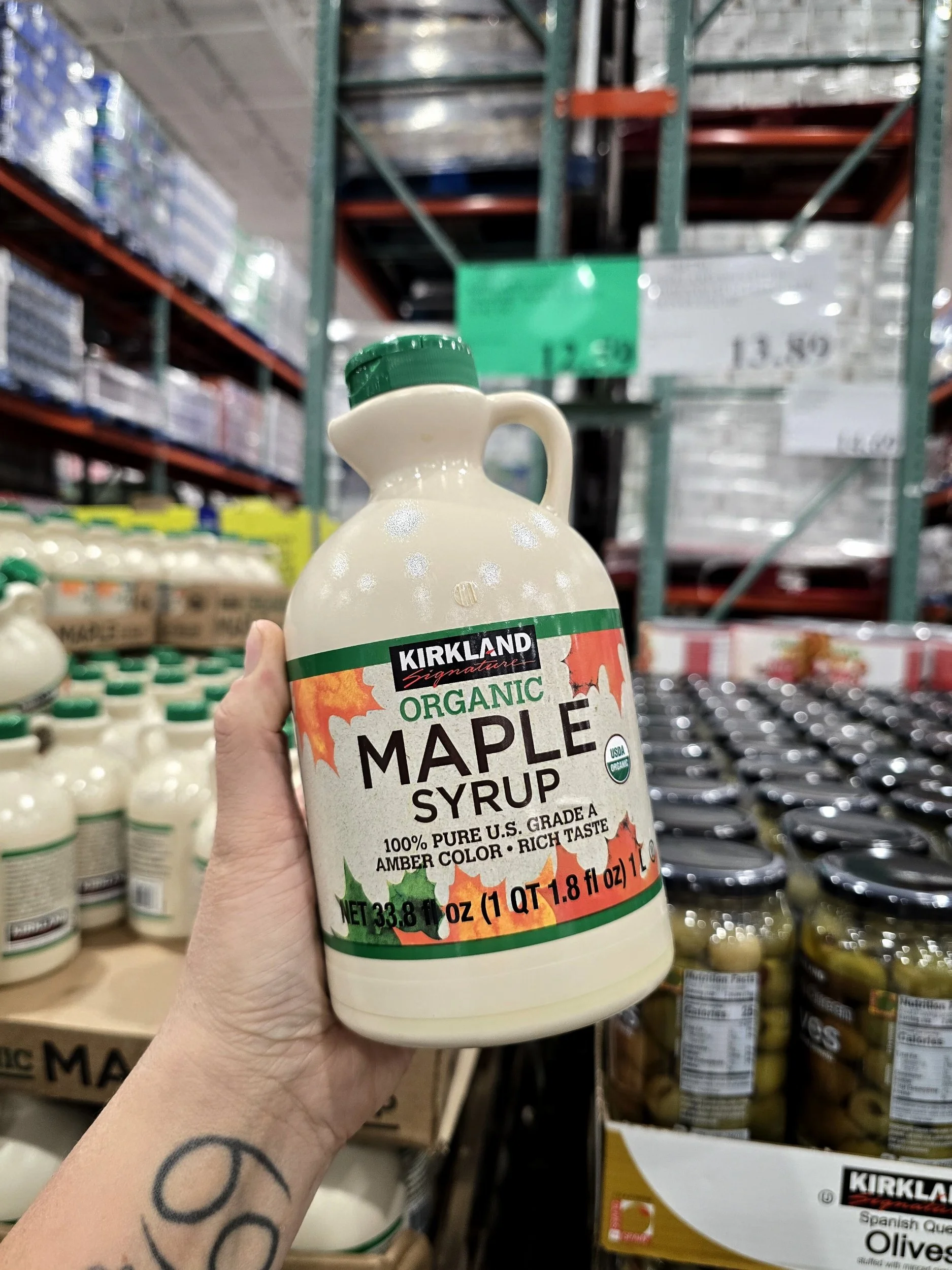
Maple syrup has been a staple my entire life, and I use it often in place of sugar in drinks. And yes, I understand it is still a sugar. It is just unrefined, I like the flavor, and this is a very good price for a solid product. It is great for breakfast foods, coffee, lemonades, using as a sugar substitute in desserts, and a lot more. This works out to easily about 25 percent less than buying it at a regular grocery store.
For storage, keep maple syrup in the fridge after opening if you will not use it within a month. Real maple syrup can mold at room temperature. If needed, you can portion it into smaller jars and freeze it. Leave about an inch of headspace, freeze without the lid, then secure the lid and label once frozen. Stored this way, it will last two years or more in the freezer.
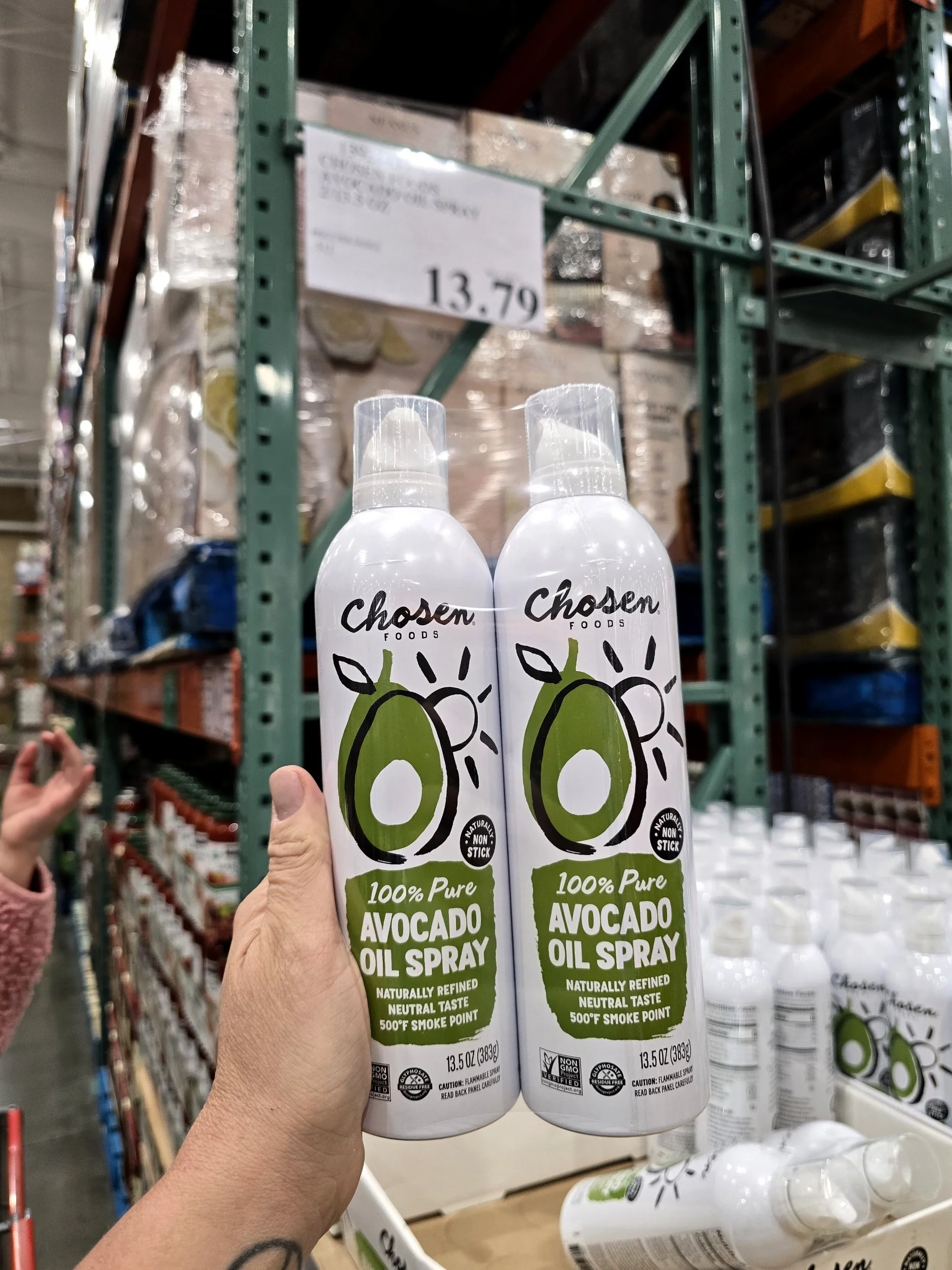
I did not actually buy these on this trip, but when I do need pan spray, this is what I get. It is just 100% pure avocado oil, and these cans go a long way. As long as they are stored somewhere cool and dark, you can easily get at least a year out of them, if not longer. No other notes.
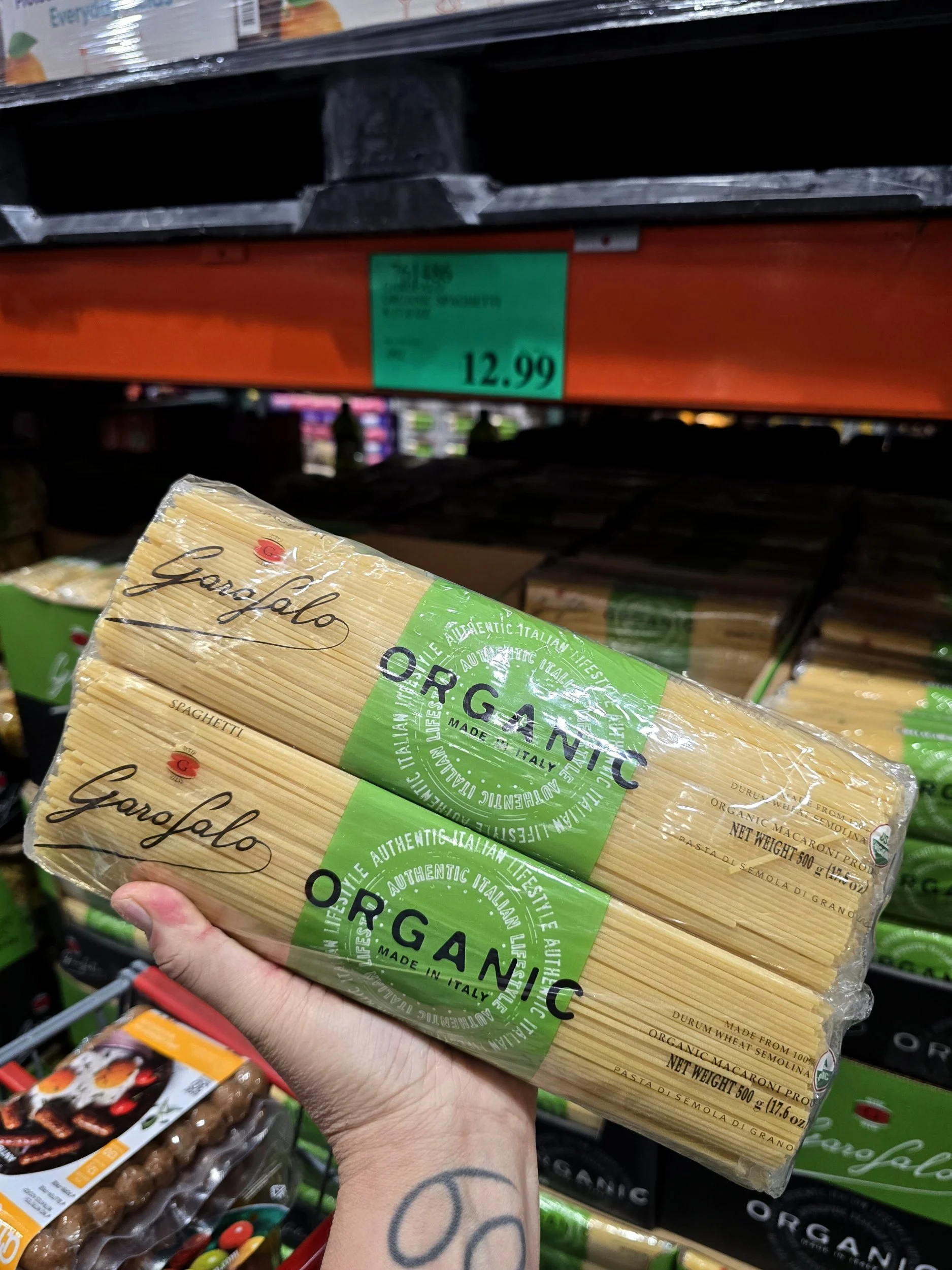
Spaghetti was not only a common meal at my Grandma Clara’s house, it is also a regular one in mine. It is hearty, filling, and makes great use of other foods I already store at home, like ground beef from beef shares and canned or frozen tomatoes from the garden. One 1.1 pound pack of spaghetti makes enough for the five of us to eat a big meal and still have plenty of leftovers for lunch the next day. An American style country bolognese is how I most often prepare it, but my kids also love shrimp scampi on pasta, which feels like a rare delicacy in our house. It also works well for a co op deli style sesame noodle situation.
This spaghetti from Costco is organic, from Italy, brass cut, and honestly just really good quality pasta. At about $1.47 per pack, it is one of the best deals around, organic or not. I also like the Garofalo pasta variety pack for penne, curly noodles, and whatever the other shape is called.
I have heard some rumblings that tariffs may impact Italian pasta imports, so it could be a good time to pick up a pack or two. Not panic buying, but this pasta stores well in its original packaging in a cool, dark place for at least a year. You might as well insulate yourself a bit from price volatility with a little thoughtful food storage.
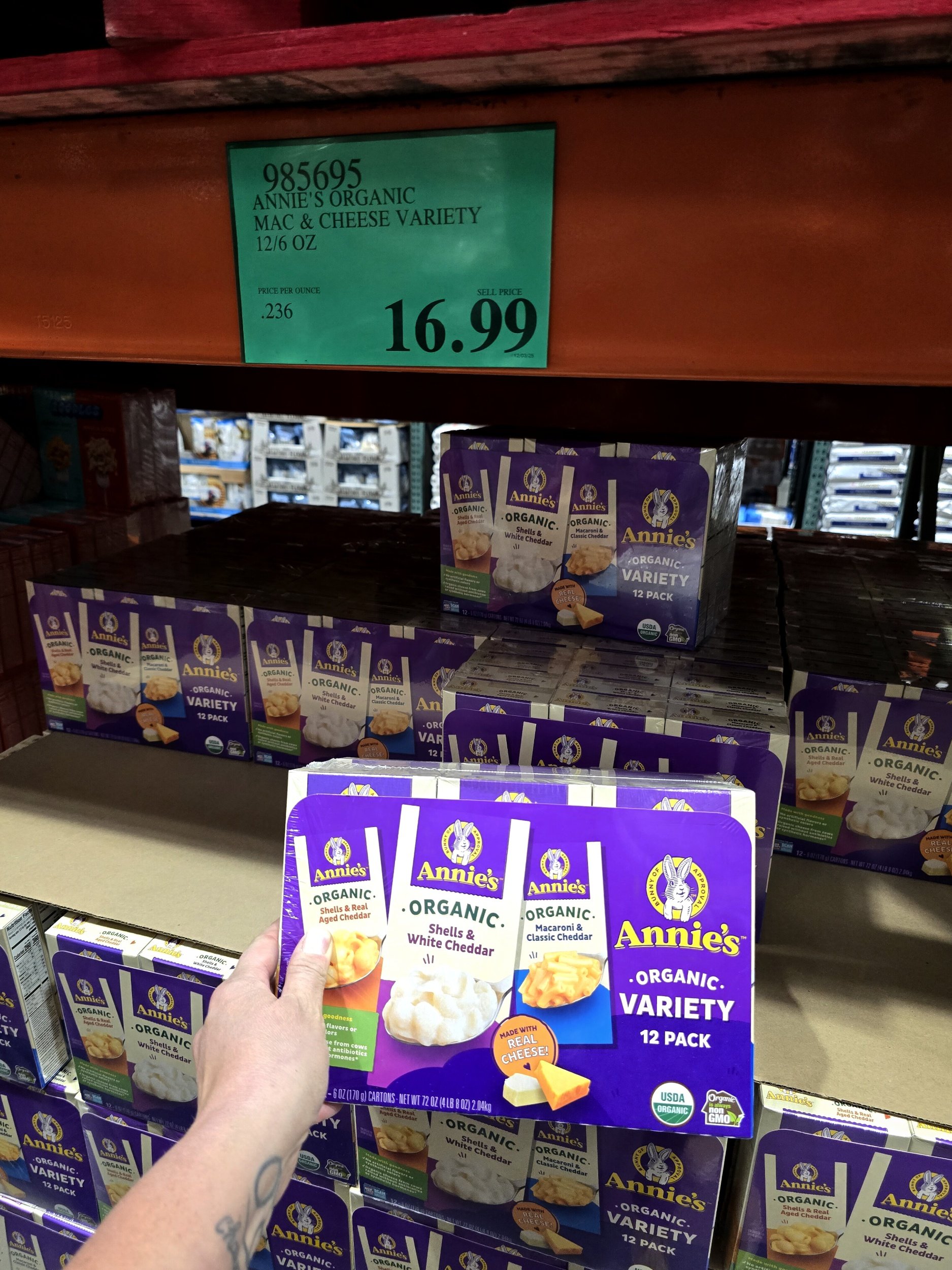
Let’s be honest, Annie’s Mac and Cheese is not really all that much healthier than something like Kraft. Boxed mac is not a health food. But I like the taste, my kids like it, and it is something quick and easy to keep in my back pocket. The ingredients are relatively basic, and sometimes that is enough.
Growing up at my mom’s house, even though she was a very crunchy, health nut type of person, we often fell on hard times. Kraft mac was something my sister and I could afford with a couple of quarters and make ourselves. So this is both a convenience and nostalgia buy for me, but also a common Costco purchase.
These last a long time when stored in a cool, dark place with relatively low humidity. When the power went out often where we were living in the foothills of Mount Baker, I was always glad we had these on hand. Not every food we store has to be homemade from scratch.
I have seen these go for as much as $5 each at a regular grocery store, so at about $1.88 per box at Costco, that is a massive savings. I would not pay more than that for what this is.
Here is a video of how I make boxed macaroni even better:
https://youtu.be/lxtSTU_nrII?si=EsG7jj_Zs_Bie8vq
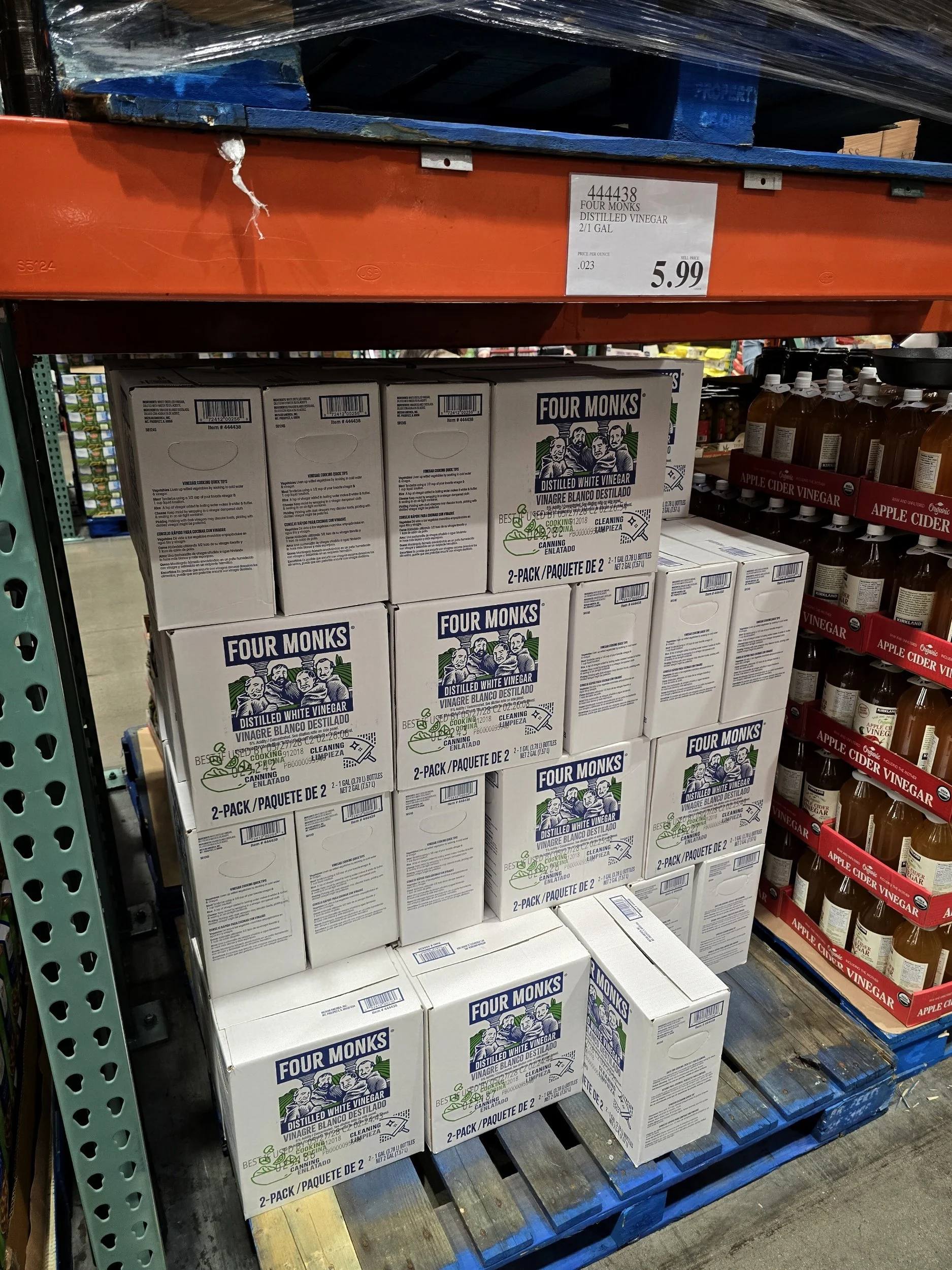
There is not much to say here other than Four Monks is a decently high quality brand for distilled white vinegar, and this is a really good deal. A gallon of white vinegar at the grocery store is usually at least $5, and for Heinz, which is about the lowest quality I will use for food applications, it can be as much as $8 per gallon depending on where you shop. So two for $5.99, and good quality, works for me.
Four Monks distilled and wine vinegars are my go to for canning in larger quantities, and I also use them for some cleaning applications. Vinegar lasts a very long time as is. That is all.
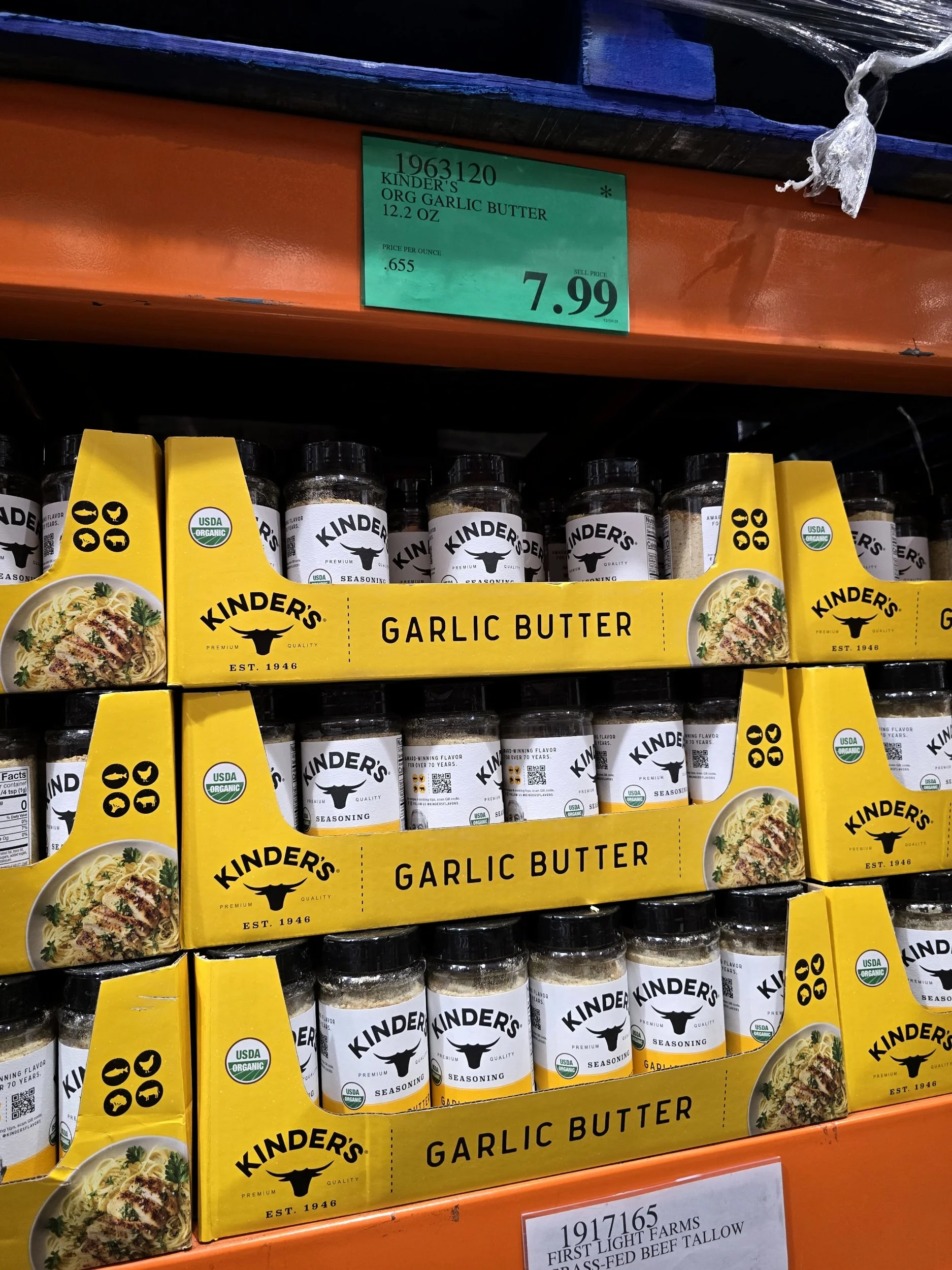
I did not buy any this time because, for some reason, during pregnancy I developed an aversion to this particular seasoning salt. That said, I really like seasoning salts in general, and I especially like Kinder’s Garlic Butter salt. At this price and quantity it is really inexpensive. You would easily pay this much for half the amount at a regular grocery store.
Seasoning salts are an easy way to bump plain foods up a notch with very little effort. I like keeping a couple on hand. Or better yet, make your own. Although I will admit, I have yet to figure out how to make butter powder at home.
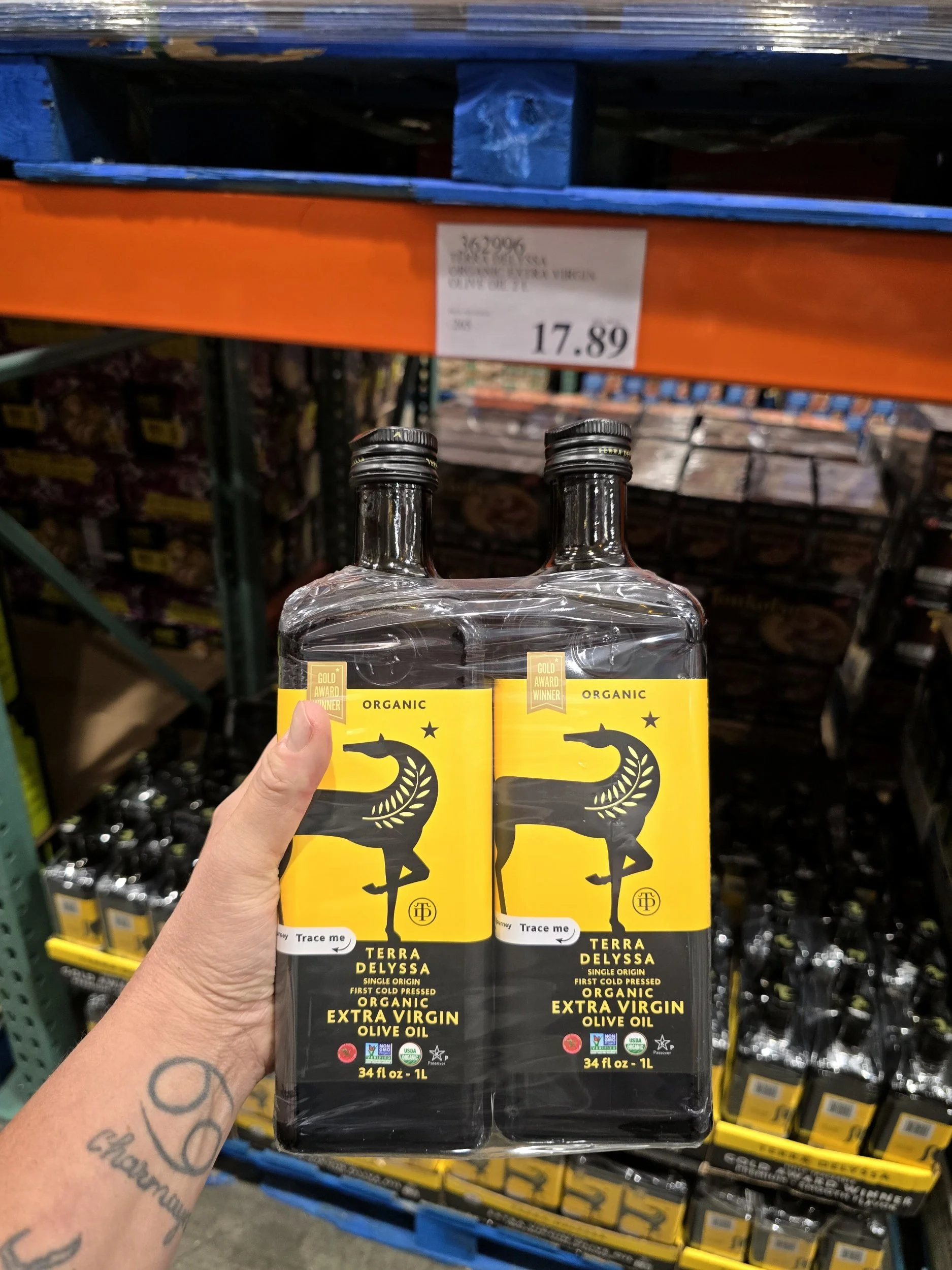
This is an exceptional quality daily driver olive oil at a really, really good price. I regularly pay $40 or more for a 500 ml bottle of fine finishing olive oil. One of my favorites is Nebali or Rumi olive oil from Canaan, harvested from olive trees that are over 1,000 years old and endemic to Palestine. So $17.89 for two liters of single origin, extra virgin olive oil with a Trace Me QR code is excellent.
This olive oil also consistently rates high in taste tests and among professionals, which makes it an easy yes for everyday cooking.
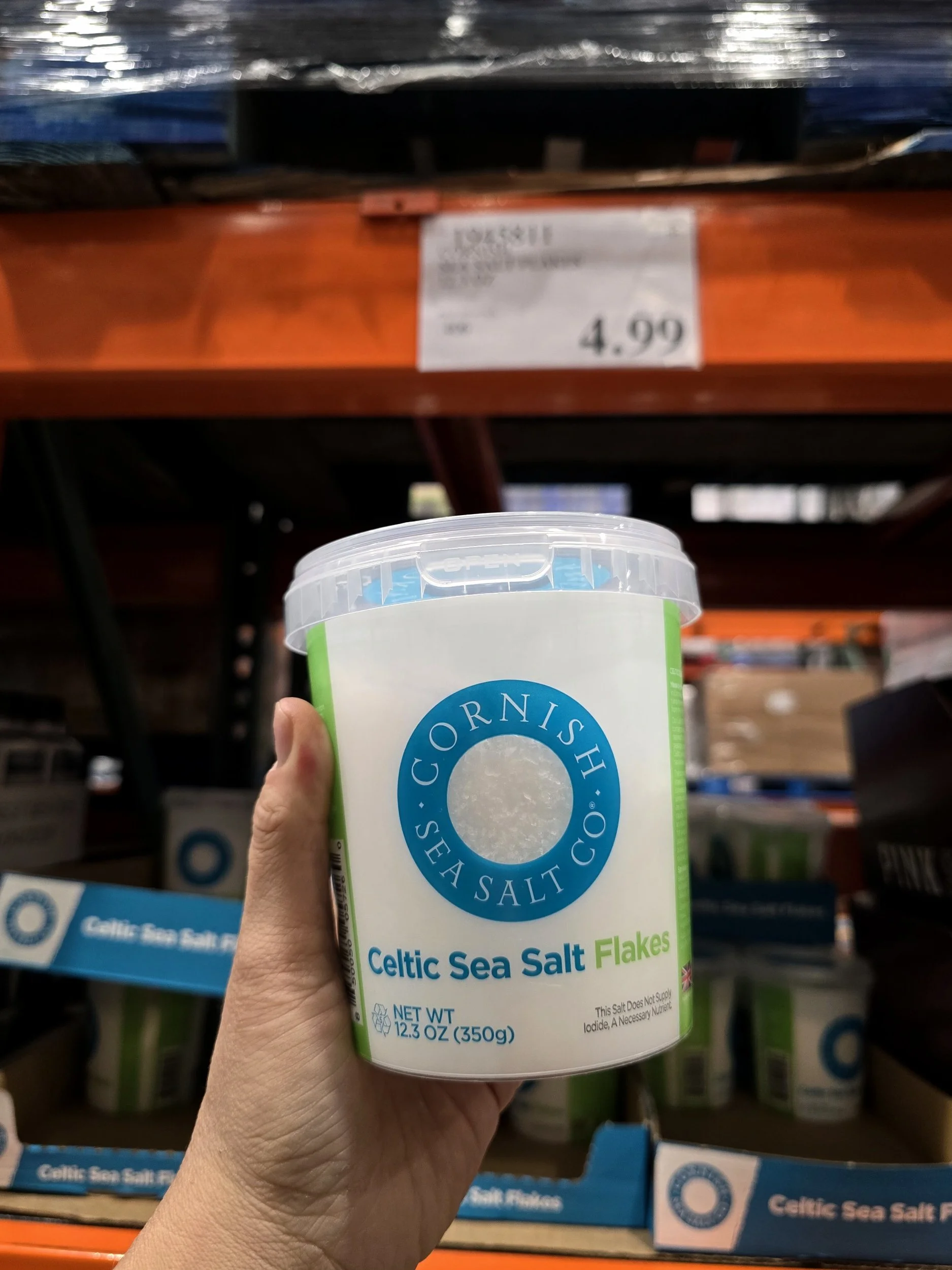
I did not buy this one, but it looks like a really tasty, crunchy Celtic sea salt, and at $4.99 for 12.3 ounces, that is a great deal. I can also see that bucket living very happily in my Tupperware cupboard once it is empty.
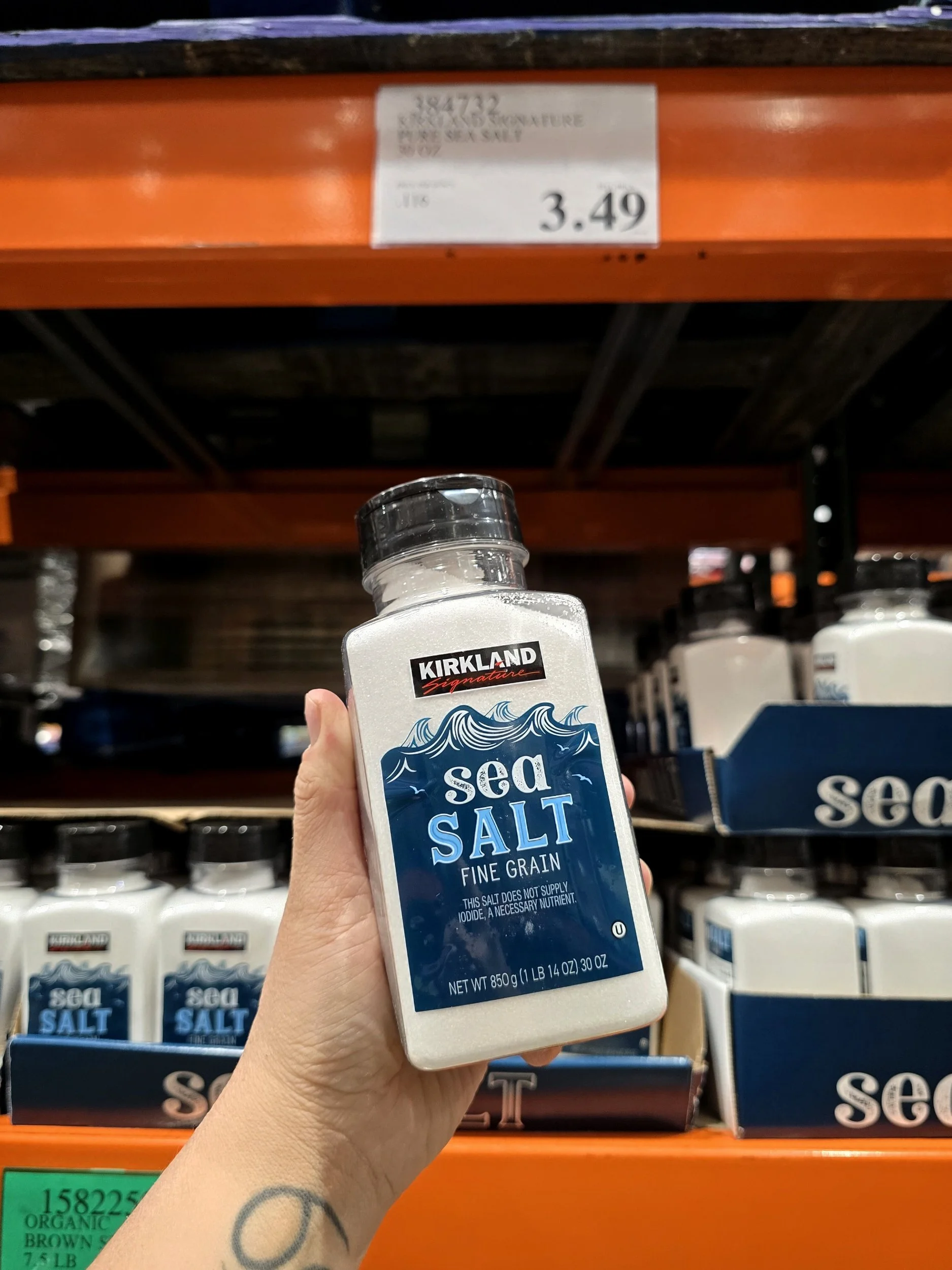
For a basic, everyday seasoning salt, this one is totally fine. I usually grab this or the big bags of sea salt from the Korean grocery store. For finishing salts, I like Maldon, San Juan Sea Salt, or a crunchy Celtic salt.
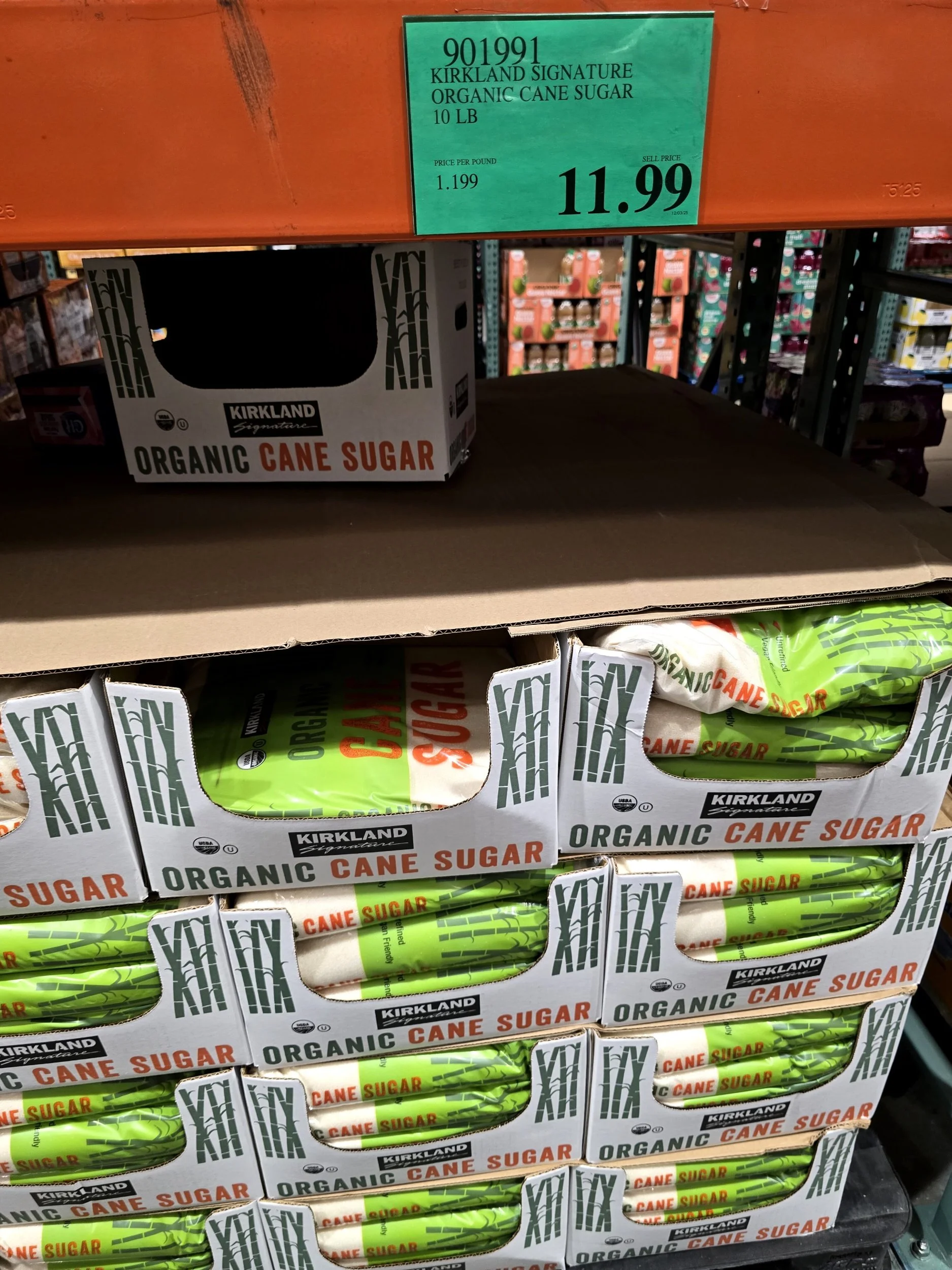
I use raw organic cane sugar in place of granulated sugar in every recipe and pretty much everywhere else. This and the Kirkland organic brown sugar are basically the only sugars I buy. With proper storage in an airtight container kept in a cool, dark place, it will essentially last forever.
I do not have any issues swapping raw cane sugar for granulated sugar. In the few applications where a finer texture really matters, I will pulse it briefly in my food processor with the regular blade to make something closer to a caster sugar. I like the flavor of raw sugar, it has more mild caramel and vanilla notes, and it still contains its original minerals. If we are going to eat sugar, we might as well get a few trace nutrients out of it.
At $1.19 a pound, it is a bargain for a high quality product.
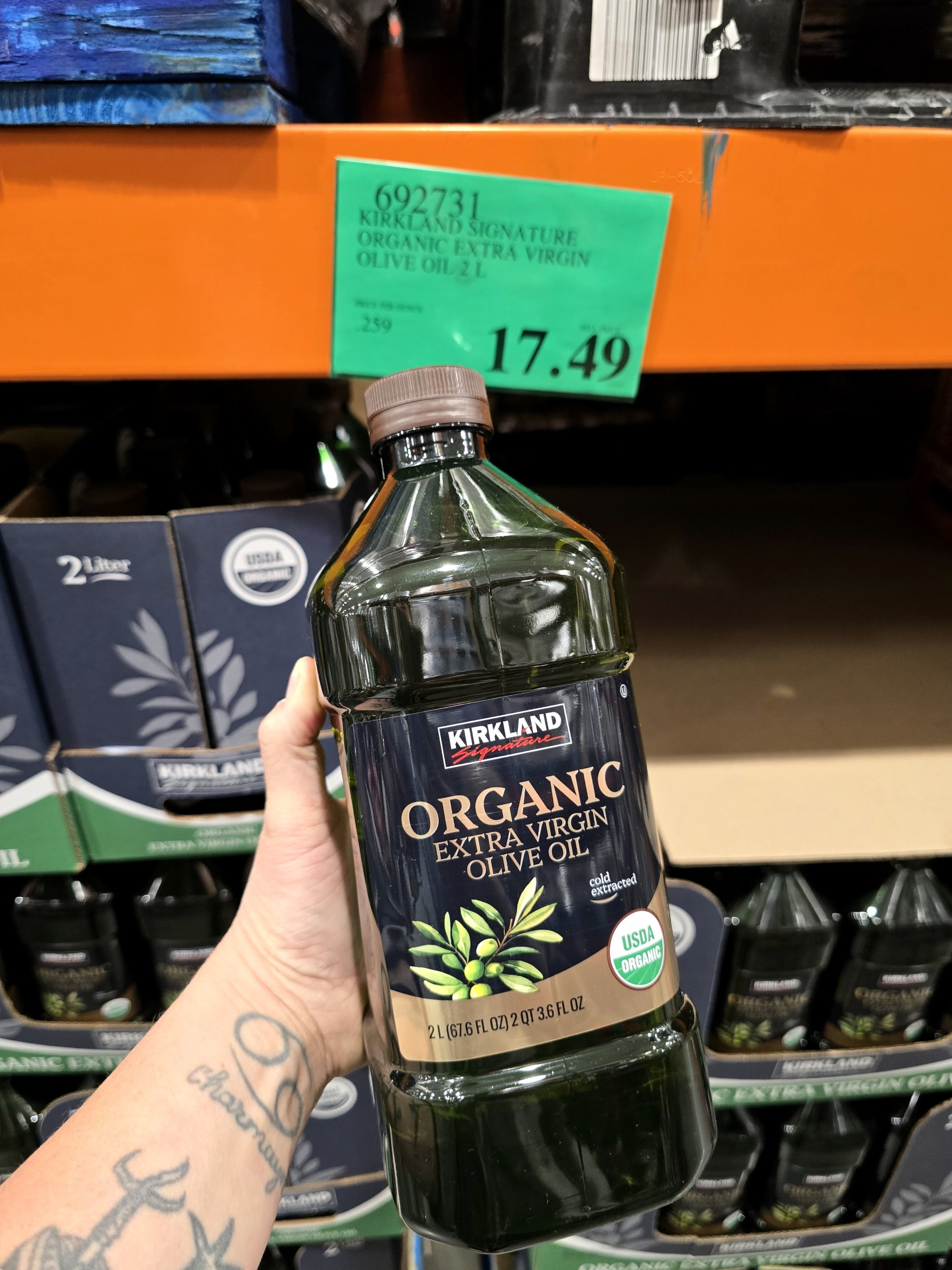
I have been going with the Terra Delyssa olive oil lately, but this Kirkland Organic one is also a really good option and comes in at about one cent cheaper per ounce than the Terra. I do prefer olive oil in glass bottles, but this one is still a solid buy. It also rates very highly in taste tests compared to regular grocery store olive oil and is far cheaper per ounce.
Just keep it stored in a cool, dark place. I like to pour it into an empty wine bottle, add a speed pour, and refill from this bottle as needed. Easy, practical, and it keeps the big jug out of the way.
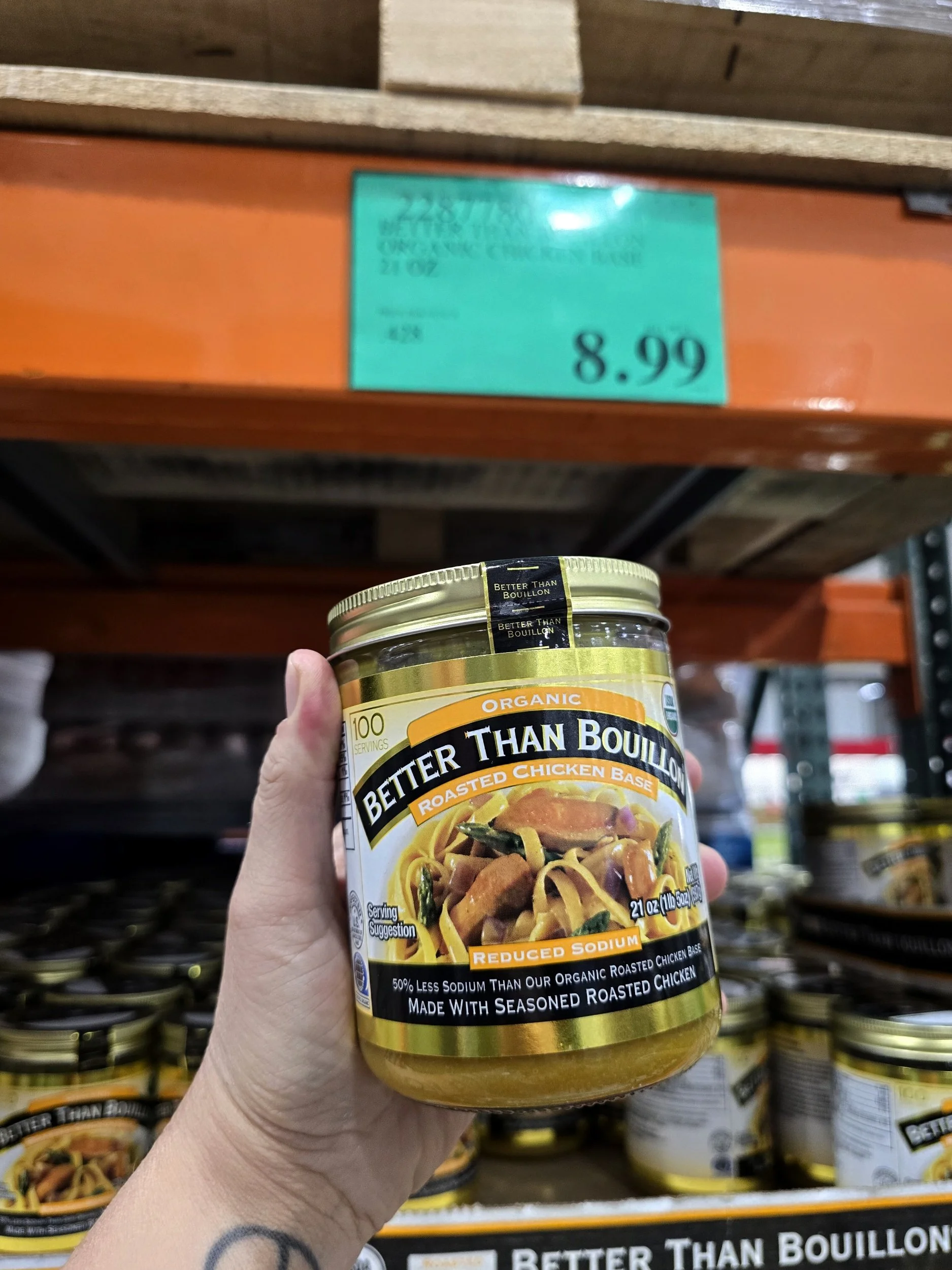
I like bouillon a lot. It adds a big boost of flavor very quickly and can make foods that already have all the veggies and meats your kids need taste a little more “store bought.” I do not know why kids are like this. At least mine are. And yes, I fed them all the weird foods and smoothies as babies, and here we are anyway.
And yes, I can absolutely make bouillon myself and I do love to. But I also spend a lot of time writing, creating, homesteading, housekeeping, and chauffeuring three kids around. So when I buy bouillon, I grab the organic ones from Costco. It is a huge bang for the buck, far cheaper than the grocery store, and it lasts forever in the fridge, easily a year or more if you use a clean utensil when scooping.
I do not use bouillon in place of stock, but I do add it to stock I have already made for that extra depth of flavor that kids seem to really like.
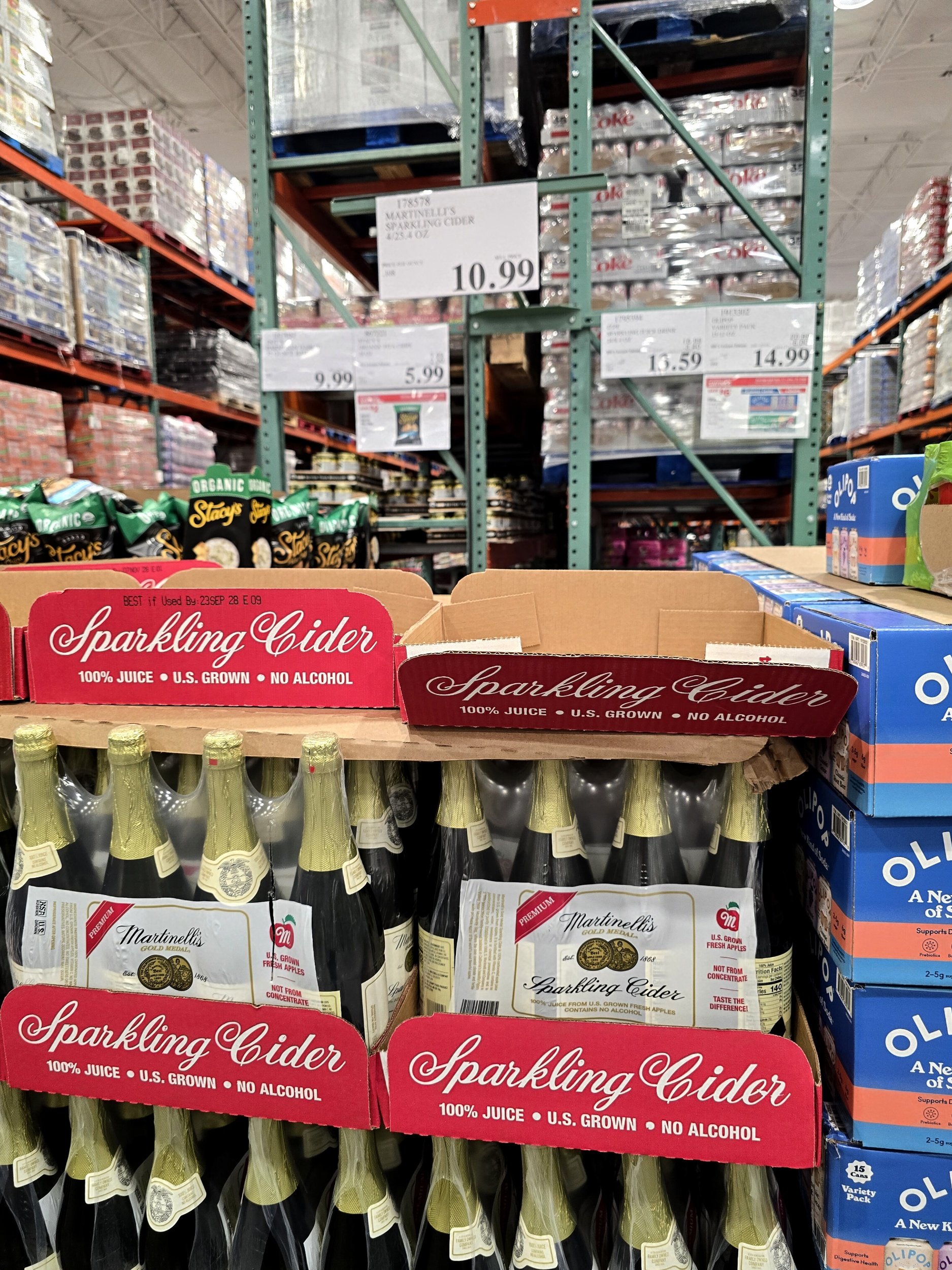
My grandpa always kept Martinelli’s on deck. It was the fancy drink at the kids table, or for people like my dad who did not drink. There is no added sugar, just apple juice and vitamin C. Plus, I am from Washington. I love apple anything.
This is a really good deal. We will probably open a few bottles and tuck the rest away for later. Stored in a cool, dark place, they keep for well over a year. I am pretty sure I drank bottles from the 80s sometime in the early 2000s at my grandpa’s house.
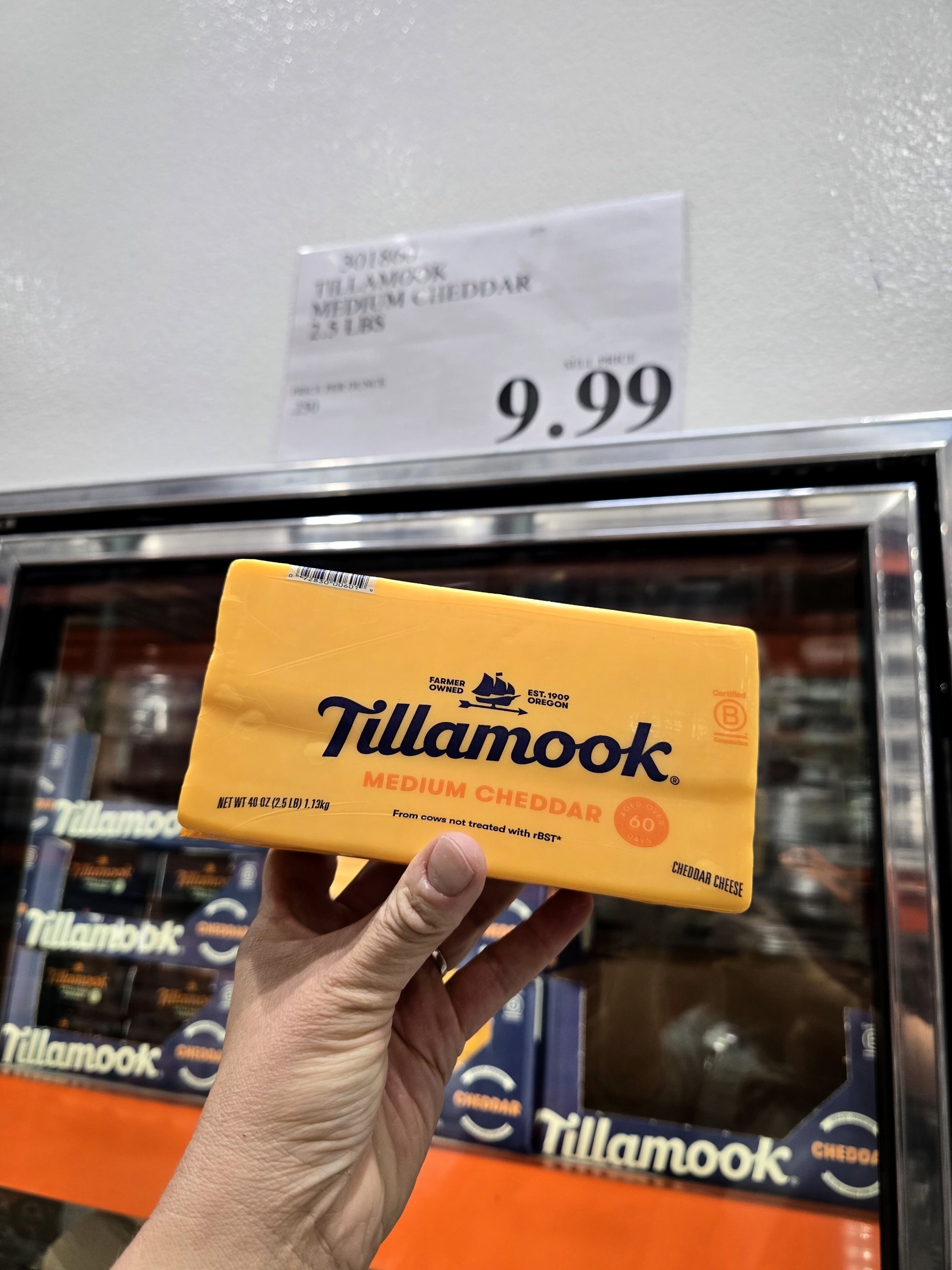
I grew up on a block of cheddar, and so will my children. I do not buy pre shredded or sliced cheese anymore. My son used to demand the pre sliced Tillamook, and one day I just decided not to buy it. He stopped caring, I guess.
Buying cheddar in a block is the best way to save money. At about $4 per pound, it is absolutely worth doing a tiny bit of work on your end. Buying smaller quantities or anything pre prepped costs at least twice as much. Pre shredded cheddar also usually has an anti caking agent dusted on it so it does not clump, but that same coating keeps it from melting as nicely.
Cheddar cheese freezes really well, too. You can prep it however you like, in chunks, shredded, or sliced. Wrap chunks or slices in plastic or waxed paper first, then store everything in a zip top bag. It will last at least a year in the freezer that way.
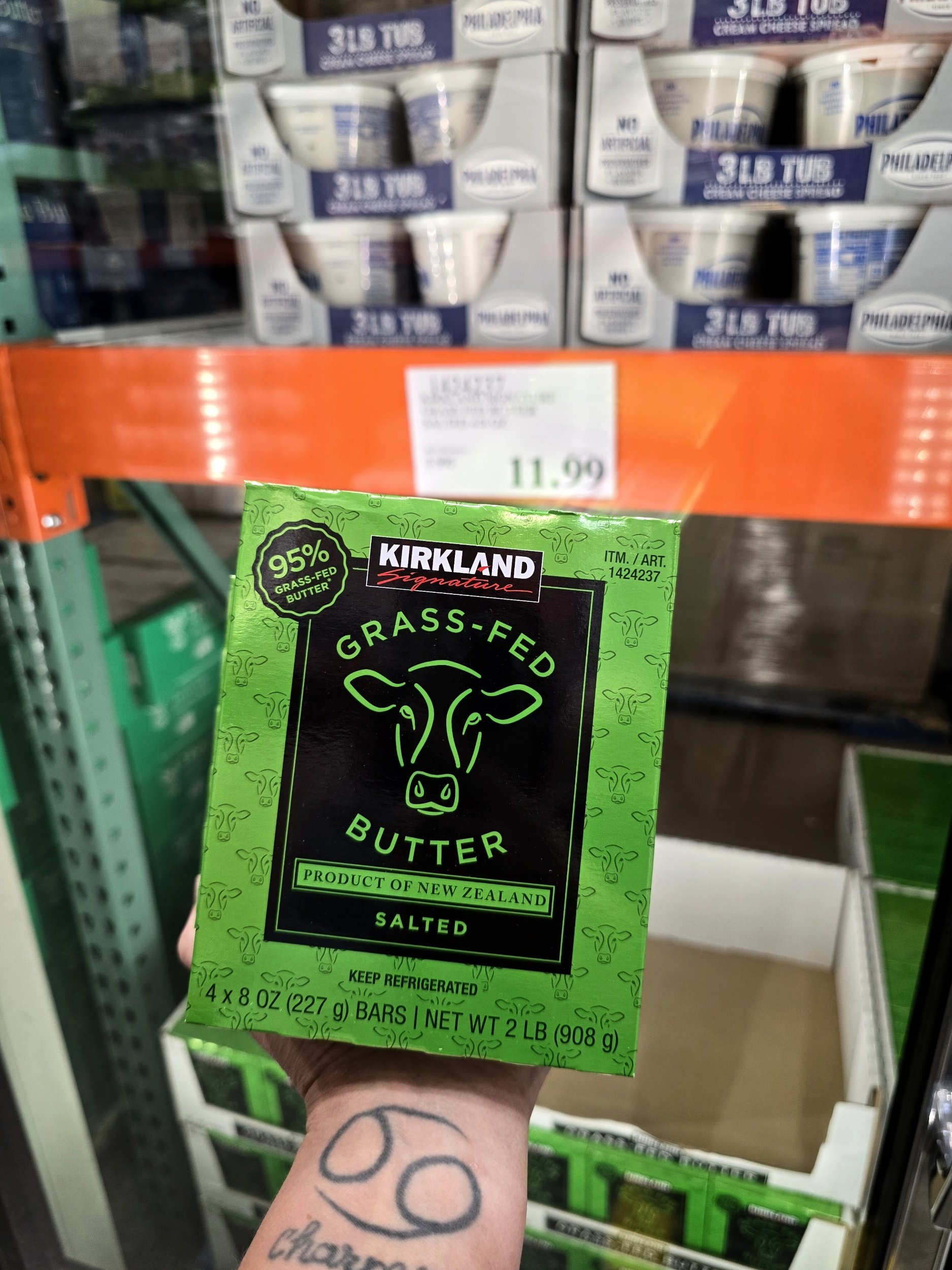
I am not thrilled about this one, but it is where we are at right now. When we lived in Whatcom County, I made all of the butter for my food business and for our home. At the end of 2021, the dairy I sourced cream from, Fresh Breeze, stopped production. I had been getting gallons of organic, grass fed cream for $16 each, produced just 15 miles from my kitchen and turning it into butter myself.
After that, I could not get an account with another local grass fed dairy that had the capacity to separate cream, demand was just too high. I continued making butter with Darigold cream, but it was never quite the same. Now, here in New Mexico, it is hard to find local milk at all, let alone organic, grass fed cream. So for now, I buy the Kirkland grass fed butter.
I really look forward to the day I can make butter again, but until then, this does the job. Butter will keep in the fridge for a month or two. After that, it can start to absorb off flavors and taste a little rancid, not in a way that will make you sick, just in a not fresh way. It does store beautifully in the freezer for at least a year. The price is very good for grass fed butter, and freezing lets you keep what you will not use right away.
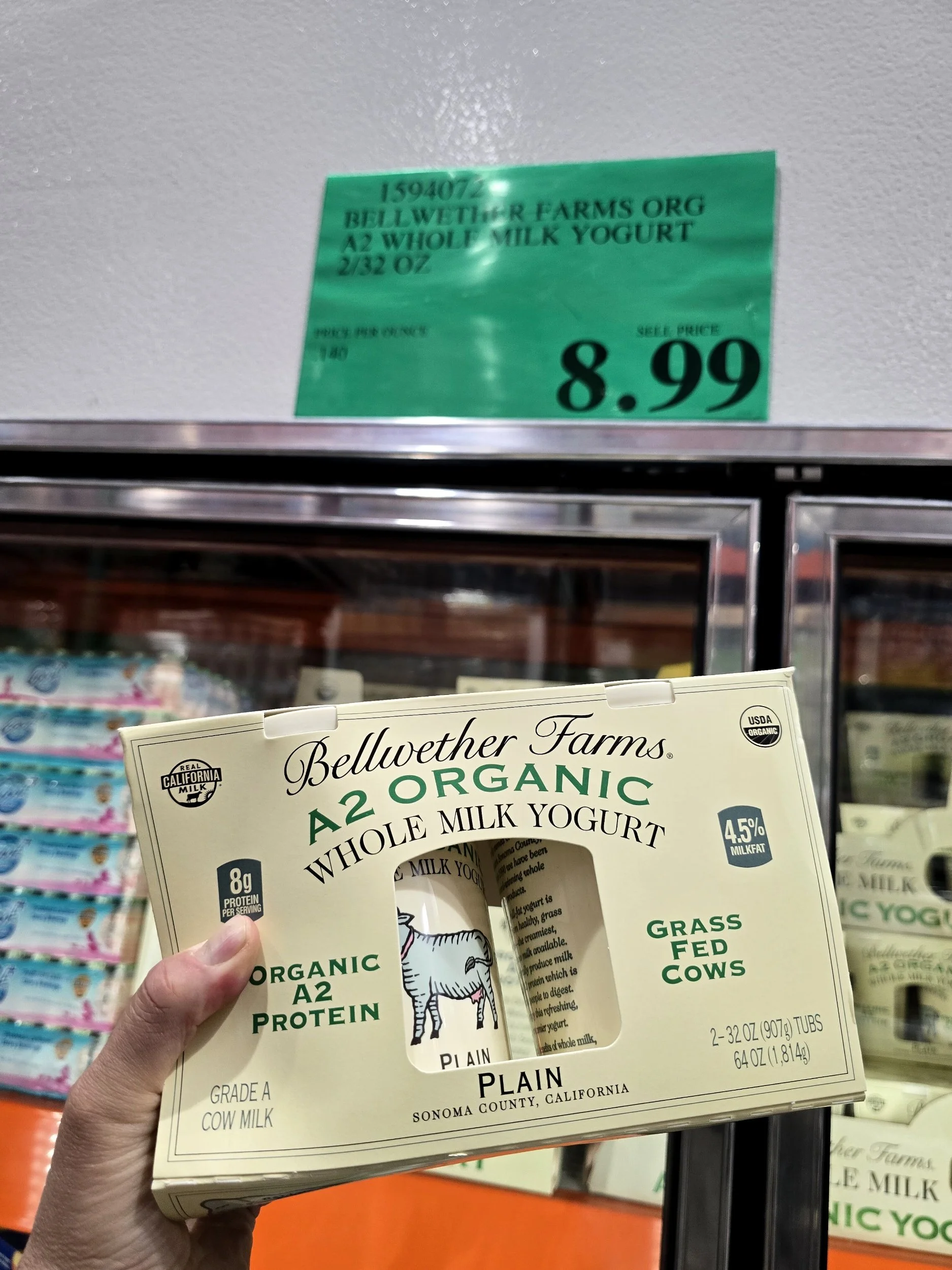
This whole dairy section is a bit of a sore subject for me. I realize now more than ever that I belong in dairy country. When I will be back there, I do not know. Until then, I really like this yogurt. It is extremely reasonable for being A2, organic, and grass fed, at about $4.50 a quart.
We easily go through two quarts a week, but unopened it will last in the fridge for at least two months.
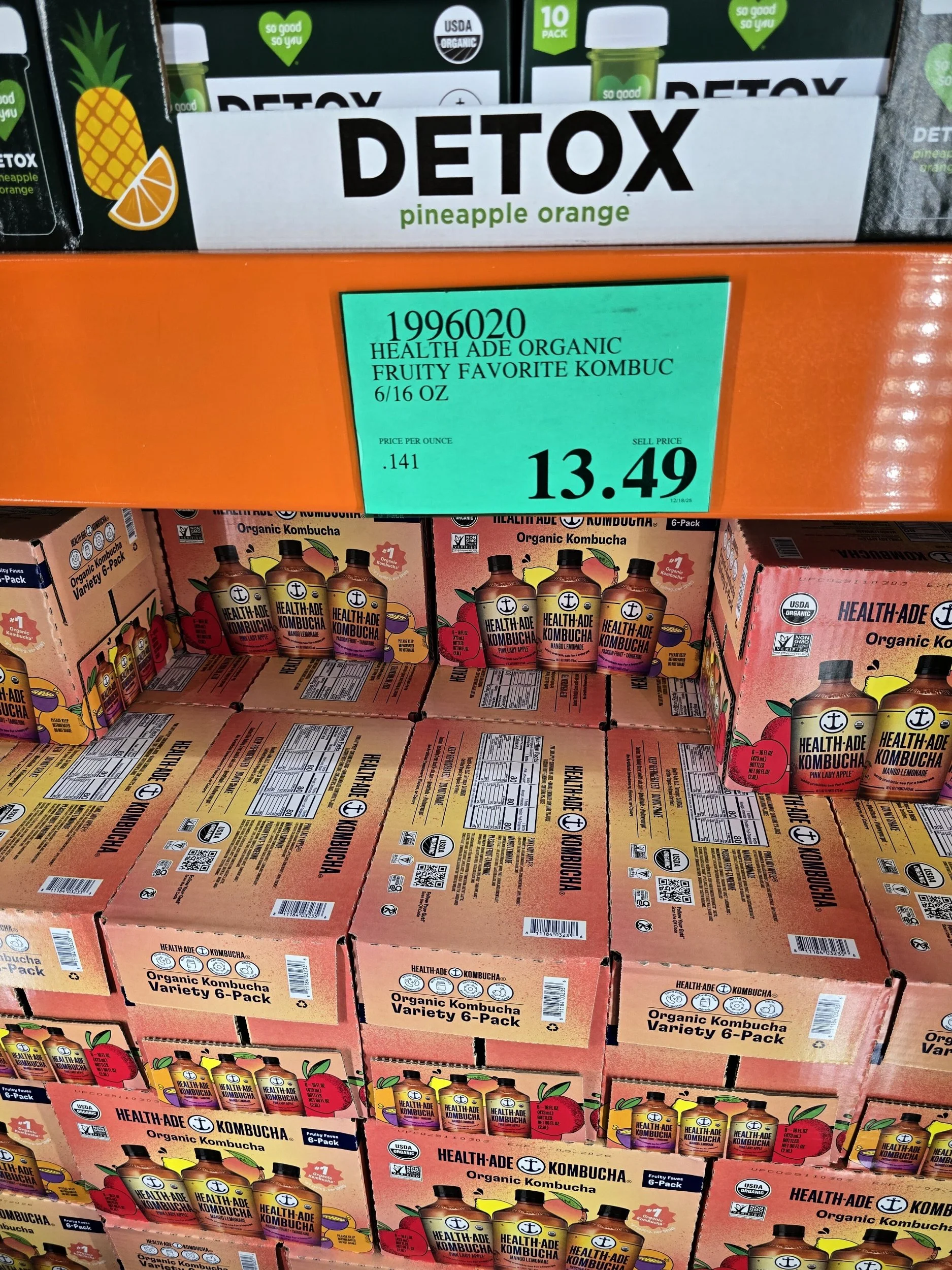
Again, this is another thing I could make myself, and love to, but just do not right now. I like this kombucha brand, and at about $2.24 a bottle, it is roughly $2 cheaper per bottle than at the grocery store. There are only six bottles in a pack, so it is not hard to find room for. In the winter, you can keep it somewhere that will not freeze but is not heated either.
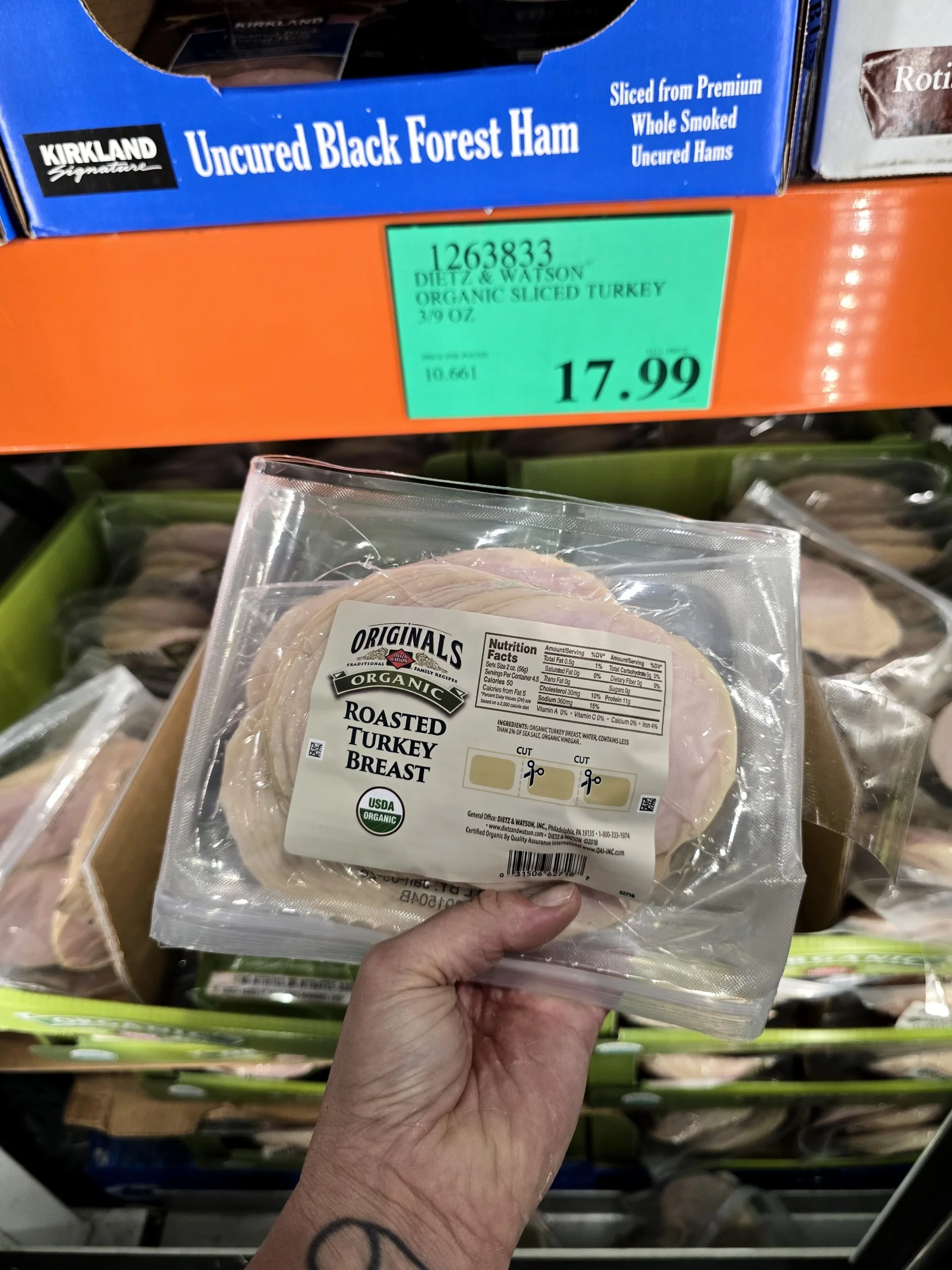
There is not much to say about this one other than this is the turkey my son will eat. It is organic, which helps take the edge off the processed food guilt spiral, even though we all know at this scale organic is mostly a labeling exercise and not a magic health switch. That said, the ingredient list here is very straightforward. It is just turkey, water, and sea salt. No nitrites or nitrates, not even from celery. It comes in three separate packs, which I like, because I can freeze the two we are not using.
Unopened, I would say it lasts about a month in the fridge. Once opened, about a week. In the freezer, easily a year. I would love to roast and slice my own turkey breast or roast beef or whatever, but our house is still very much a construction zone. The kitchen serves multiple purposes and is wildly inefficient, with very little storage beyond normal day to day cooking.
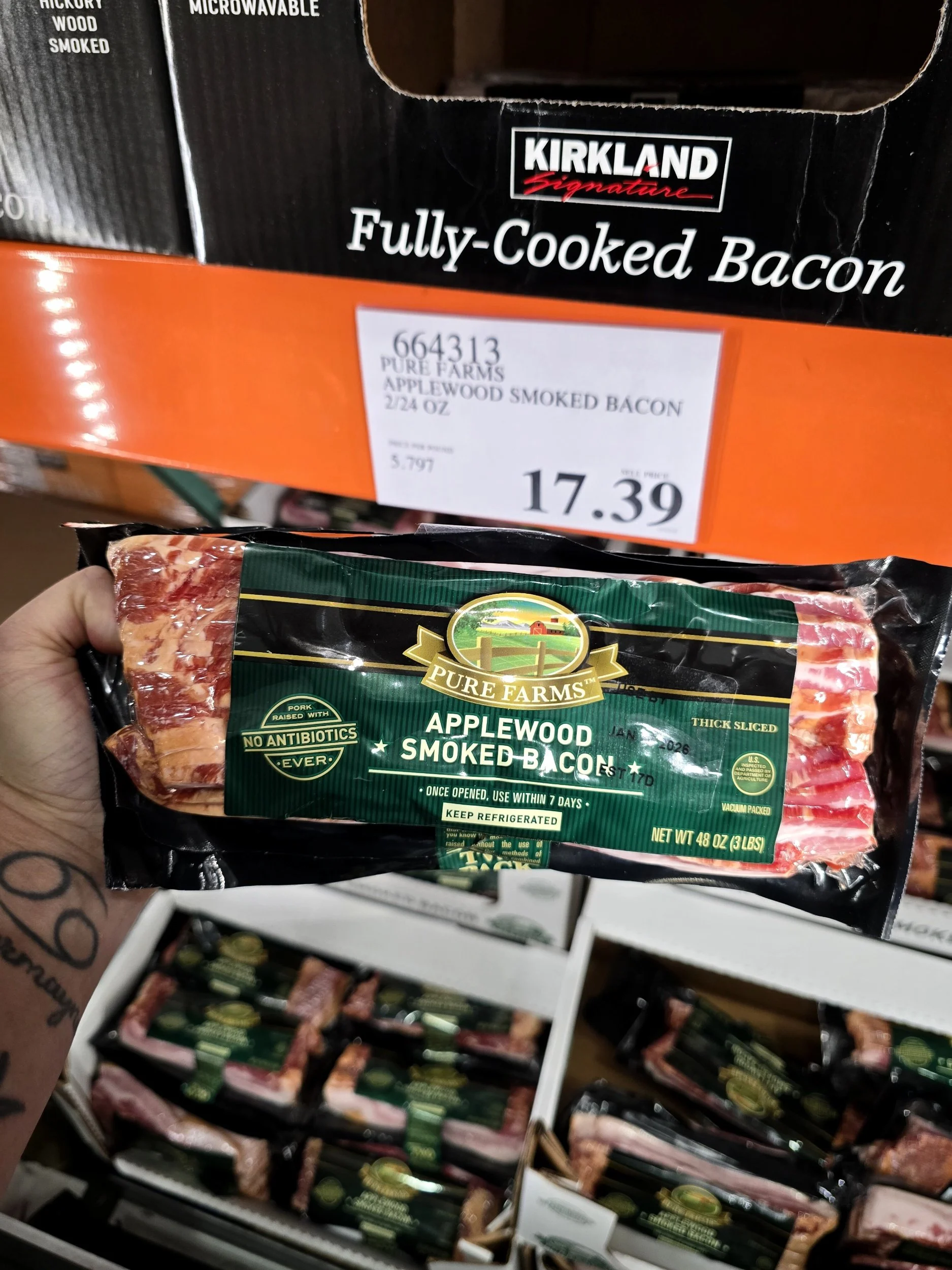
I don’t always buy bacon, maybe a few times a year. But it is around the holidays, the kids are home more, and when I do buy bacon, this is the one I buy. Bacon from a pork share is infinitely better than anything you will find at a grocery store. Anyways, this one is thick cut, the ingredients are relatively simple, and my son really likes floppy bacon. This one does floppy very well.
I tried the uncured, sugar free bacon once and it was awful. “Uncured” does not mean preservative free. It usually just means the bacon is cured with celery leaf or celery powder instead of conventional curing salts. Celery naturally contains nitrates, which convert to nitrites during curing, so it is still doing the same job. I am fine with uncured bacon. I draw the line at sugar free. That is ridiculous.
These packs last about a month in the fridge unopened, around a week once opened, and a year or more in the freezer.
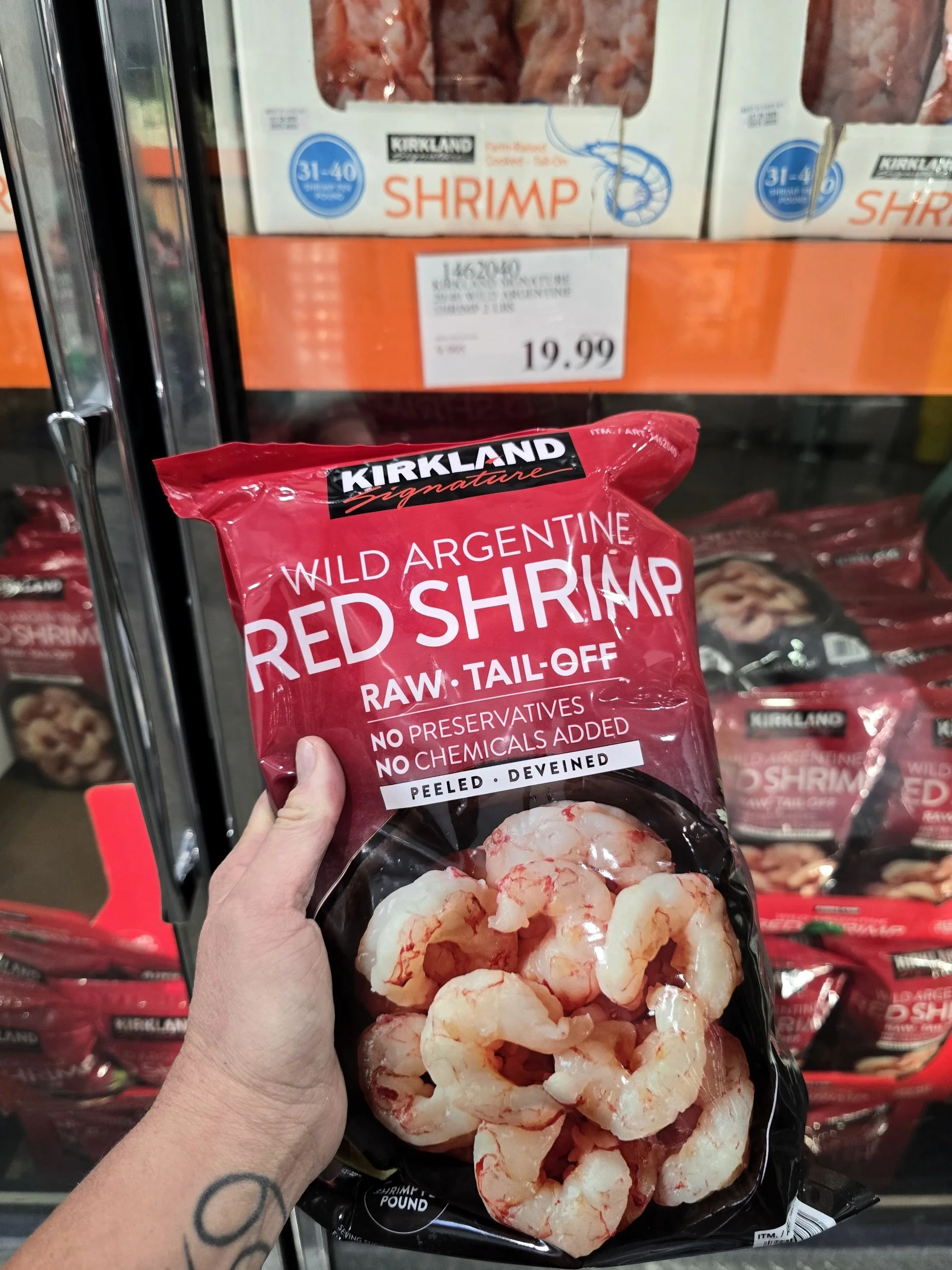
This is another rare splurge for me. I gravitate toward wild meats and seafood whenever I can. These are from Argentina, which is really far away and definitely on my mind as I am buying them, but sometimes I want shrimp, and wild caught is still much better than a lot of shrimp farming practices. Unopened, these store in the freezer at best quality for about six months or so. Once opened, keep airtight, or portion into separate airtight packs for portioned use. Twenty dollars for a two pound bag of wild shrimp is pretty good.
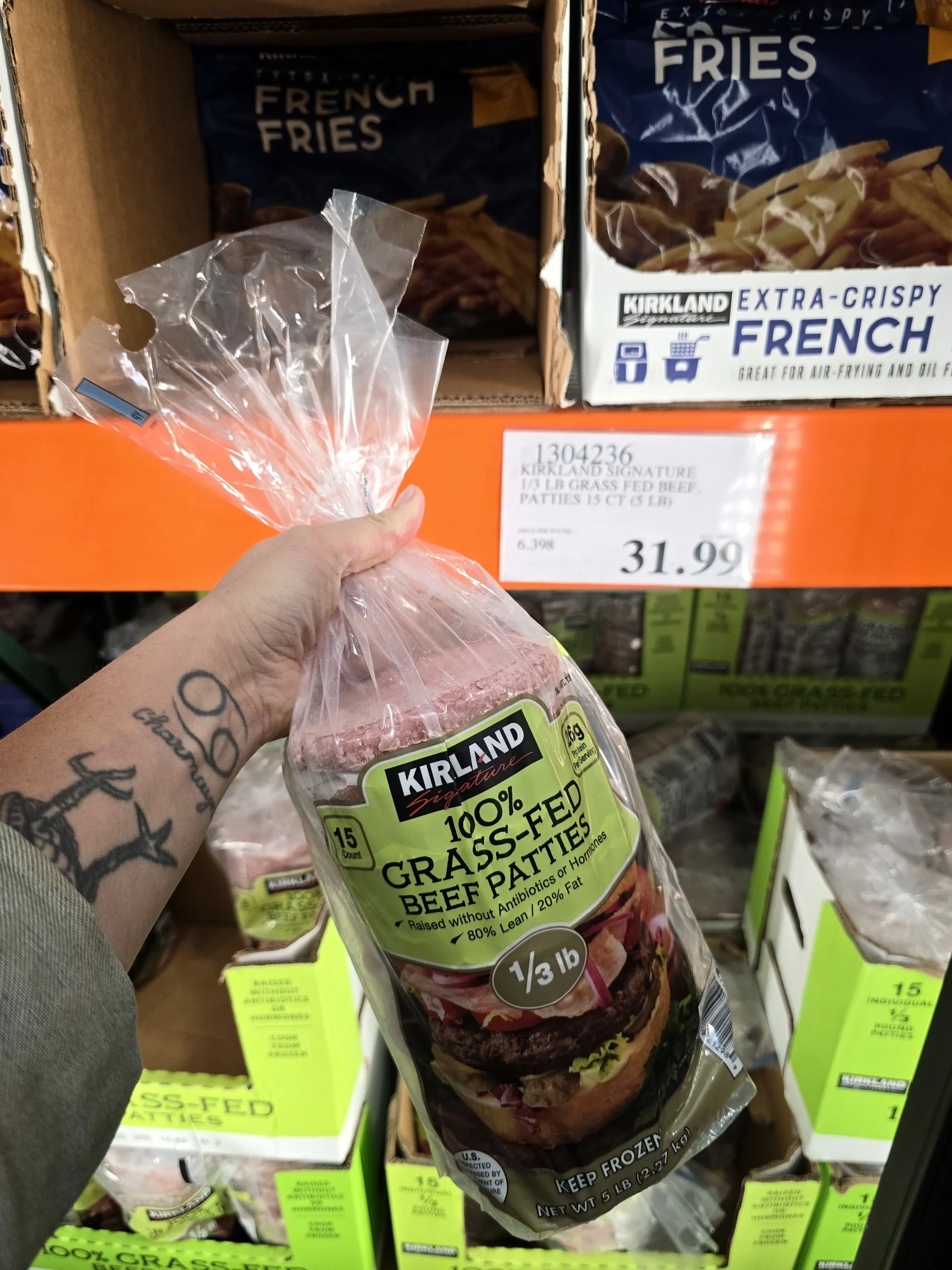
My kids will eat these any time of day. They are pre-formed, and I toss them into a skillet straight from frozen. They take about ten minutes to get a good sear. I will always say that I prefer a beef share, but kids need something filling, simple, and with enough protein to balance things out, and these work.
Unopened, they keep well in the freezer for about a year. Once opened, just keep the bag shut tight and you have a couple of months. That said, we go through a pack in about two weeks.
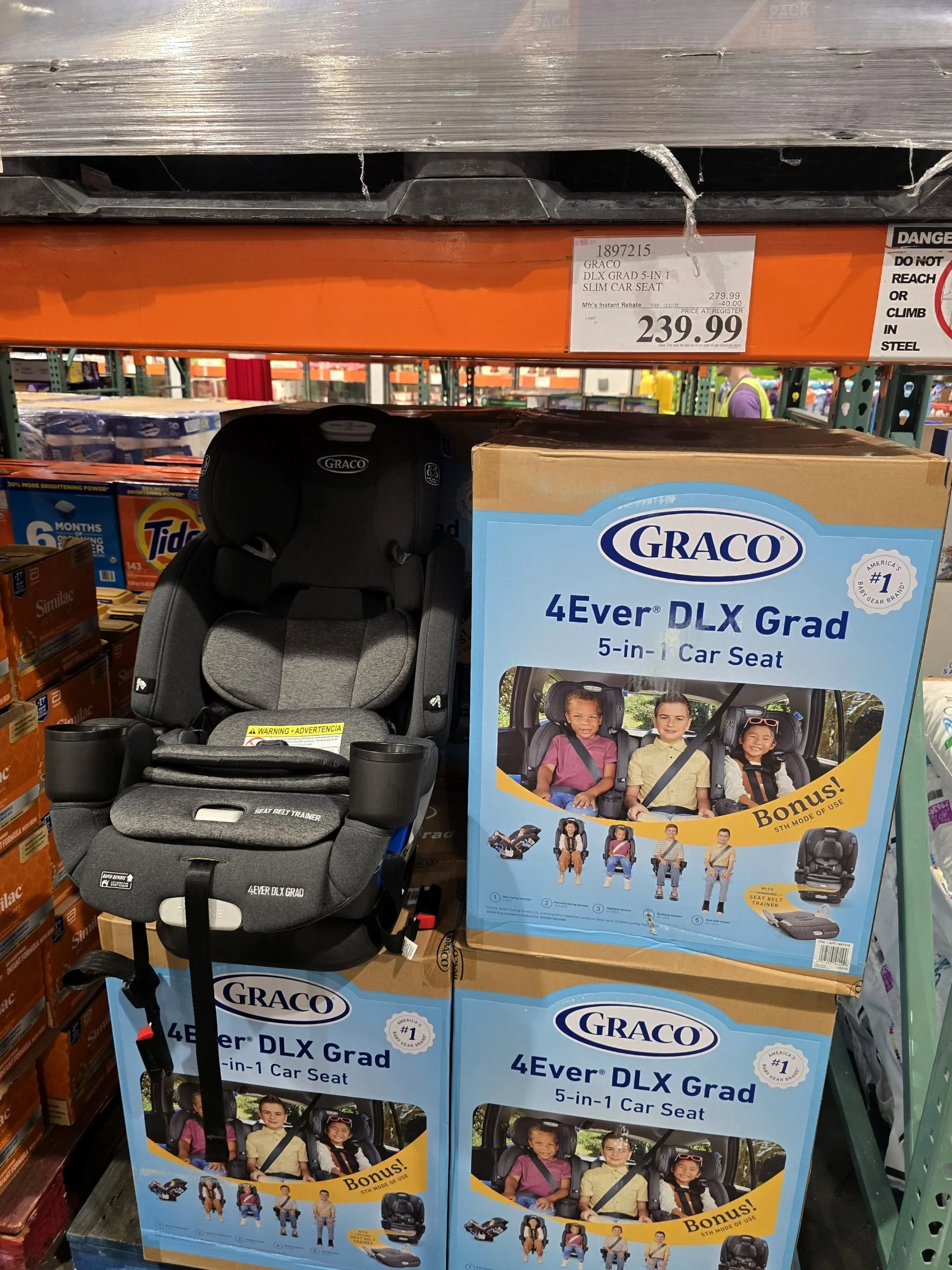
This is the car seat I got for my daughter and will probably get again for our baby once we get a little more use out of the bassinet style seat that was his sister’s. It rates well, and obviously car seats are a very personal decision. I am not endorsing or promoting anything here. I am just sharing that this one fell within the safety range I am comfortable with and works for a wide range of sizes, which helps reduce both waste and cost over time.
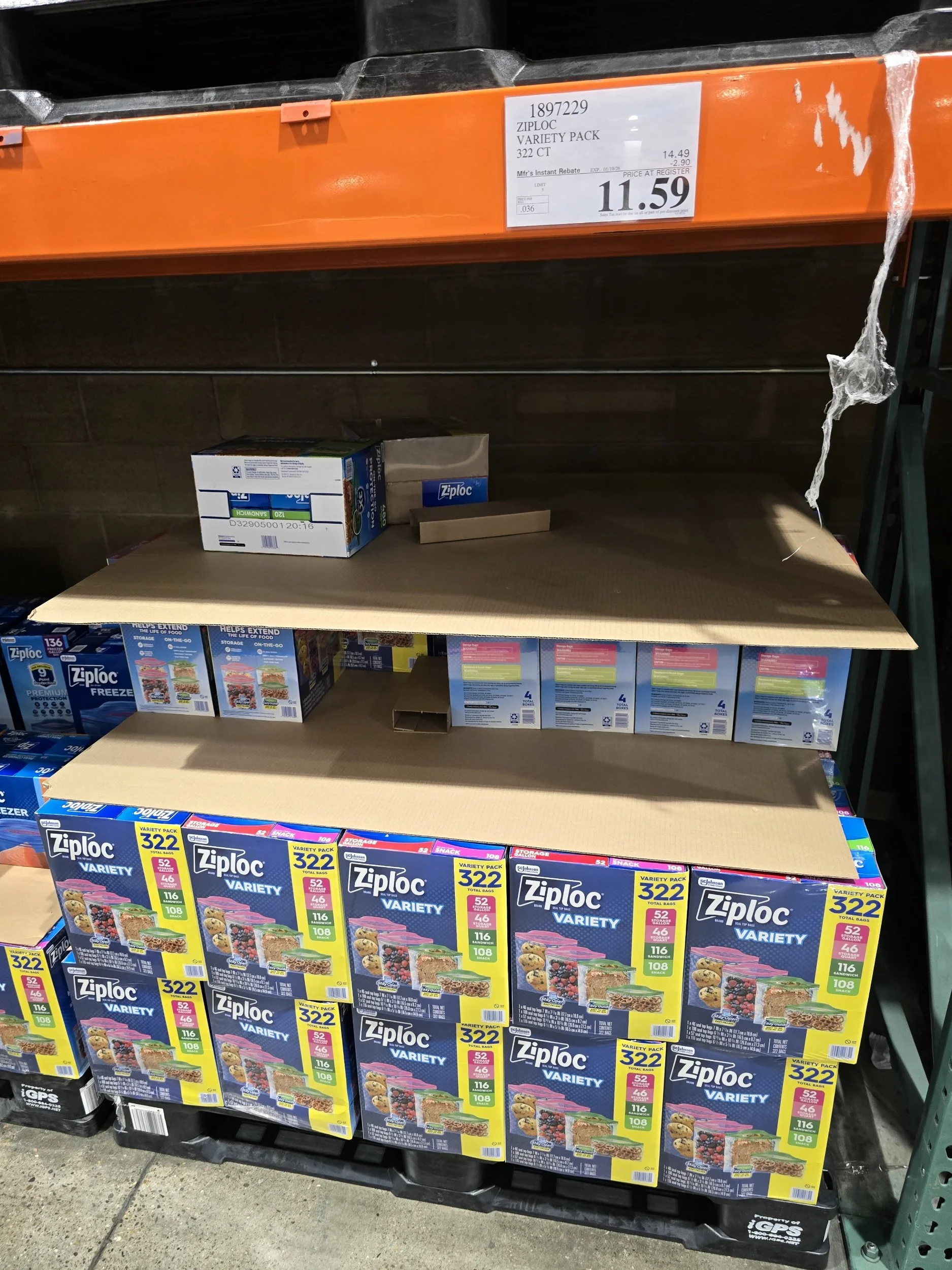
This is the best deal on Ziplocks for food storage. I know there are a lot of ways to reduce waste and use washable bags, but we do not have a dishwasher and I cook around three meals a day. We go out or get takeout maybe once or twice a week. I have also found that the washable bags tend to get kind of funky after a while, and I like to think using Ziplocks to preserve food I grew, sourced locally, or prepared myself is at least somewhat of an offset. Maybe that is just a foolhardy consolation I give myself.
And at heart, I am still a cook who spent years working in restaurants, and I grew very fond of Ziplocks.
Someday I would like to reduce how much I use them, maybe even cull them from my kitchen altogether. But for now, this makes a wide range of food storage accessible to me given my time and equipment constraints.
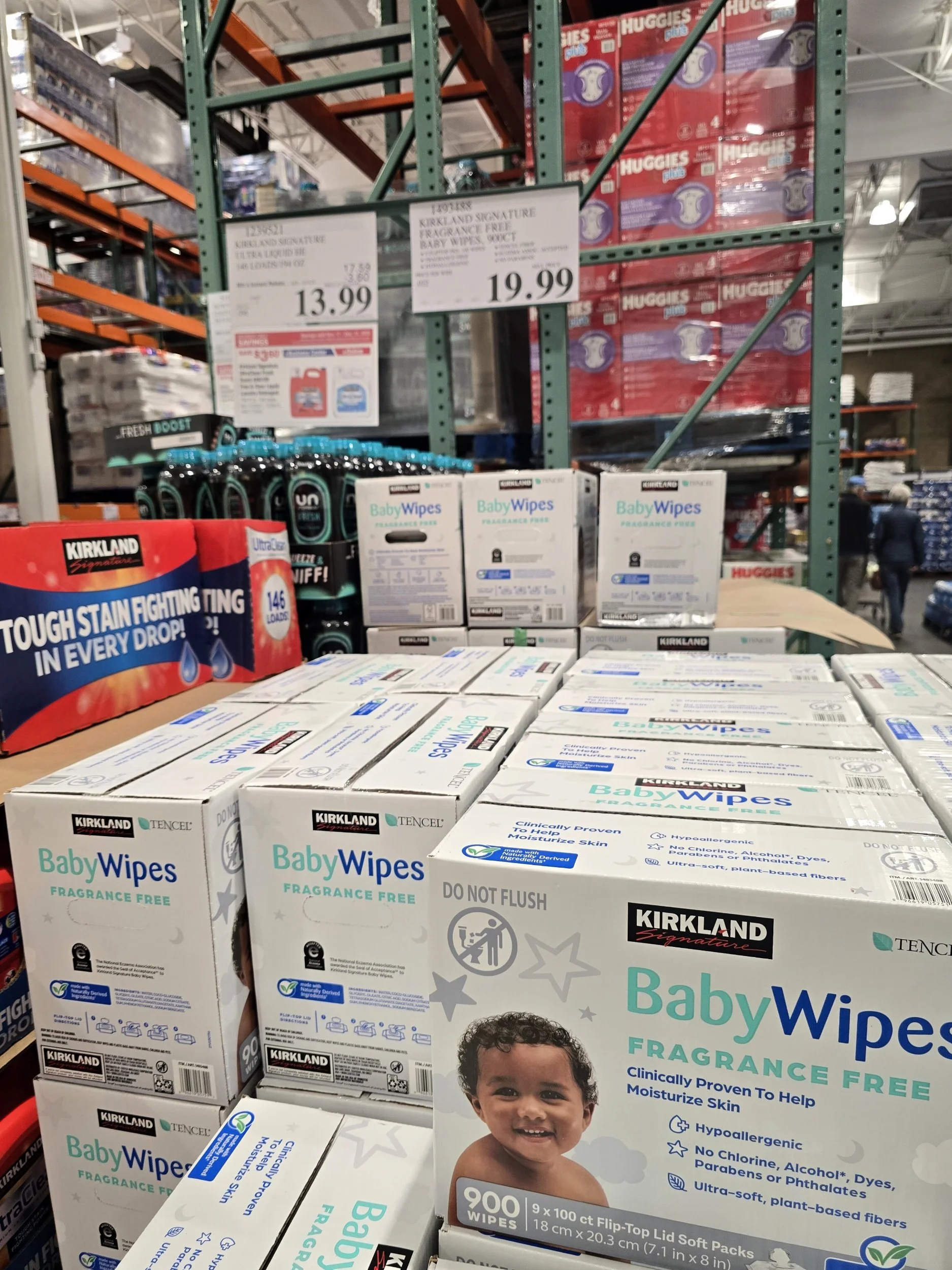
Yet another contentious purchase in zero waste circles. At home, I do use reusable wipes when I can get half a mind to. With my first, it was probably about 80 percent washable wipes when he was really little. With my second, maybe closer to 50 percent. And now, I am doing my best with a very, very small support circle here.
These come in huge packs, and each one is about double the size of a normal pack of wipes, so there is a big bang for the buck. The ingredients are relatively clean, and right now, this is what works for our family.
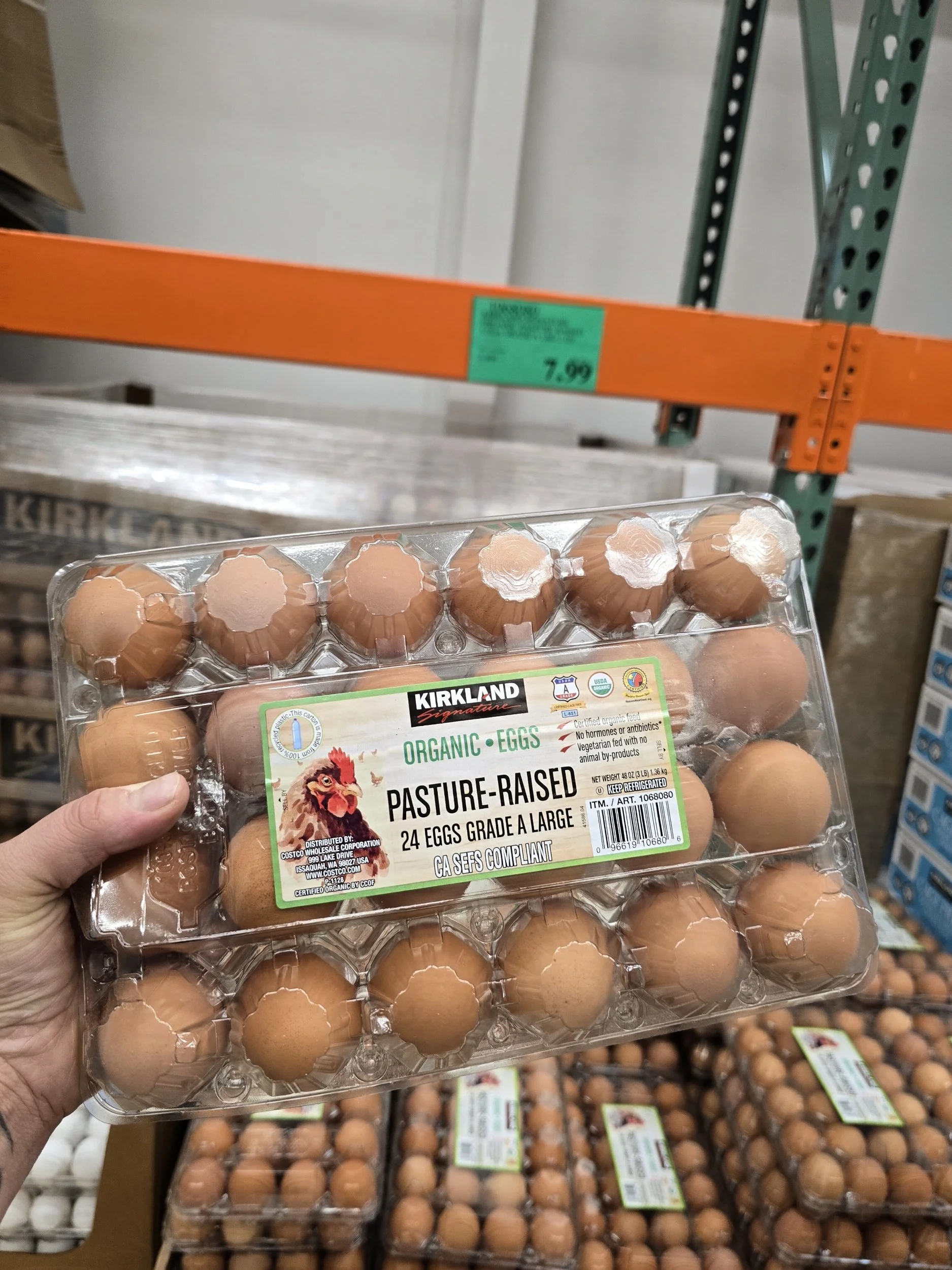
Shock and horror, the woman who keeps big flocks of chickens is buying eggs.
I let my older hens rest in the winter. I do not provide supplemental light and I let their bodies tell them what they need to do. The older hens get, the fewer eggs they lay overall, but especially in winter. All of my laying age hens right now are at least three years old. I did not get any new birds last year, and my current new flock still has about a month to go before they start laying.
This year I focused on meat birds and did not bring in new laying stock until August. I was pregnant and had to pick and choose my battles. I have had next to no eggs laid since late October or November, and I pulled my last jar of frozen eggs out about two weeks ago.
I would love to buy local eggs, but they run about $10 a dozen for organic eggs, which is completely reasonable for the amount of work that goes into feeding and caring for hens on a small scale farm. What I cannot afford is to both keep a flock of birds that are not producing and also spend $10 a dozen on eggs. That would be close to $80 a month for our family.
When we are back in eggs, I need to be much more diligent about freezing eggs in the spring and summer to get us through winter. The young birds coming into lay in January or February should lay next winter, but it is never a guarantee. I will also be getting more chicks this spring so we are not left relying on store eggs.
If you want to naturally keep egg production up at home, you really do need to bring in new chickens every year. They will lay steadily from the time they start until their first molt, winter or not. That gives you roughly twelve to eighteen months of prime laying. After that, you can keep older hens or process them for the freezer. Or you need a large enough flock that spring and summer production creates a surplus you can sock away. I have chosen to keep all of my hens and add to them. The older hens I have now will live out their days here. They have been with me since Washington, moved to New Mexico with us, and have done their duty many times over.
I have compared these eggs to ours, and there is no comparison. When you get to choose the feed, allow birds to roam and forage, and let them eat bugs and live like chickens, the eggs are just different. Home raised, well cared for birds will always beat grocery store eggs, even if the package says “pasture raised.”
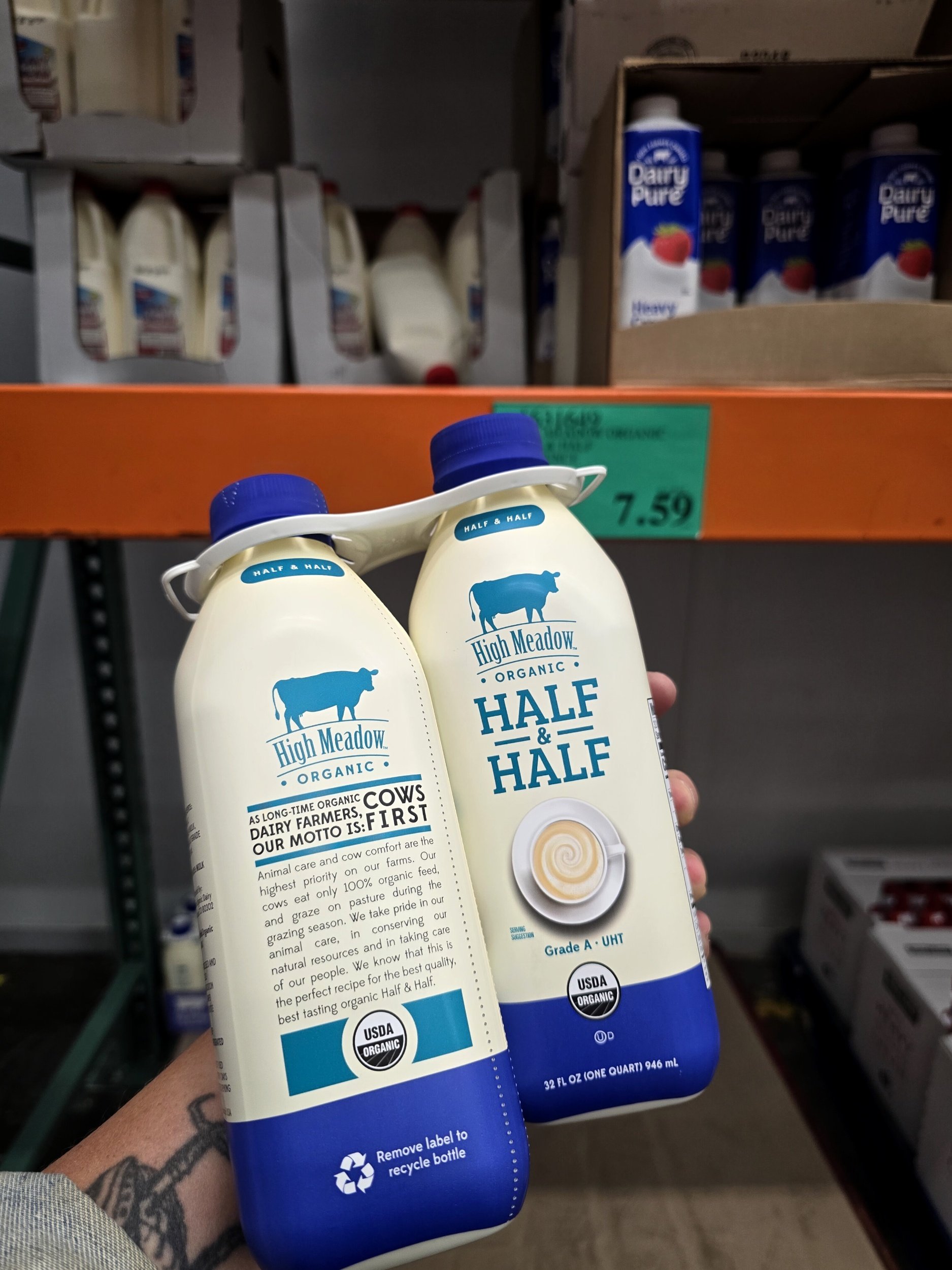
More dairy woes. I would have never dreamed of buying half and half at Costco in Washington, but here we are. Not in Washington. This one comes from not far away in Colorado. It’s fine, it’s organic, and it is less than $8 for two quarts. If I have to buy it at the store, I am not going to pay $4 to $5 per pint. I use a lot of half and half, and that would add up fast.
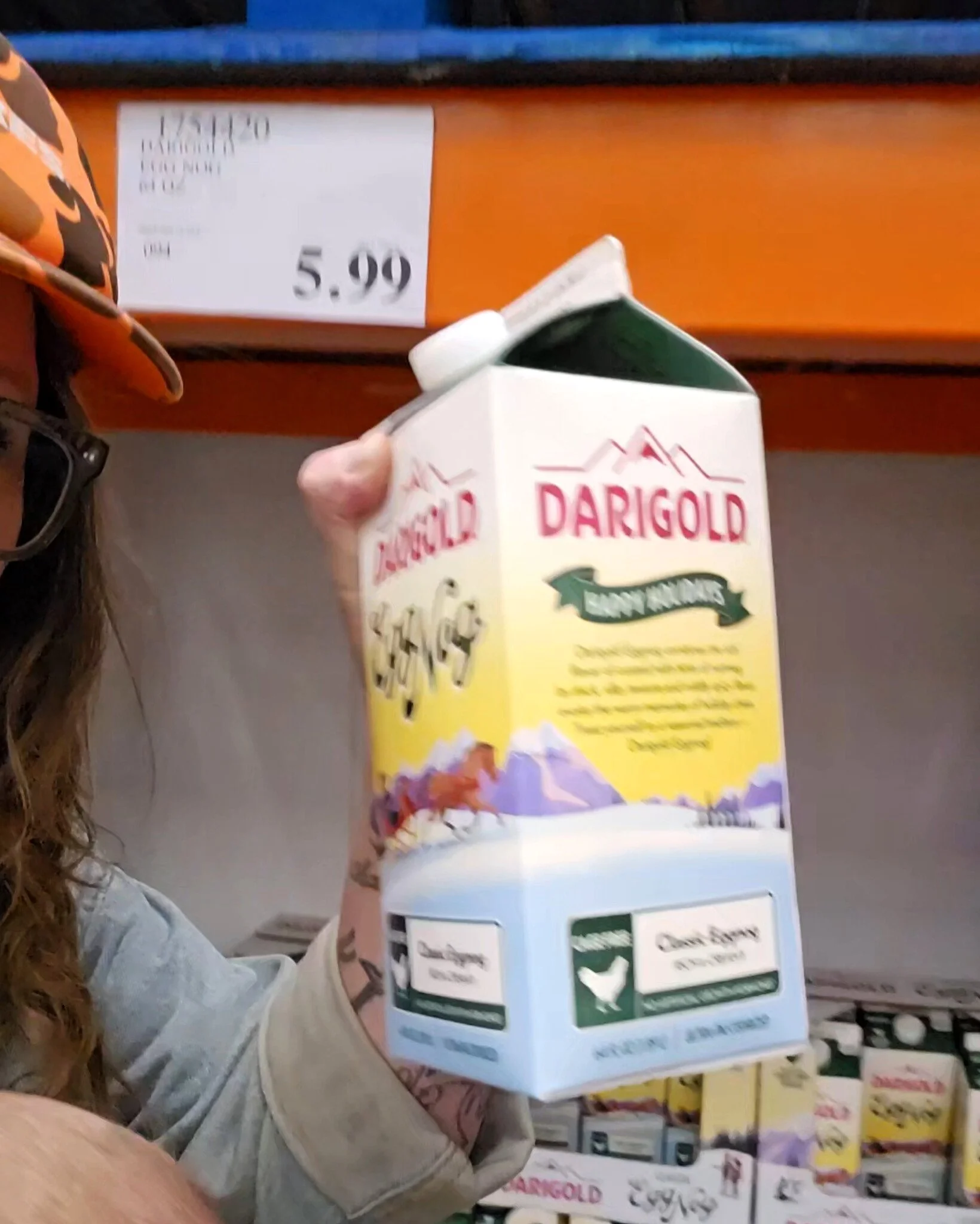
I forgot to take a picture of this one, so a screen grab from a video will have to do. If I see Darigold down here in New Mexico, I am buying it. Especially eggnog. I love eggnog, and I do not care what anyone thinks about that.
Which is funny, considering that in Washington I avoided Darigold at all costs. I do not love milk from a bunch of different farms blended into one homogeneous product. Dairy has terroir just like wine does. I also do not love how Darigold treats their co op members. These co ops were sold the idea that this was how they could all survive, yet in many ways it has hollowed out the micro dairy and keeps producers under a thumb.
All that being said, I have dear friends who produce dairy for Darigold. It comes from land that I am from. So I like to think that somewhere in there is a speck of milk from someone I love and a mineral or two from soil I cherish.
Make that make sense. You cannot.
Anyways, six dollars for half a gallon of Darigold eggnog is a good price, and it will not go bad before we finish it. I buy eggnog maybe once or twice a year.
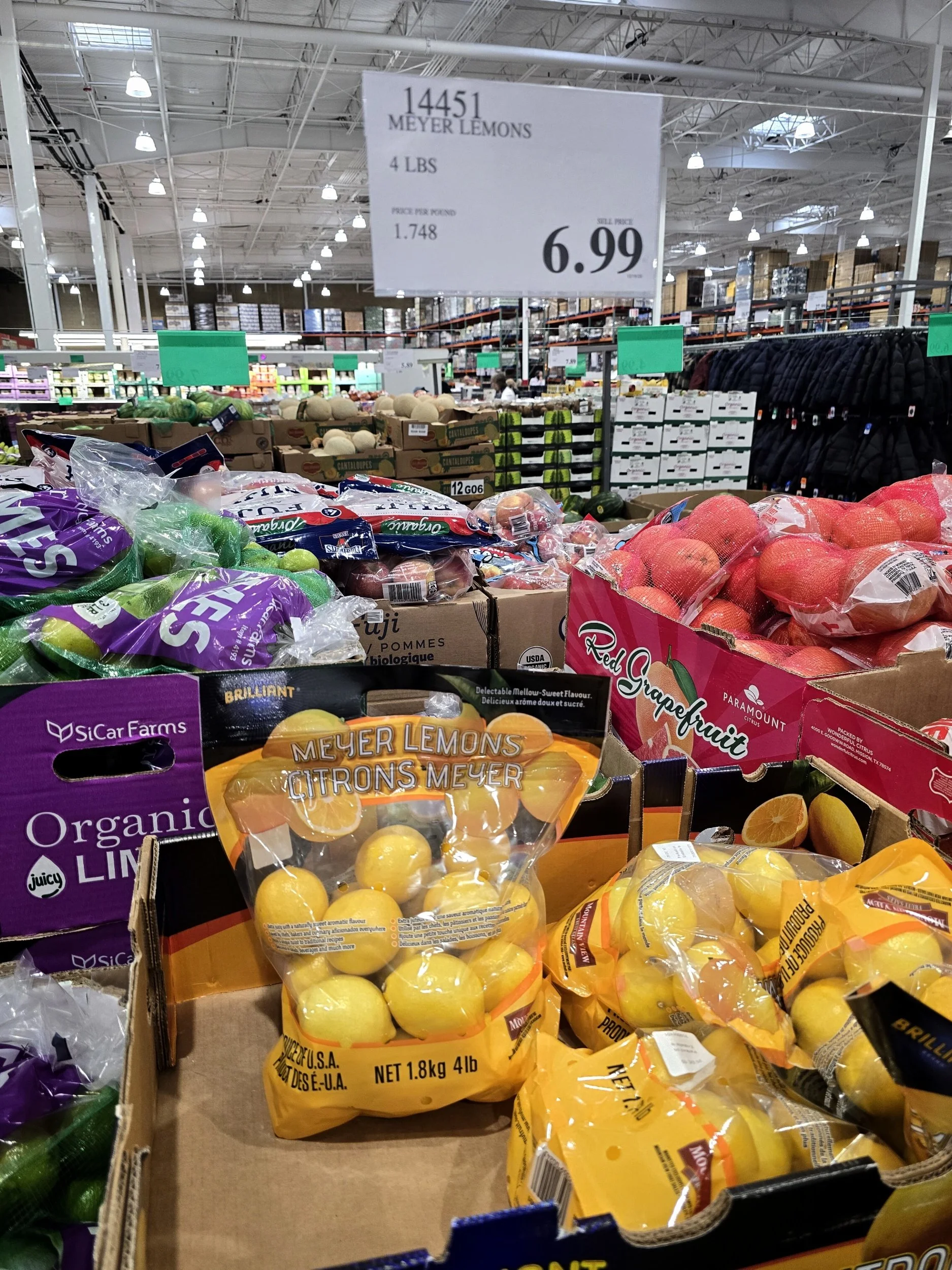
Although citrus is commonly associated with summer, its season is actually fall and winter. These come from not far away in California, and this is when they are at their best. Costco very rarely has Meyer lemons, so I grabbed them.
I tend to keep lemons around most of the time for near daily use, but I will probably zest, juice, and freeze most of these to use in desserts and other cooking projects and to stretch them out as much as possible. Stored in the fridge, citrus keeps really well as long as it is not too moist or too dry. Easily two months when kept cold and checked occasionally.
If you go through a lot of lemons, this is the best way to buy them versus purchasing individually. It is easy to pay a dollar or more per lemon at the grocery store.
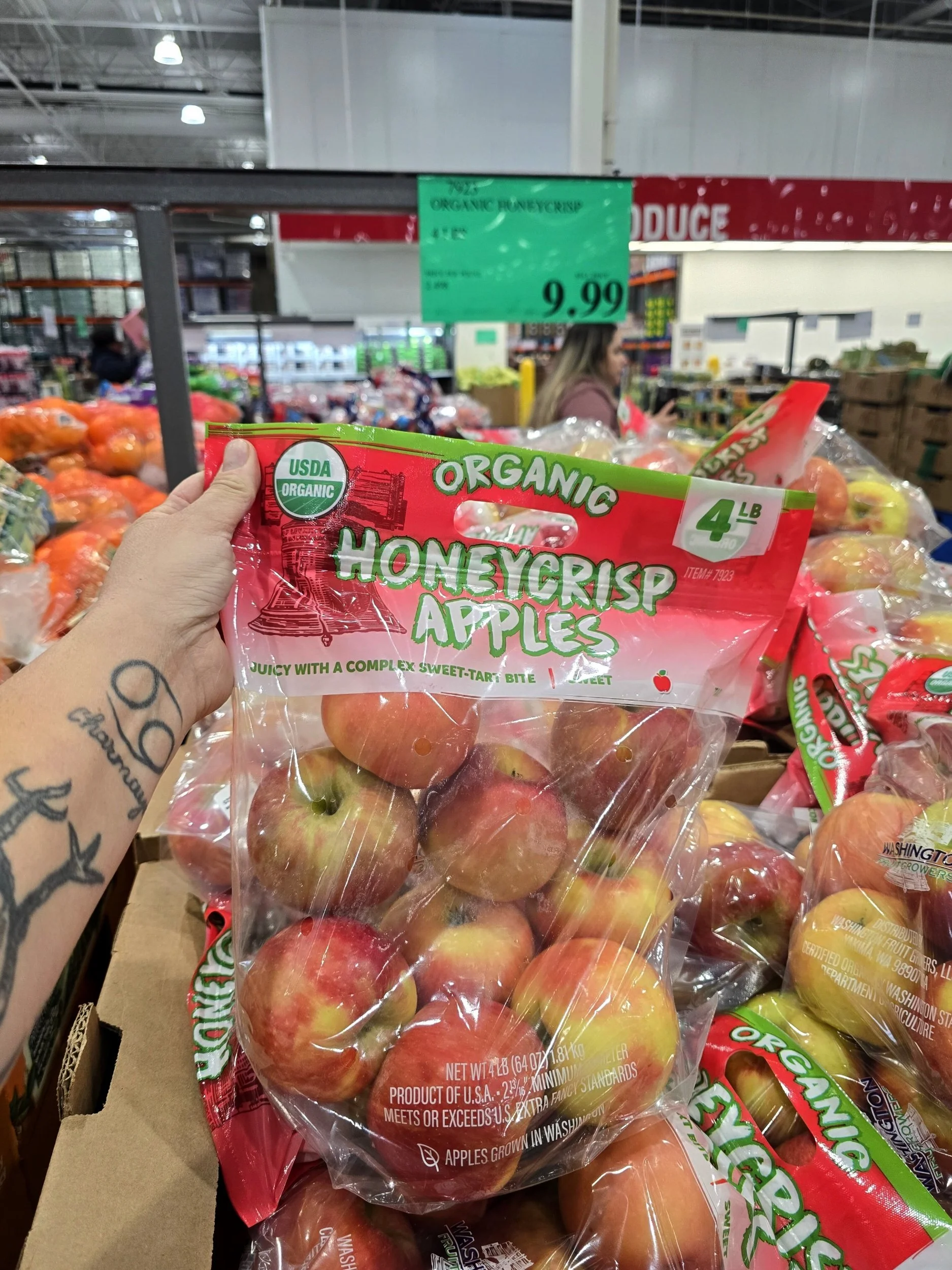
Ten dollars for four pounds of Honeycrisp apples is a massive savings, especially when you consider that my kids will polish this bag off in about two to three days. I did buy a box of apples from a local orchard this fall. We live in a small bastion for orchard fruits here in New Mexico, and it kind of reminds me of a little Yakima. I still have about half of that box left, which I save for special things.
But my kids are absolute fruit monsters, and money at the end of summer was really tight. My husband switched jobs not long before we had the baby and had to take some time off, and I have not brought in much income this year. I could not afford to buy all the apples we would need to get through the whole winter, so Costco apples it is.
And hey, they were grown in Washington, and I like that.
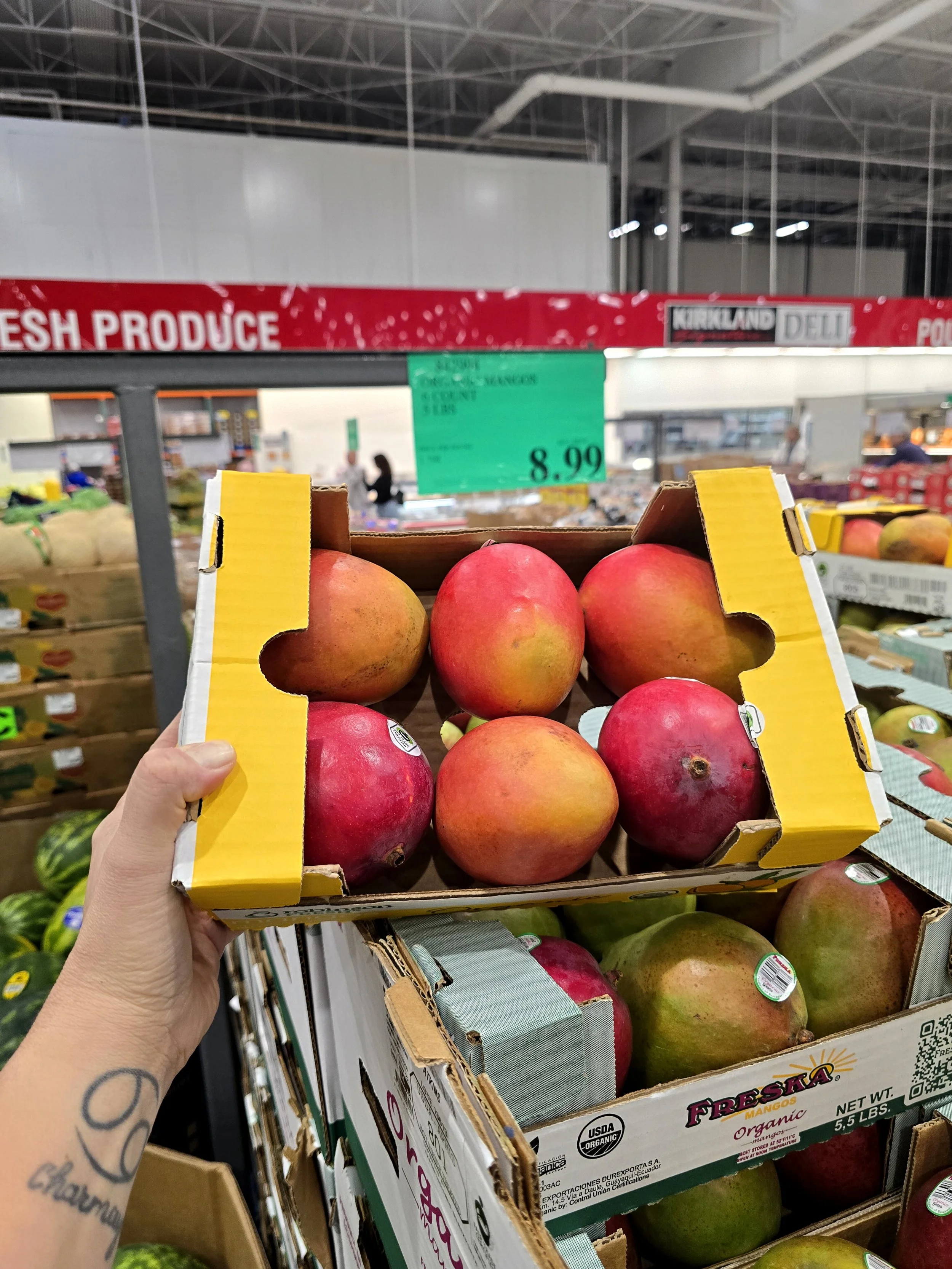
Similar to citrus, mango season is fall and winter. California and Mexico are relatively close to New Mexico, so when they are in season I will usually buy a case or two of mangoes a year. These, unfortunately, were awful. Brown in the centers and basically flavorless. Hopefully the last two in the box are better. $8.99 for six organic mangoes. Cheap fruit, expensive chicken feed.
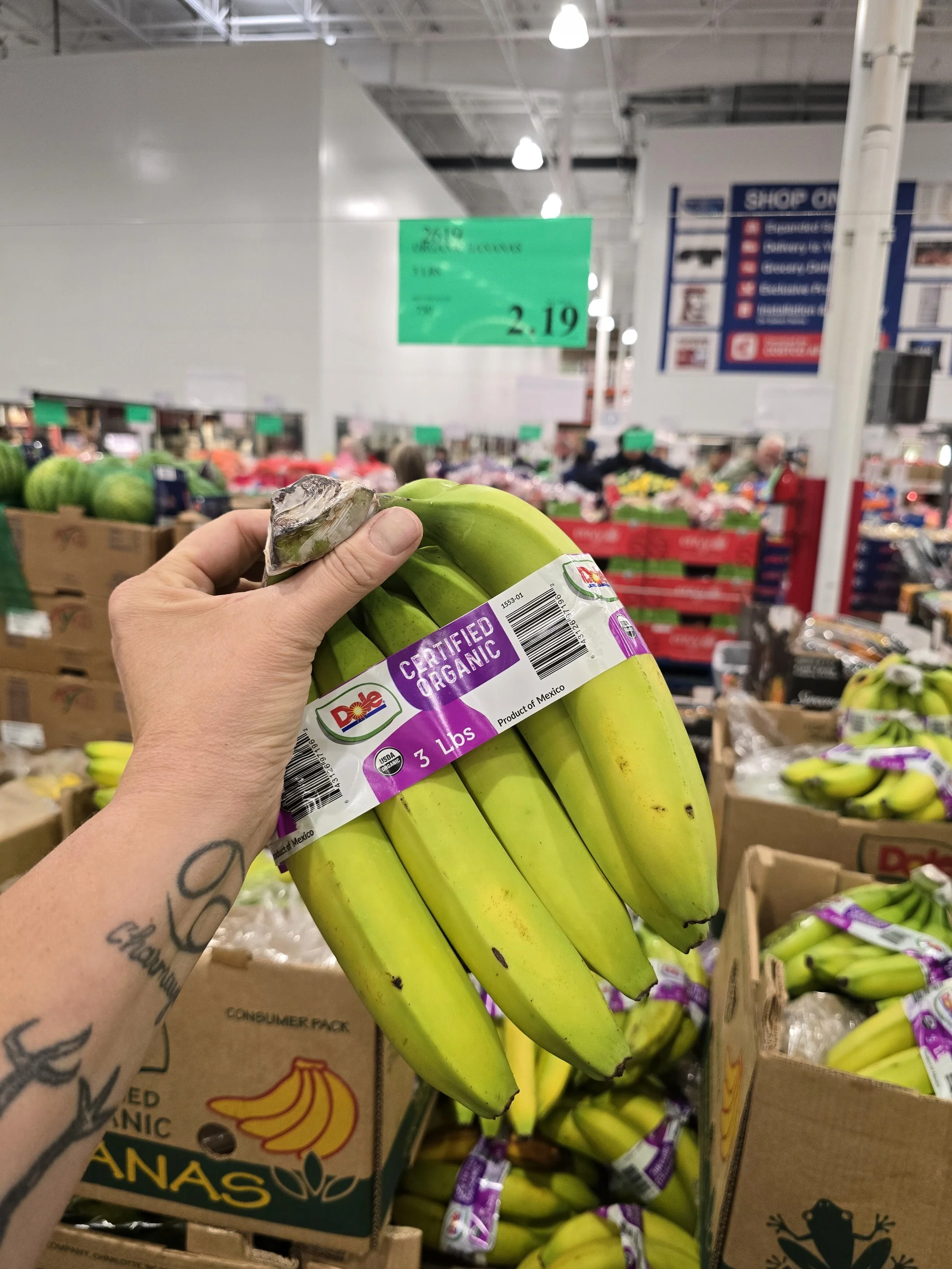
Kids, bananas, cheap. Not much else to say. Did I mention they’re organic?
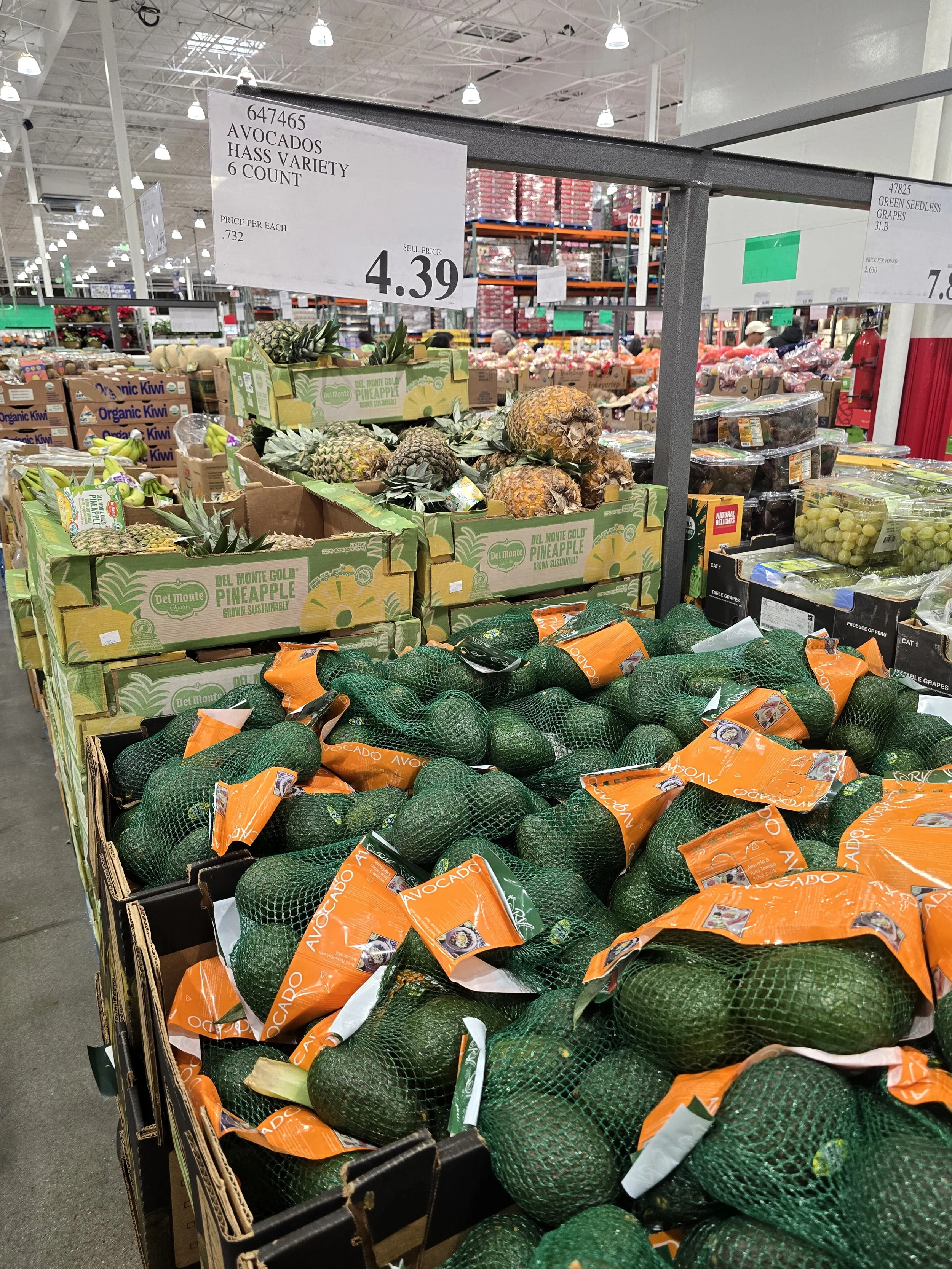
Avocados are in season right now. These came from Mexico, and because they are in season and relatively close, they are super affordable. I like that they are still green and take a bit to ripen. I keep half out of the fridge and half in to stagger their ripening.
I do not buy avocados year round, only when they are in season from Mexico or California. I accidentally bought off season Peruvian avocados once and they were terrible. Brown bruising and fermenting before they ever got soft.
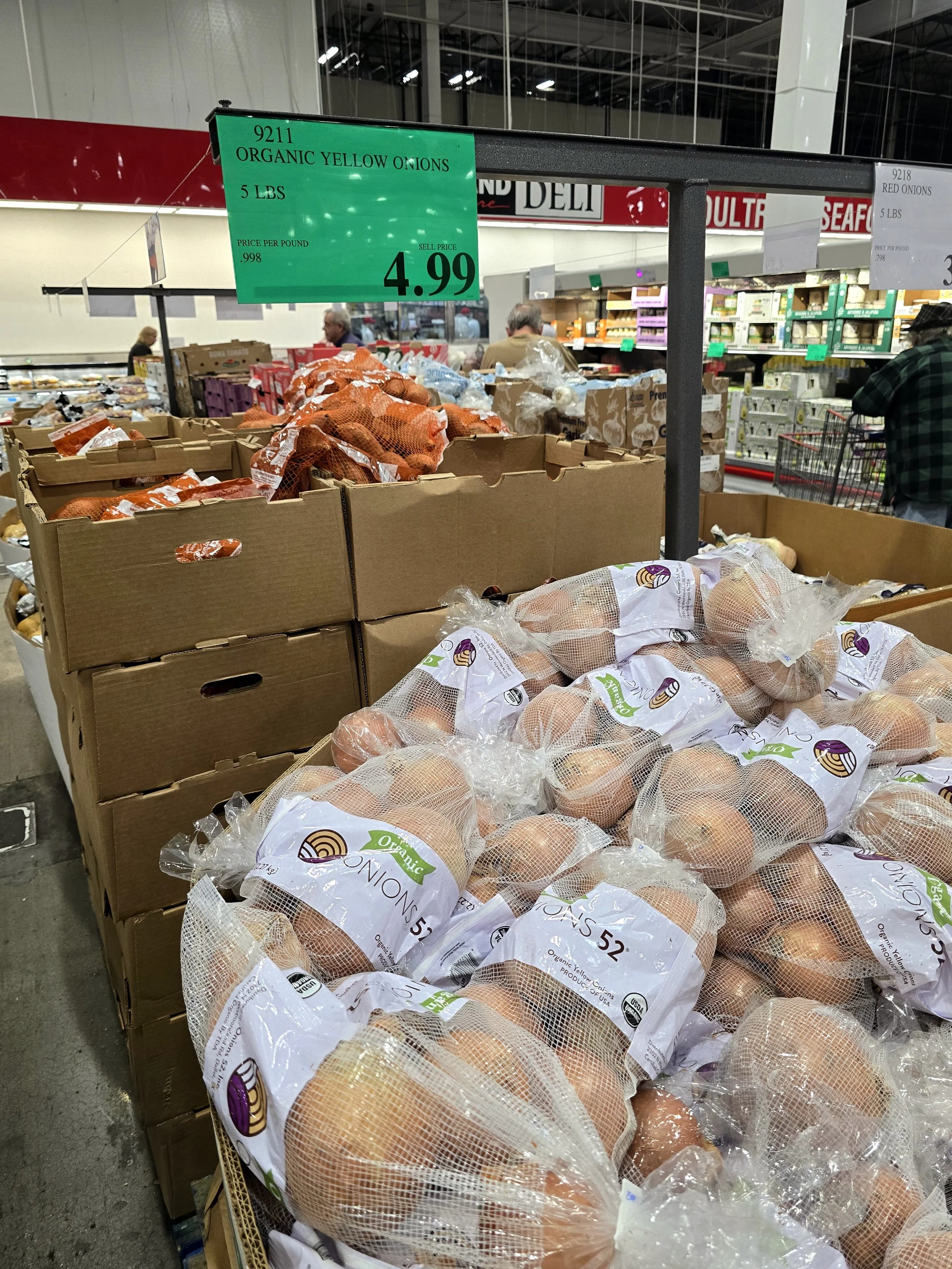
I grew onions this year, cured them for storage, and still have some left. Curing is basically preparing storage vegetables so they keep well, and it looks a little different depending on whether you are talking about onions, potatoes, squash, garlic, and so on. They were also reasonably priced at the farmers market and we had the money to buy a good amount, so I did not pick these up on this trip.
That said, when I do run out, I will likely buy these. They are fairly tasty, store well in a cool, dark place, and at about $1 per pound for U.S. grown organic onions, that is a solid price.
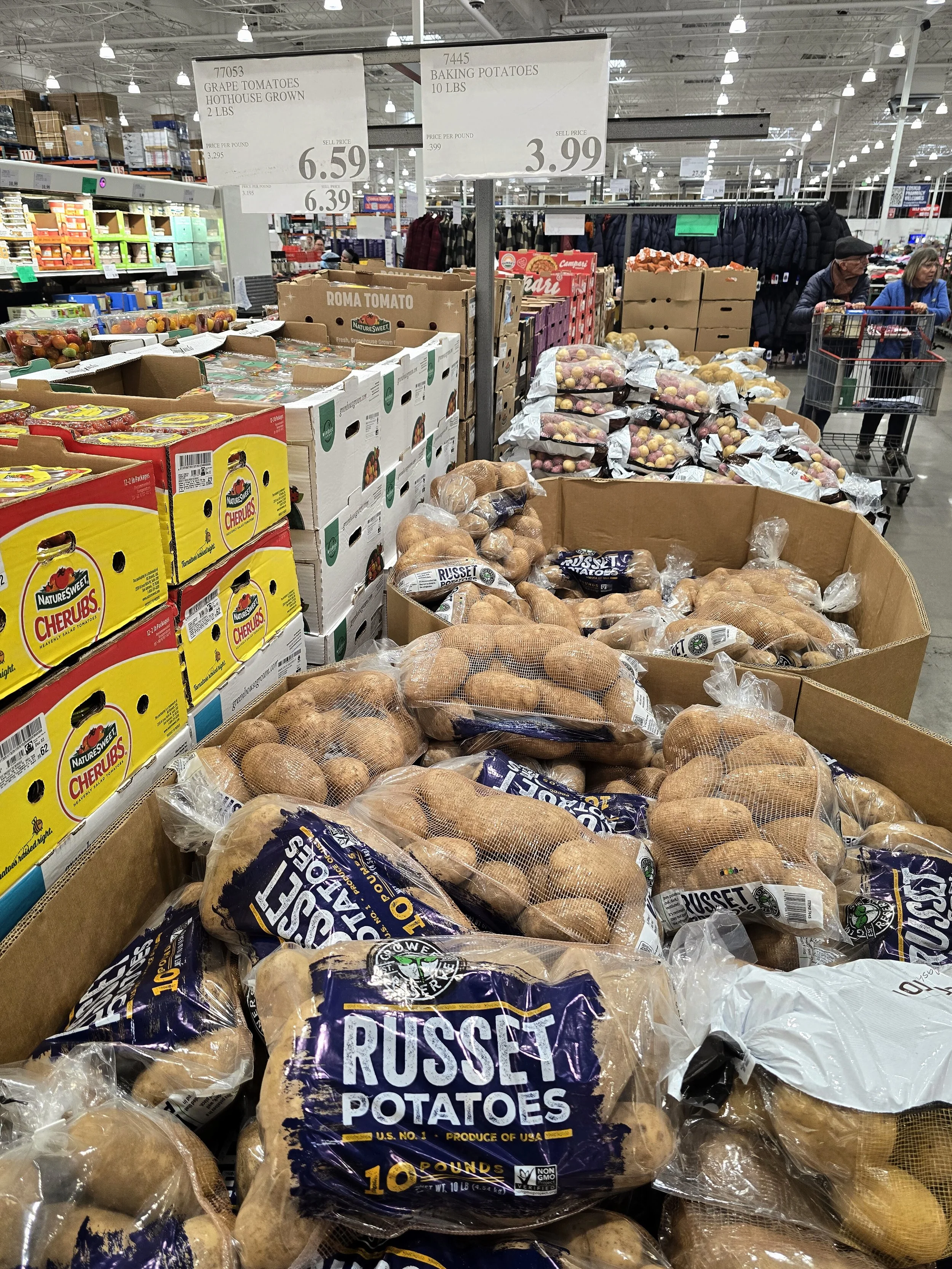
I also grew potatoes this year, but not nearly enough for how many potatoes my family eats. I still have some of ours socked away for something special. For everyday potatoes, though, I have been buying these, and we go through a bag in about a week.
Store bought potatoes do not store all that well because they are washed and not cured for long term storage, which really affects how long they last. If you will not eat ten pounds in a month or less, I would not buy them. Last year, I paid $18 for three pounds of just okay potatoes at the farmers market. I did find a few better deals on unwashed potatoes and bought as much as I could, but honestly, I am just going to have to work harder to grow more next year.
In Washington, we had a massive, somewhat self seeding potato patch and I never really had to worry about potatoes. I would compost the patch in the winter, plant a few in the spring, and it produced far more than I ever planted. It came back year after year. I need to get back to the patch.
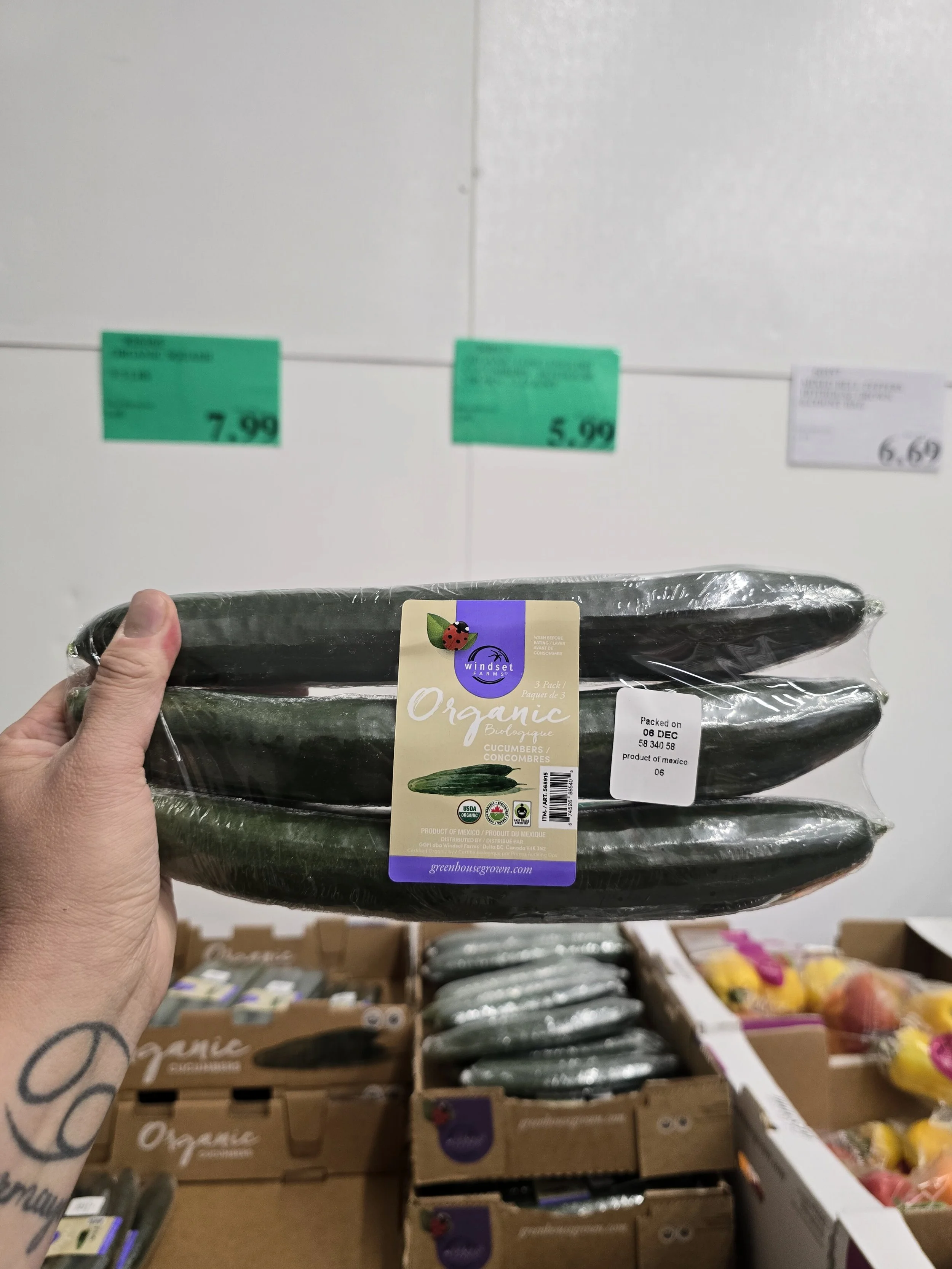
What is there to say here other than sometimes cucumbers and carrots are the vegetables I can reliably get my kids to eat in the winter. When the garden is in full swing, they just wander outside and pick things off the vine and eat them right there. Winter is a different story.
These are organic and come from not too far away in California. I do think about how far food has to travel before I buy it, even at Costco. These need to be eaten within about a week of buying, and that is not a problem for us. At $5.99 for three, that is much better than paying $2.50 each at the grocery store.
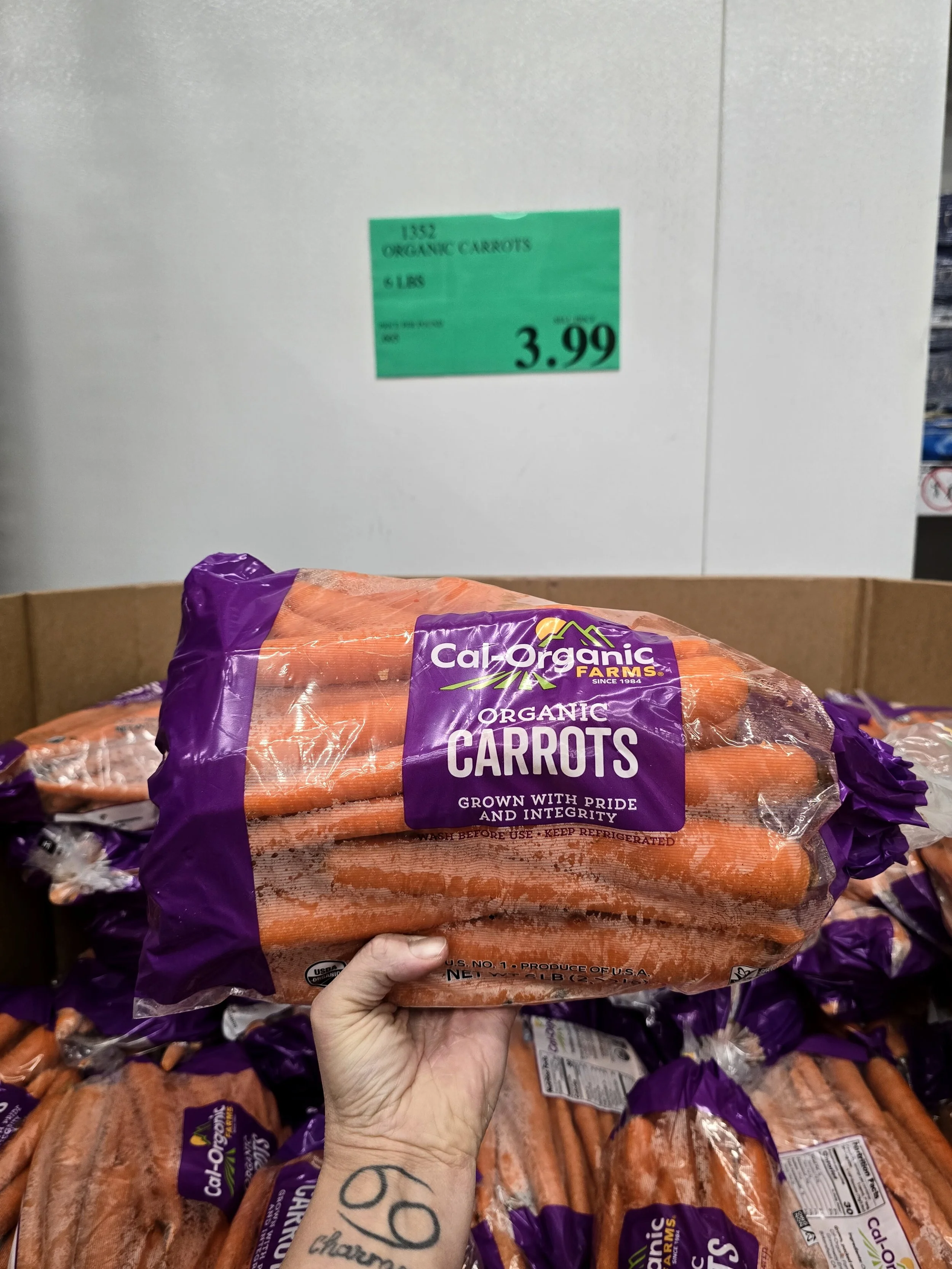
Back home, I used to buy bulk carrots from Ralph’s Green House or at the farmers market if someone was willing to do a deal on bulk. I use a lot of carrots for fresh eating and for things like soups, stews, and stock. They store really well in the fridge as is. If you check them every once in a while and make sure they are not getting too wet or too dry, they will easily last about two months.
Here in New Mexico, carrots are harder to grow because keeping the soil consistently moist is a challenge, so they tend to be pretty expensive at the markets. I do try to buy as many as I can there when they are available, but I cannot buy everything we need, especially in the winter. These are organic and come from not too far away in California. I have never been great at growing carrots. I would like to be, and I will try again this year, but if nothing else, I do not feel all that bad about this purchase.
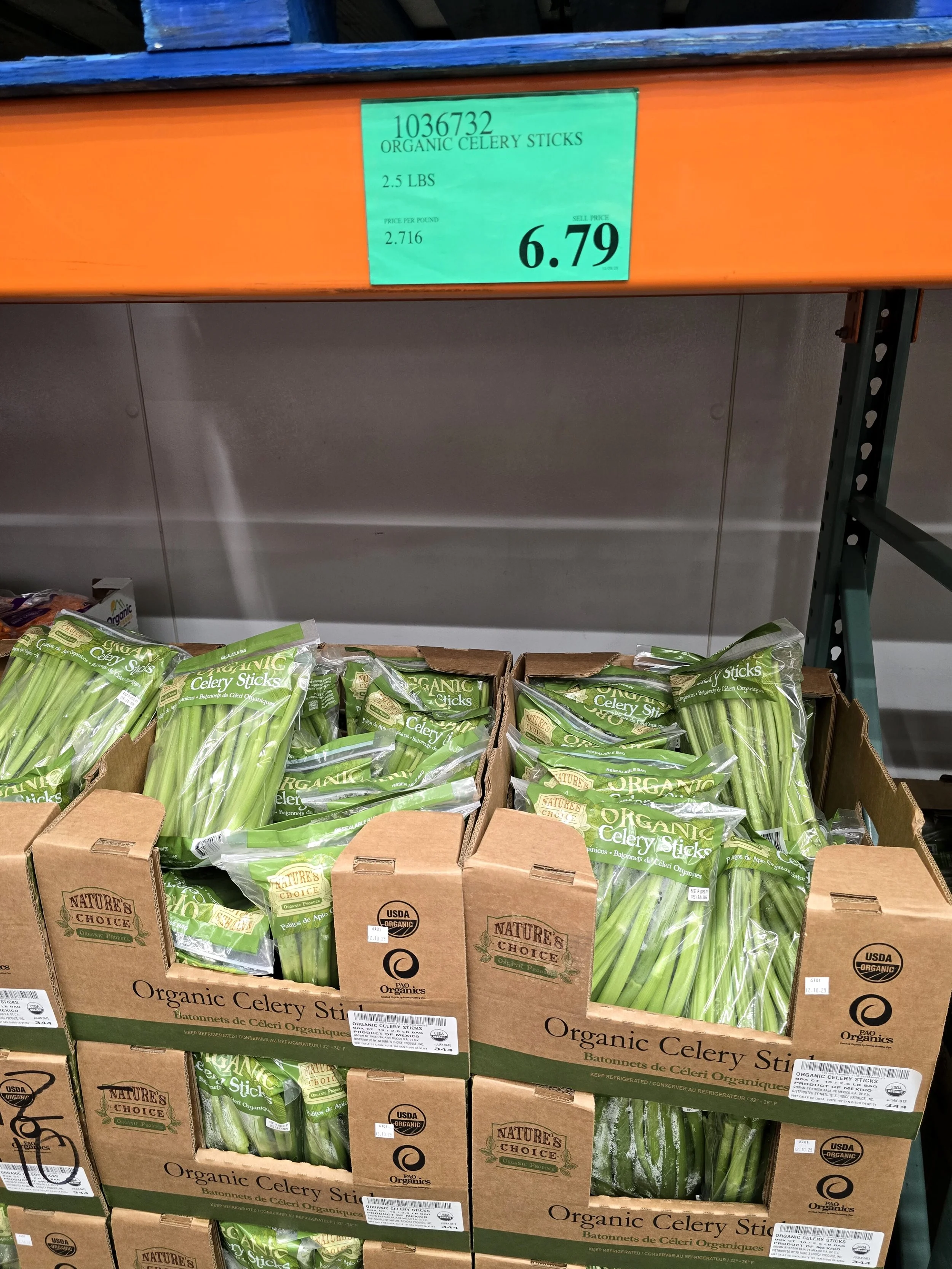
I buy celery at the farmers markets here whenever I see it. Celery is a cool weather crop, but we do not have much of a gentle shoulder season between summer and winter. It goes from the 80s during the day to freezing at night very quickly in the fall, which is a pretty intense swing for celery.
When I do find it at the markets, it is that gorgeous kind with slimmer stalks and tons of leaf. I dehydrate the leaves and use them to flavor stocks and broths. For fresh eating, or for dicing into soups and stews, I buy these bags instead.
I do not love the prepped celery stalks in the bag, so this is not something I buy all that often, and I did not pick them up on this trip. Once celery is cut, it just does not last as long. I still have two whole heads I bought in November from the farmers market. Celery stores really well when kept whole.
If you are not making a lot of stock and soup, which I do recommend you make yourself because it is extremely easy, makes use of things that otherwise have no purpose like bones, and is soup-er nourishing, sorry I had to, then I would skip the prepped celery. Yet again, this is organic and from California.
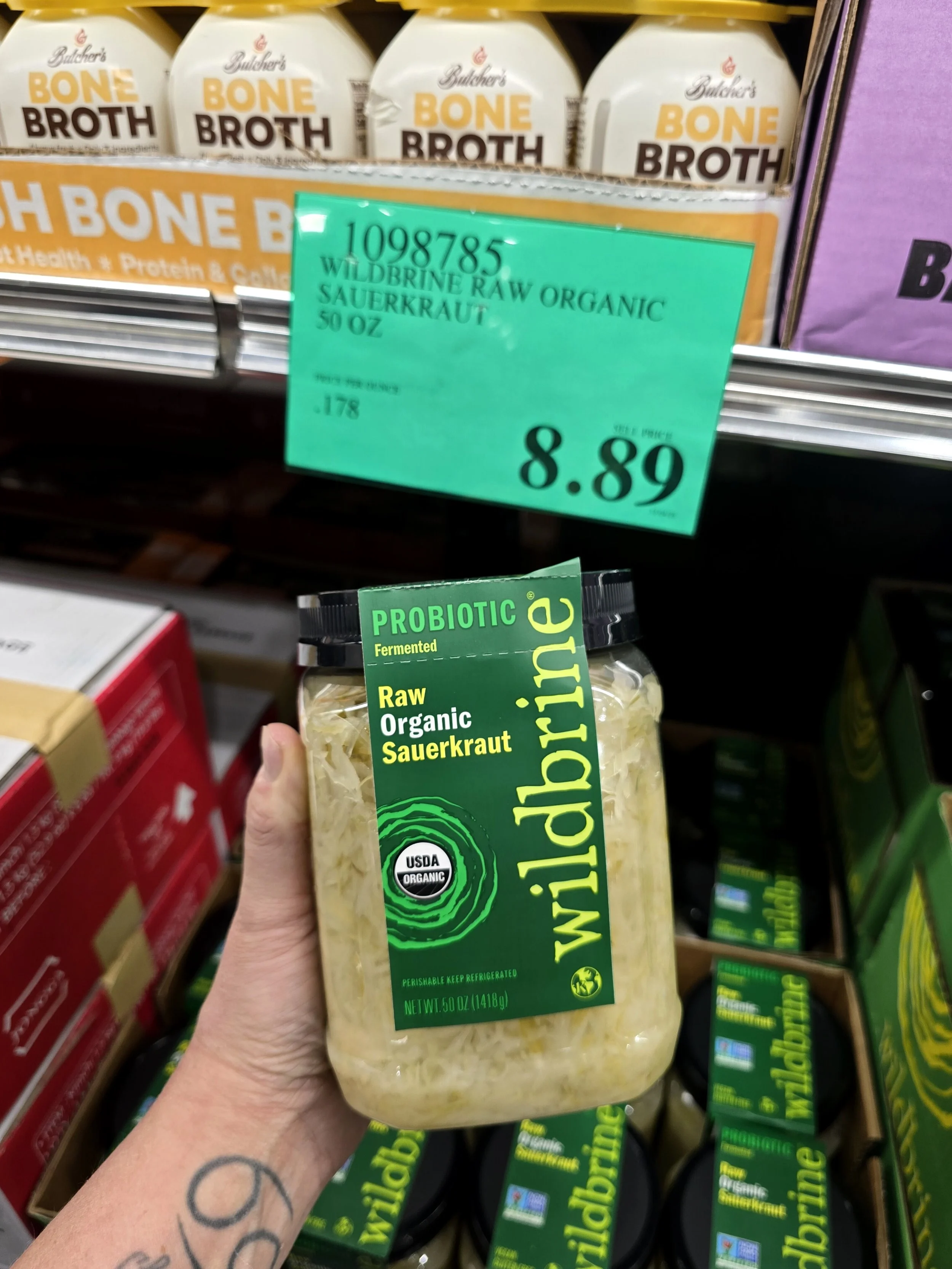
This one is a little embarrassing, but here we are. I made one jar of garam masala sauerkraut this year and it was incredible. Then I brought it to Thanksgiving in Oregon and forgot it. C’est la vie.
I like Wildbrine. It started as a pretty small company, and it is just basic, raw sauerkraut. Stored in the fridge, it will keep for about a year, and may get a little more sour in the process. As long as you use a clean fork when scooping some out, pickles and ferments can last somewhat indefinitely in the fridge if not contaminated. The price for this quantity is also very good. Jars about a third of this size often cost the same amount at the co op grocery store.
I know that next year I need to make a lot more of my own, and I will. I cannot be the pickle princess out here buying sauerkraut at the store.
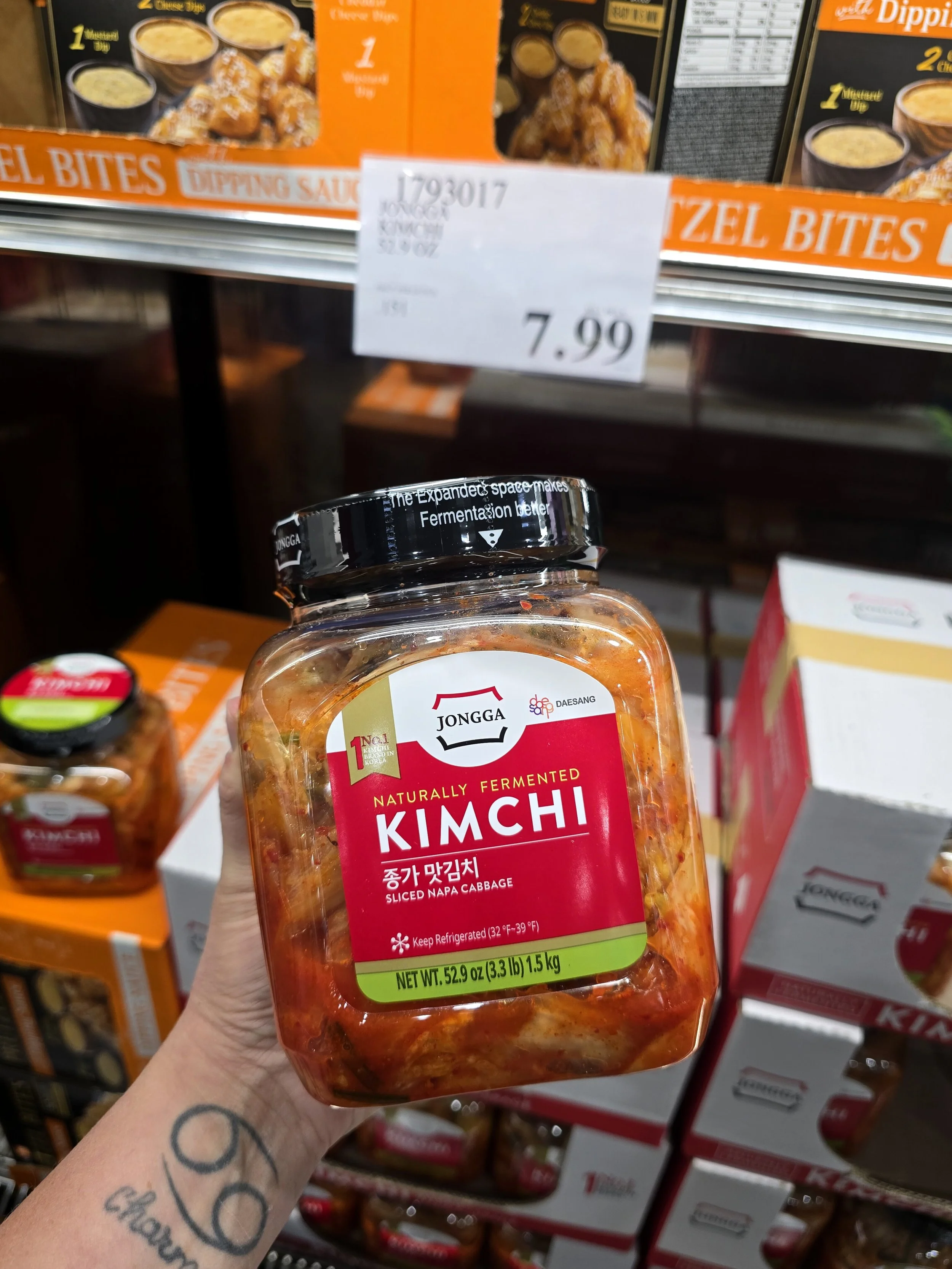
Again, why am I buying kimchi? I make kimchi, and I love to do so. I especially love Maangchi’s classic kimchi recipe. It is very authentic and makes great use of a variety of greens I usually grow, like Chinese broccoli, bok choy, and cabbages. However, I did not grow any of that this year.
This one is also authentic and really delicious. We will go through it in about a month. I do not always buy kimchi, but especially in the winter I crave fermented foods. It will keep for about a year in the fridge if you use a clean utensil, though it will definitely become more sour over time.
Nothing else to say here except have you tried subbing lunch for a can of sardines, a bowl of kimchi, and some slices of cheese? Surely you have tried sardines, kimchi, and cheddar for lunch.
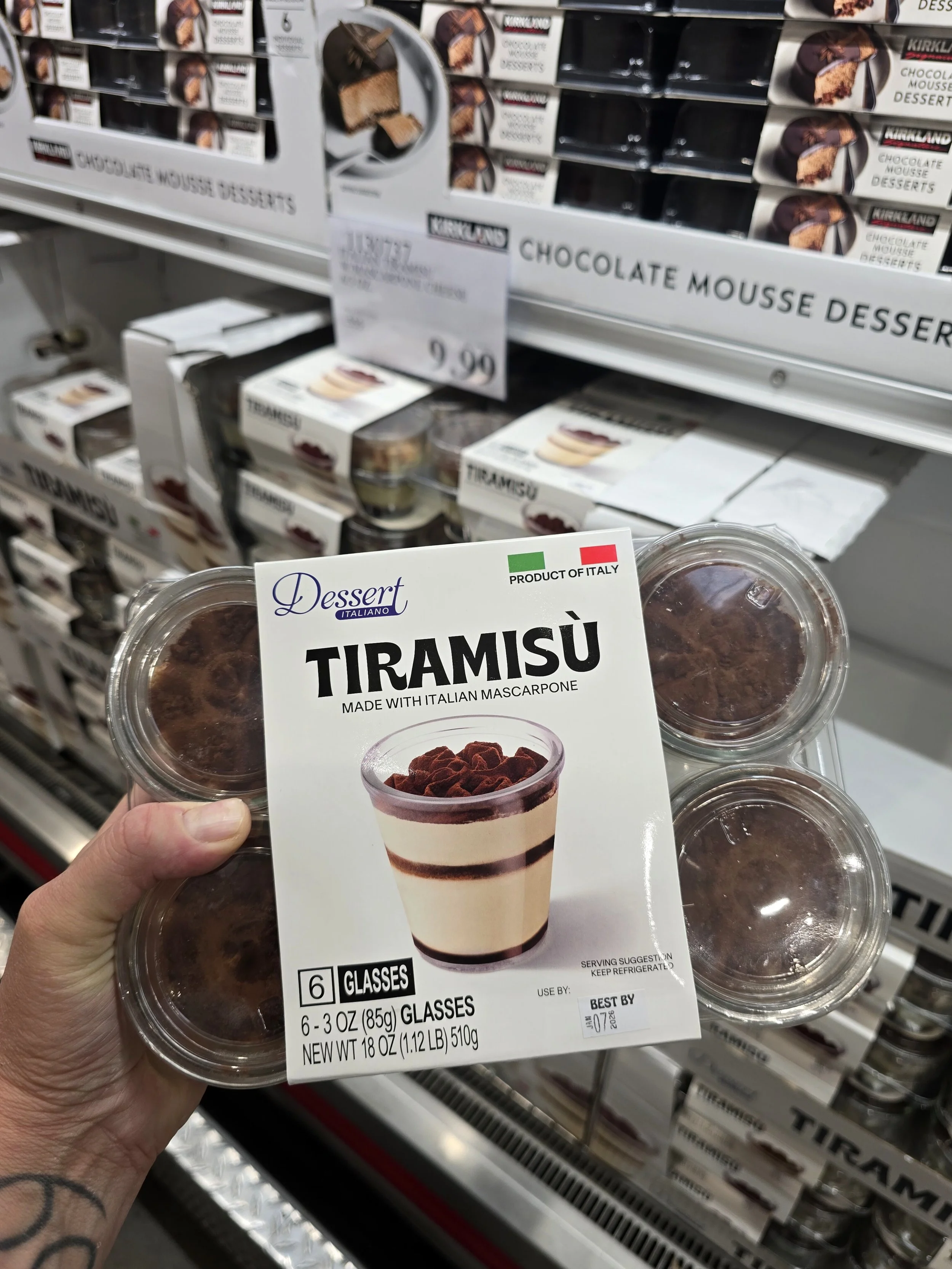
Rarely do I buy these tiramisus, but when I am having a true “treat yo self” moment, I do. They are from Italy, the ingredients are very simple, and they come in four ounce glass cups, which are perfect for kids, or for things like a stemless wine glass, or a neat or on the rocks liquor or aperitif serving once they are empty. I truly do not care what happens to them.
They also make a crème brûlée that comes in a glass cup, more like a little ramekin. I use those all the time for mise en place when I am cooking or filming videos, or for dipping sauces with a meal. Same deal there too. Very simple ingredients and basically a two for one situation.
I buy these mostly for the glasses, and the dessert is a fun little bonus that happens to be inside. At essentially a two for one value, they are an incredible price.
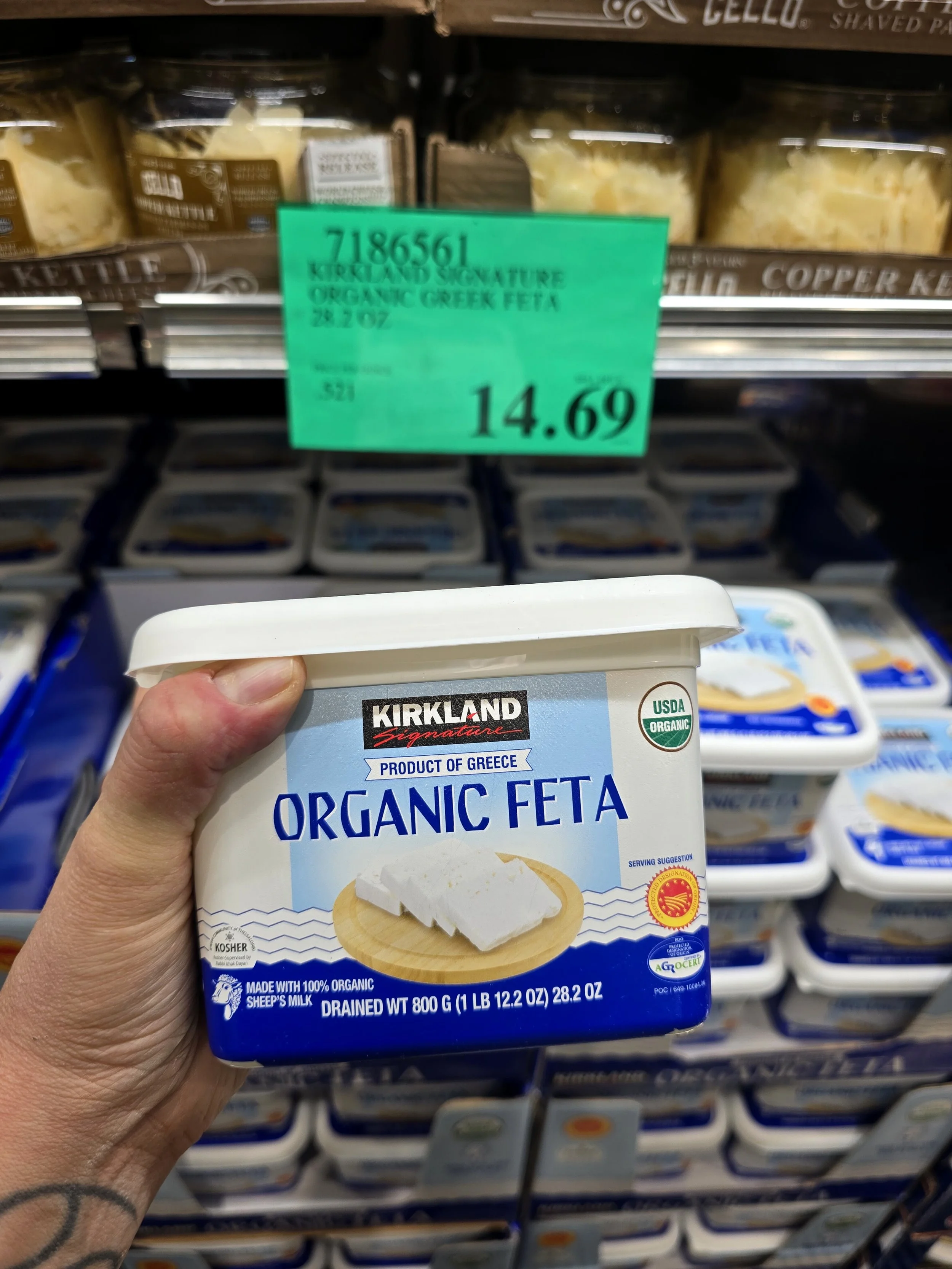
This is a very good feta made from 100 percent sheep’s milk. Feta is not meant to be made with cow’s milk, though in the U.S. it often is. Most grocery store feta here is pretty subpar and frequently sold outside of brine, which is not ideal.
Whenever possible, you will find me at a Mediterranean market buying feta. When that is not available, this is what I buy. Kirkland often does a solid job sourcing products from established producers in the regions where these foods originate, and the value they offer is honestly hard to beat. This feta checks all the boxes for me. Good milk, proper brining, and a price that makes it realistic to use as an everyday cheese.
I grew up eating at Greek cafes, and my first job was at a Greek restaurant in Seattle, Panos Kleftiko Greek Taverna. By blood we are zero percent Greek, but by association, Mediterranean food has always been a big part of our family table. This feta works well for daily use.
If you use a clean fork when scooping it out, it will easily last about two months in the fridge.
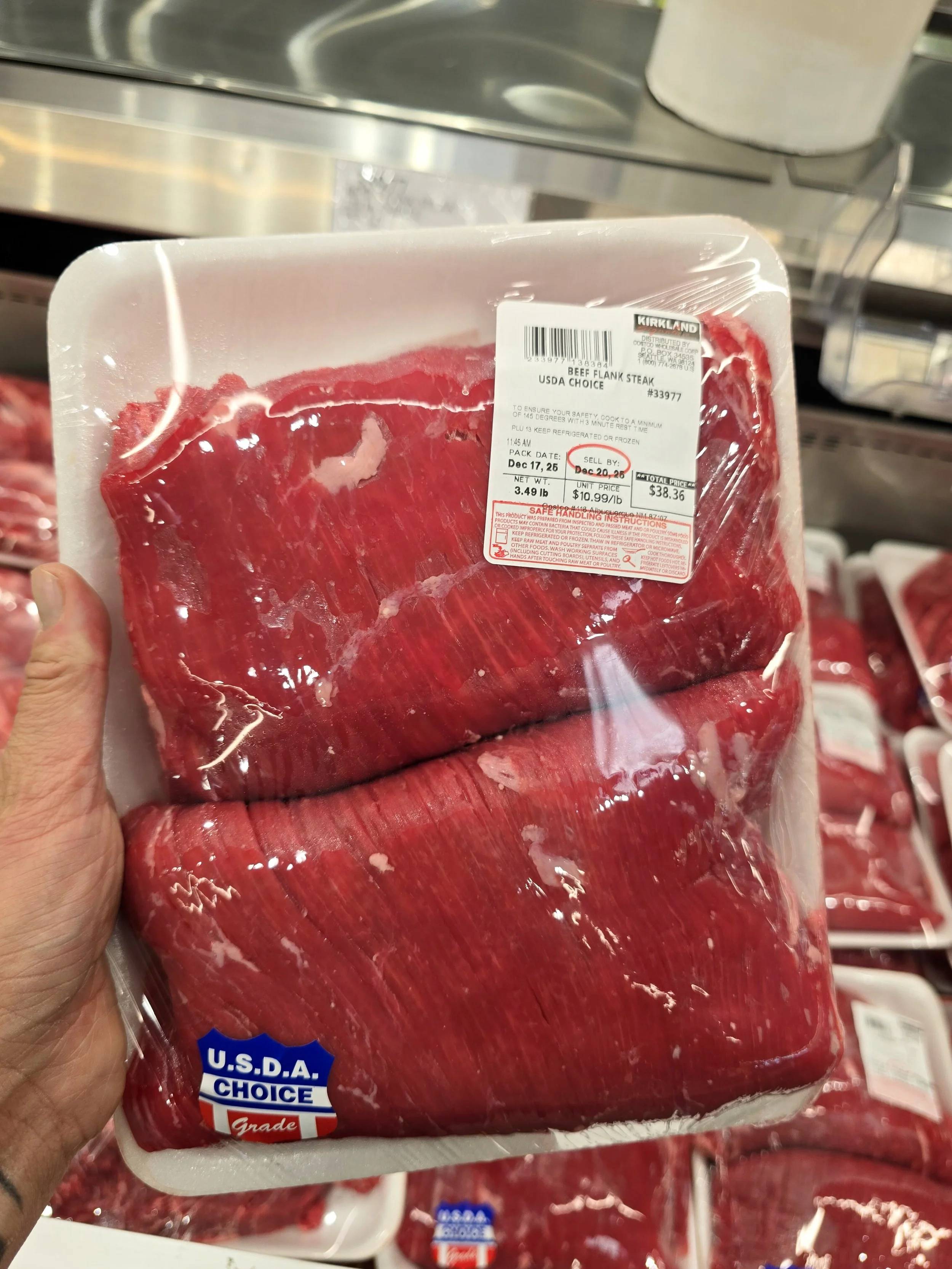
I prefer to buy beef in shares whenever possible. As I mentioned above, finding a beef share here that is both the quality I like and at a cost we can afford has been a little tough. Our Steensma beef share in Washington was really, really good meat at an extremely reasonable price from a fifth generation dairy and cattle family. That is not the kind of thing you just find on the corner anywhere you are.
I have eyed a few shares here, but since moving it has been hard to come up with a large chunk of money all at once. We arrived during a time when my husband was out of work for nine months due to an injury, our baby was about ten months old, and I had greatly reduced the amount of income I was bringing in.
2024 was a better year for me financially, but in 2025 I took the least amount of paid work I ever have since I started working at fourteen. My job has largely been my family, the homestead, and the many hours I spend producing videos and writing. I also went back to school earlier this year. I love that I get to have the platforms I do and that my husband believes in what I am building. We are very fortunate that I can put this effort in. But we are still coming back from the financial situation that led to this move and the decrease in my income. Because of that, a beef share is still out of the question for now.
One thing I am really proud of, though, is that we did produce enough of our own chicken meat this year that I do not need to buy it at all.
I do think we could swing a beef share after the holidays, and I really look forward to that. There is nothing like a good beef share.
In the meantime, I sometimes buy a flank or skirt steak pack from Costco. I really love flank steak, and this is a good price for almost four pounds of meat. I cut each flank lengthwise and then once through the middle to portion each roughly 1.7 pound flank into four steaks. I wrap them and freeze them together in a bag. Each pack gives me about eight steaks total, they defrost very quickly this way, and they will last at least a year if kept airtight.
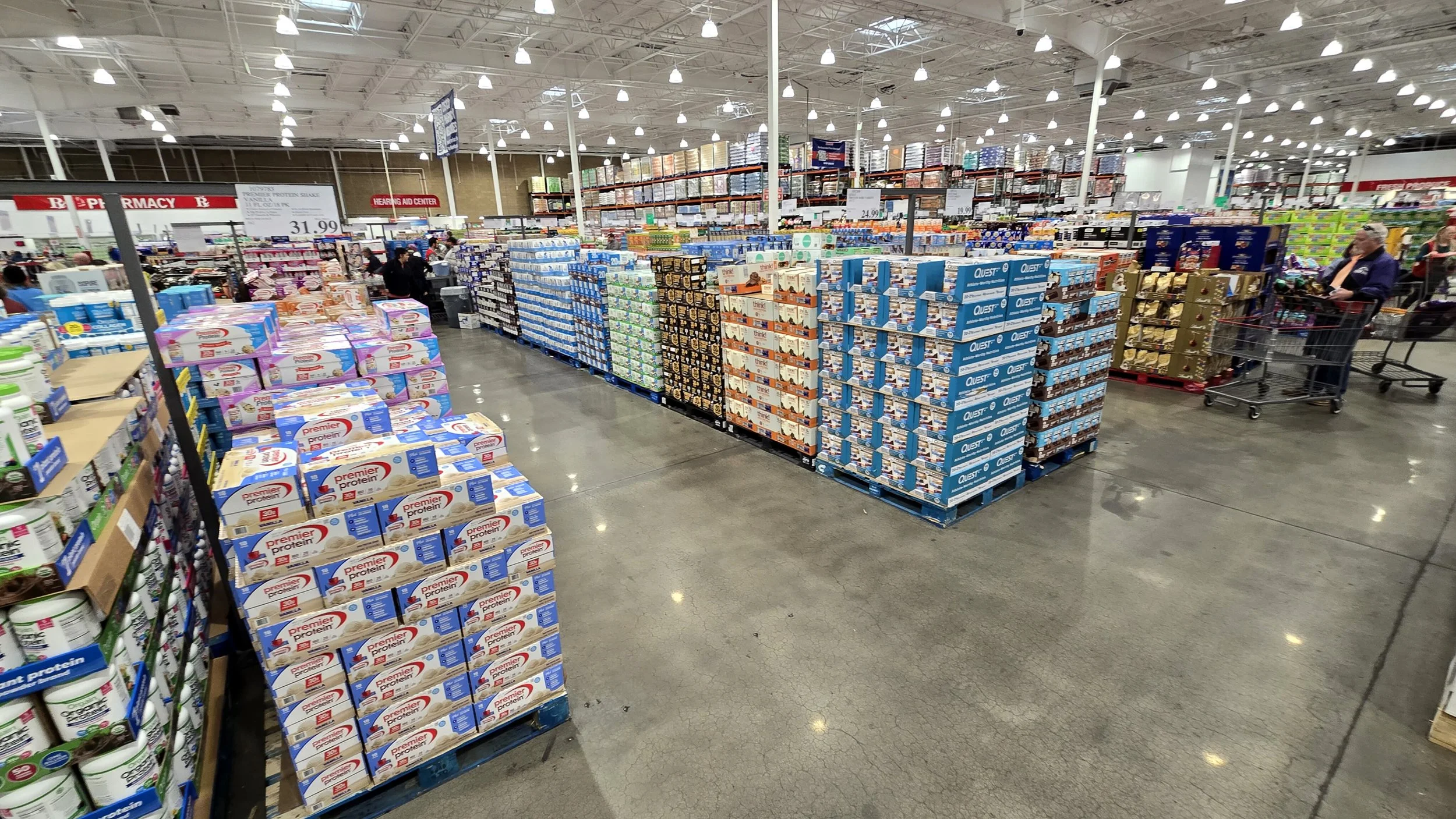
I completely skip this entire section. Protein goos and whatsits, snacks, cookies, and candy. I do sometimes buy the Kirkland grass fed beef sticks for my kids. They end up being about a dollar each for the twelve pack, which is a much better product and price than paying three dollars or more per stick at the grocery store. That said, my kids go through them incredibly fast, so I do not buy them every trip.
Every once in a while, I will grab a treat. The Kirkland s’mores bites are genuinely dangerous, though, so I cannot keep those around too often. I have zero shame around sugar and I do not restrict treats with my family, but it is also not something I need to buy in bulk quantities at Costco or keep a lot of around the house.
What This Season Has Taught Me
This season of life has been humbling for me. Losing access to so much of the local and home grown food that once made up a huge portion of our table has been hard. It is not what I envisioned for our family, and it is not where I hope to stay. But it has taught me a lot. About flexibility. About priorities. About how to feed a family well on a tighter budget without losing your values entirely. My Grandma Clara showed me how to always keep food on the table and how to balance what is local, what is homegrown, and what comes from the grocery store.
Everything I go through gives me something to share, in the hope that it helps someone else. There is no point in struggling alone. Buying food in bulk, when done thoughtfully, has brought a lot of stability into our home. It reduces packaging, cuts down on trips to the store and gas spent, and increases food security in a very real way. Yes, you are buying more at once, but over time it is significantly cheaper. With a little planning, basic food storage, and some effort when you get home, it becomes not only manageable, but empowering.
A lot of us are heading into 2026 with less margin and a need to be more intentional with our money. If there is anything I hope this post offers, it is the reassurance that feeding your family well does not have to look perfect to be effective. Thoughtful bulk shopping, paired with realistic storage and use, can be a powerful tool. We adapt, we learn, and we keep going. And we do it together.